


1

ポンペイ最期の日の光
1830年から1833年にかけて、カール・ブリューロフの手によって生み出された「ポンペイ最期の日の光」。アナトリー・デミドフの依頼によって制作されたこの記念碑的な歴史画は、西暦79年に起きたヴェスヴィオ火山の破滅的な噴火の瞬間を鮮烈に捉えています。


10月 2026 更新 · 当サイトの人気スコア(各作品の検索数、閲覧数、注文数)に基づくランキング · 407点の カール・ブリューロフの作品がカタログにあります
要約すると
カール・ブリューロフの代表作はポンペイ最期の日の光 (1833)です。サンクトペテルブルクにあるロシア国立美術館で鑑賞いただけます。 次に続くのは、The Rider (1832)とBathsheba (1832)です。 当カタログにはカール・ブリューロフによる作品が407点収められています。本ガイドでは、その中から最も有名な100作品を厳選し、制作年、所蔵美術館、そして各作品にまつわる物語とともにご紹介します。
1830年から1833年にかけて、カール・ブリューロフの手によって生み出された「ポンペイ最期の日の光」。アナトリー・デミドフの依頼によって制作されたこの記念碑的な歴史画は、西暦79年に起きたヴェスヴィオ火山の破滅的な噴火の瞬間を鮮烈に捉えています。

Karl Pavlovich Bryullov's "The Rider," painted in 1832, is more than just a portrait; it’s a carefully constructed tableau of aristocratic leisure and burgeoning Romantic sentiment. This captivating work, now available as a stunning hand-painted reproduction from WahooArt.com, transports the viewer to a sun-drenched Italian estate, capturing an intimate scene of a young woman – Giovanina and Amacilia Pacini, the adopted children of Countess Yuliya Pavlovna Samoil – enjoying a…

In the quiet, luminous depths of Karl Pavlovich Bryullov’s 1832 masterpiece, Bathsheba, we find ourselves transported to a moment where time itself seems to hold its breath. This monumental canvas is far more than a mere biblical illustration; it is a profound psychological study wrapped in the velvet textures of the Romantic era. The scene captures the biblical Bathsheba in a state of private contemplation, seated as she tends to…

To stand before Karl Pavlovich Brulloff's depiction of Pilgrims at the Entrance of the Lateran Basilica is to step across the threshold of time itself. This oil on canvas, executed in 1825, is far more than a mere historical scene; it is a profound meditation on faith, community, and the enduring human journey toward something sacred. Brulloff captures that exquisite moment when the weight of worldly experience meets the promise…

The artwork is titled Portrait of F.A. Bruni and was executed by the artist Karl Bryullov. This specific work is a monochromatic portrait sketch that focuses on the head and upper torso of a man. The subject is presented in a three-quarter view, with his gaze directed toward the viewer. Based on the title, the man depicted is likely F.A. Bruni.

A Portrait Steeped in Romantic Grandeur: Bryullov’s “Horsewoman” The canvas breathes with an immediacy rarely achieved by artists of its era—a testament to Karl Pavlovich Bryullov's masterful command of Romanticism. Completed around 1840, "Horsewoman," housed prominently within the Tretyakov Gallery in Moscow, transcends mere depiction; it’s a carefully constructed narrative designed to evoke profound emotion and celebrate idealized beauty. Bryullov wasn’t simply capturing an image; he was striving to embody…

The Portrait of V. A. Perovsky is a stunning oil on canvas painting created by the renowned Russian artist Karl Pavlovich Brulloff in 1837. This magnificent work of art measures 247 x 152 cm and is currently housed at the prestigious Tretyakov Gallery in Moscow, Russia. As a professional expert in Art and salesman at https://AllPaintingsStore.com, I can attest that this painting is a true masterpiece that showcases Brulloff's exceptional…

Karl Pavlovich Bryullov's "Child in a Swimming Pool," painted in 1829, is more than just a charming pastoral scene; it’s a poignant meditation on innocence, fleeting beauty, and the ephemeral nature of childhood. This watercolor masterpiece, currently residing within the hallowed halls of the Tretyakov Gallery in Moscow, captures a young boy – widely believed to be Prince Alexander Gagarin, a future figure in Russian history – immersed in a…

The evening air settles heavily around the figures in Vespers, a genre painting by Karl Bryullov. Created in 1825, the work captures a quiet, communal moment of devotion. Here, the artist turns his gaze toward the simple, profound acts of faith that define a community. The scene unfolds as a gathering of souls, each caught in a private moment of prayer or reflection during an evening service.

In this portrait of Countess Samoilova by Karl Bryullov, the composition is anchored by the central figure of the woman. She is positioned prominently in the middle of the frame, wearing a blue dress and a crown upon her head. This central placement establishes her as the primary focus of the work. To her sides, two other figures complete the grouping. On one side, a person is dressed in a…
これらの作品に最も頻繁に登場する4つの主題と、それぞれの代表的な例。
このページに掲載されている絵画を最も多く所蔵している 8 の美術館
| 美術館 | 都市 | カール・ブリューロフの作品 | このリストの絵画 |
|---|---|---|---|
 トレトヤコフ美術館 |
モスクワ | 32 | The Rider, Bathsheba, Pilgrims at the Entrance of the Lateran Basilica |
 エルミタージュ美術館 |
サンクトペテルブルク | 5 | Daphnis and Chloe, Portrait of N. A. Okhotnikov, Sketch on the Subject of the Trinity Beneath the Oak of Mambre |
 プーシキン美術館 |
モスクワ | 6 | Greek Morning in Myraca, Temple of Apollo in Phigalia |
 国立ロシア美術館 |
サンクトペテルブルク | 3 | Princess Yuliya Pavlovna Samoilova Leaving a Ball with Adopted Daughter Amacilia Pacini |
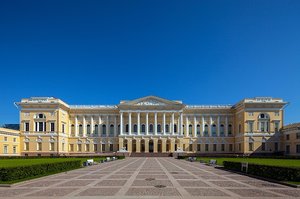 ロシア国立美術館 |
サンクトペテルブルク | 2 | ポンペイ最期の日の光 |
 Finnish National Gallery |
ヘルシンキ | 2 | Portrait of a woman |
 ワルシャワ国立博物館 |
ワルシャワ | 1 | Portrait of Baroness Reinthal with her daughter. |
 Taras Shevchenko National Museum |
Kiev | 1 | Portrait of V. A. Zhukovsky |
年代を選択して、その時代の代表作をご覧ください。

To stand before Karl Pavlovich Brulloff's depiction of Pilgrims at the Entrance of the Lateran Basilica is to step across the threshold of time itself. This oil on canvas, executed in 1825, is far more than a mere historical scene; it is a profound meditation on faith, community, and the enduring human journey toward something sacred. Brulloff captures that exquisite moment when the weight of worldly experience meets the promise…
1830年から1833年にかけて、カール・ブリューロフの手によって生み出された「ポンペイ最期の日の光」。アナトリー・デミドフの依頼によって制作されたこの記念碑的な歴史画は、西暦79年に起きたヴェスヴィオ火山の破滅的な噴火の瞬間を鮮烈に捉えています。

The Portrait of U. M. Smirnova is an oil on canvas work by the artist Karl Bryullov. Created in 1840, the painting captures a woman in a moment of quiet repose. She is accompanied by a dog, its fur resting near her. This portrait is also known by the alternative title Portrait of Ulyana Smirnova, née Spiridonova.

In this oil painting, two figures occupy a woodland setting during twilight or a nocturnal hour. The composition centers on the interaction between Daphnis and Chloe. One figure, Chloe, stands with her back to the viewer, while Daphnis sits on the right, facing her. The figures are rendered with pale, luminous skin tones that contrast against a background of deep greens and dark shadows. A small stream flows through the…
リストのトップはロシア国立美術館, サンクトペテルブルクのポンペイ最期の日の光 (1833)です。それに続くのはThe Rider (1832)、そしてBathsheba (1832)です。
34歳。カール・ブリューロフは1799に生まれ、ポンペイ最期の日の光は1833年の作品です。
ポンペイ最期の日の光, The Rider, Bathsheba, Pilgrims at the Entrance of the Lateran Basilica, Portrait of F.A. Bruni, Princess Yuliya Pavlovna Samoilova Leaving a Ball with Adopted Daughter Amacilia Pacini, Portrait of V. A. Perovsky, Child in a Swimming Pool (Portrait of Prince A.G. Gagarin in Childhood), Vespers と Portrait of Countess Samoilova。制作年および所蔵美術館については、上記のリストをご参照ください。
当カタログにはカール・ブリューロフによる作品が407点あり、制作時期は1811から1852にわたります。
その多くはトレトヤコフ美術館 (モスクワ), エルミタージュ美術館 (サンクトペテルブルク) と プーシキン美術館 (モスクワ)で見ることができます。上記の美術館リストに詳細が記載されています。
1820sは、他のどの時期よりも多くの作品が集中しています。このページにある全100点のうち44点がその時代の作品であり、そのうちPilgrims at the Entrance of the Lateran Basilica点が含まれます。
ここにある最も古い作品はThe head of Bacchus (1811)、最新の作品はForced to Swim (1852)です。
このページに掲載されている100点のうち、Portraits (18), Portrait (16) と Men (16)点
このページに掲載されている全100点のうち、26点にOil On Canvasが使用されています。
このページに掲載されている作品をご覧いただければわかる通り、Romanticism と Neo-classicism
トレトヤコフ美術館, モスクワにあるThe Rider, Bathsheba と Pilgrims at the Entrance of the Lateran Basilicaを含む23点の作品を、このページでご覧いただけます。
はい。このページに掲載されているすべての絵画は、お手持ちのスペースに合わせたサイズで、手描きの油彩複製画またはプリントとしてご購入いただけます。作品のページを開いてご注文ください。
カール・パヴロヴィチ・ブリューロフ(Karl Pavlovich Bryullov、旧名:カール・ブリュッロ)は、18世紀末のロシア、サンクトペテルブルクに生まれ、19世紀の芸術界を大きく揺るがした画家です。彼の父、パヴェル・イワノヴィチ・ブリューロフはアカデミー会員であり、木彫家、版画家として名声を馳せていました。幼いカールは父から芸術への愛情を育み、その才能を開花させていくことになります。1809年、帝国美術学校に入学し、正式な教育を受ける中で、彼の芸術的素質が徐々に明らかになっていきました。
ブリューロフは、古典的な枠組みの中で教育を受けながらも、その厳格さに常に葛藤していました。幼少の頃からイタリアへの強い憧れを抱き、彼の芸術的発展はイタリア・ルネサンス期の巨匠たちからの影響を深く受けています。特にラファエロ、ミケランジェロ、カラヴァッジョといった画家たちの作品から、光と影の劇的な表現や解剖学的な正確さへの探求心を学びました。彼の作品には、これらの巨匠たちの影響が色濃く表れており、古典主義の堅実さとロマン主義の情熱が融合した独特の世界観を構築していきました。
ブリューロフの名声を決定づけたのは、1830年から1833年にかけて制作された壮大な歴史画「ポンペイ最期の日の光」です。ヴェスヴィオ火山の噴火という混沌とした状況を描いたこの作品は、その劇的な構図、感情の激しさ、そして卓越した技術力によって、瞬く間に国際的な賞賛を集めました。プーシキンやゴーゴリといった同時代の文豪たちからも絶大な評価を受け、彼の地位を不動のものとしました。
「ポンペイ最期の日の光」以降、ブリューロフは様々なテーマに挑戦し、その芸術的才能を発揮していきました。「ツァーリの命奪取」(1827年)は初期の作品であり、歴史的な出来事を巧みに描写した技術が際立っています。また、「聖墳墓を守護する」 (1846年)では、感情と歴史的正確さのバランスを追求し、彼の円熟期における表現力を示しました。さらに、「ユリヤ・パヴロヴナ・サモイロワ夫人の舞踏会からの退場」(1832年)は、肖像画における彼の卓越した才能を示す傑作です。そして、「ガイスリックのローマ侵攻」(1835年)は、バロック様式の影響を受けたもう一つのドラマチックな歴史的場面を描いています。
「ポンペイ最期の日の光」の成功の後、ブリューロフはロシアに帰国し、1836年に帝国美術アカデミーの教授として迎えられました。彼はそこで次世代のロシア人アーティストたちを指導し、その才能を育んでいきました。しかし、健康状態は徐々に悪化していき、サン・イサーク大聖堂の天井画制作中に深刻な病に苦しむことになります。1849年、健康回復を目指してロシアを離れ、マデイラ島を経てイタリアに移住し、ローマ近郊で静かな生活を送りました。
カール・パヴロヴィチ・ブリューロフは、ロシア・ロマン主義を代表する画家の一人として、その歴史に大きな足跡を残しました。彼の作品は、古典主義的な形式美から脱却し、より感情的でドラマチックな表現へと向かうロシア美術の転換点となりました。彼は新古典主義の堅実さとロマン主義の情熱を融合させ、ガヴリール・ゴレロフをはじめとする後進のアーティストたちに多大な影響を与えました。ブリューロフは、単なる画家としてだけでなく、尊敬される教育者であり、芸術革新の推進者としても知られています。1852年6月23日、彼はローマ近郊で生涯を閉じましたが、その功績はロシア文化遺産の中で永遠に輝き続けるでしょう。


