In breve
Se conosci un dipinto di Barnaba Da Modena, probabilmente si tratta di The Virgin and Child between Saint John the Baptist and Saint Michael (1350), esposto al Musée du Petit Palais a Avignone. Madonna and Child (1367) e Pentecost (1371) completano il trio di opere immediatamente riconoscibili. Il nostro catalogo comprende 9 opere di Barnaba Da Modena. Di seguito sono riportate le 9 più conosciute, con l'anno, il luogo in cui trovarle e ciò che le rende speciali.
Inizia da qui: i 10 migliori dipinti di Barnaba Da Modena
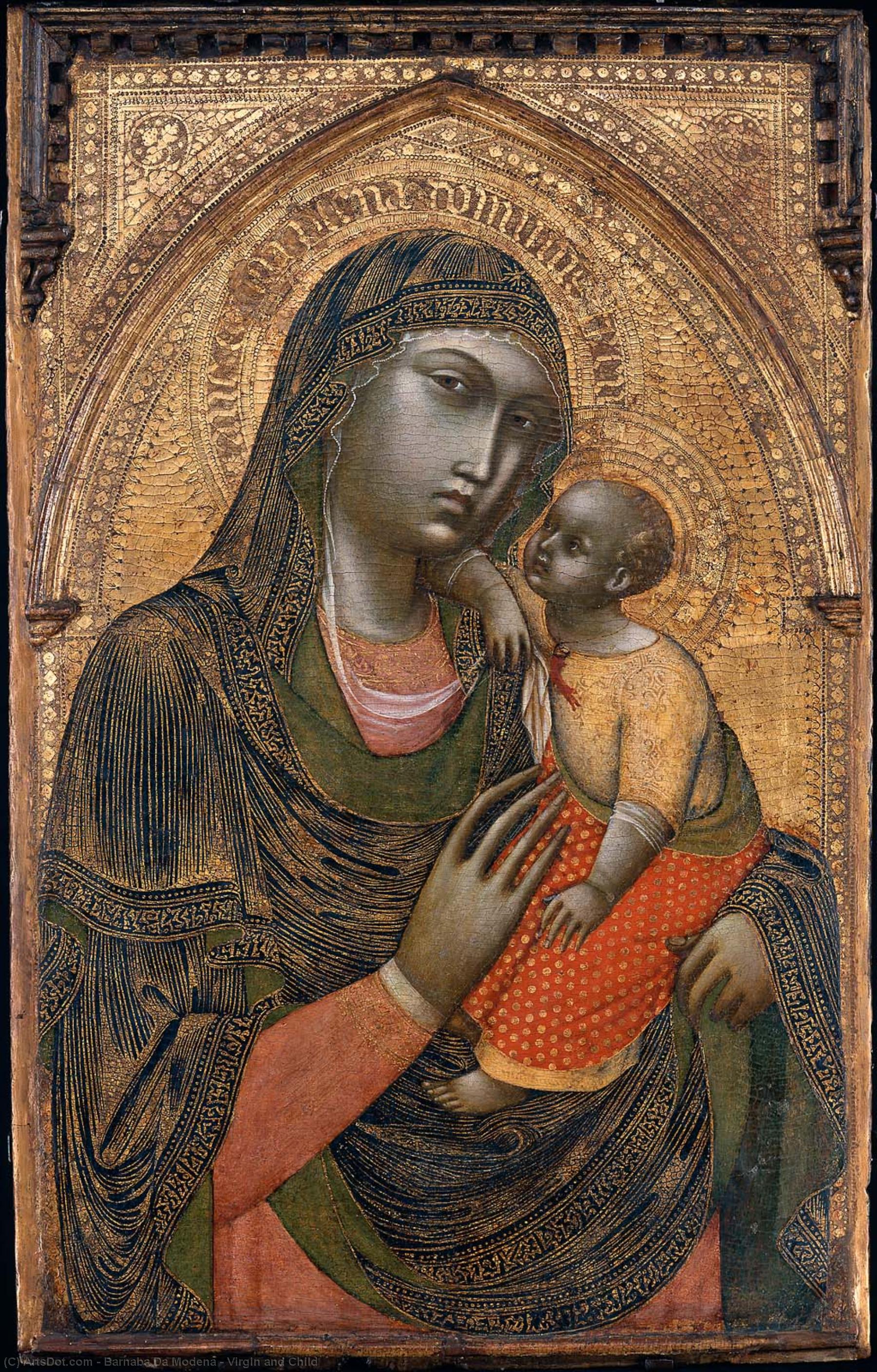
Vergine e Bambino
Sguardo fisso su questa raffigurazione della Vergine e del Bambino, si compie un viaggio diretto nel cuore devozionale dell'Italia del XIV secolo. La scena si svela con un'intimità quasi palpabile; la Vergine Maria, adornata da ricche vesti blu e incoronata con regale grazia, stringe il figlio infante al proprio seno. È un momento sospeso nel tempo—una tenera comunione che parla eloquentemente di un amore materno intrecciato al mistero divino. Barnaba…
Vergine col Bambino
Nella quieta intimità della Vergine col Bambino di Barnaba da Modena, siamo invitati a entrare in un momento sacro che trascende i secoli. Creata intorno al 1360, questo capolavoro funge da profonda finestra sul cuore spirituale del Trecento. Il dipinto cattura una connessione profondamente umana tra la Vergine Maria e il suo figlio neonato, presentando una scena in cui la maestà divina incontra la tenerezza materna. Mentre accoglie tra le…
Crocifissione
Nella quieta sacralità del Museum of Art di Indianapolis, esiste una finestra sul XIV secolo che trascende il semplice scorrere del tempo. La Crocifissione di Barnaba da Modena, eseguita intorno al 1375, non è solo un dipinto, ma un profondo incontro spirituale. Guardando questa tempera su tavola lignea, lo spettatore viene immediatamente avvolto dalla solennità del periodo tardo medievale. La composizione si concentra sulla figura agonizzante eppure maestosa di Gesù…
Le opere più celebri di Barnaba Da Modena
I quattro soggetti che compaiono più spesso in queste opere, ognuno con il suo esempio più celebre.
Stile bizantino 3 opere
Vergine maria 2 opere
Madonna col bambino 2 opere
Arte religiosa 2 opere
Dove puoi ammirare i dipinti di Barnaba Da Modena
I 8 musei che ospitano la maggior parte dei dipinti presenti in questa pagina.
| Museo | Città | Opere di Barnaba Da Modena | Opere di questo elenco |
|---|---|---|---|
| Londra | 2 | Pentecost, Scenes of the Virgin; The Trinity; The Crucifixion | |
| Avignone | 1 | The Virgin and Child between Saint John the Baptist and Saint Michael | |
| Francoforte sul Meno | 1 | Madonna and Child | |
| Berlino | 1 | Madona and Child | |
| Parigi | 1 | Vergine e Bambino | |
| New Haven | 1 | Mourning Virgin | |
| Boston | 1 | Vergine col Bambino | |
| Indianapolis | 1 | Crocifissione |
Barnaba Da Modena decennio per decennio: un capolavoro per ogni epoca
Opere per decennio
Scegli un decennio per scoprire il suo capolavoro.
The Virgin and Child between Saint John the Baptist and Saint Michael
Le tue domande sui dipinti di Barnaba Da Modena
Qual è il dipinto più famoso di Barnaba Da Modena?Vedi la risposta
In cima alla lista c'è The Virgin and Child between Saint John the Baptist and Saint Michael (1350), Musée du Petit Palais, Avignone. Subito dopo: Madonna and Child (1367) e Pentecost (1371).
Quanti anni aveva Barnaba Da Modena quando è stata realizzata The Virgin and Child between Saint John the Baptist and Saint Michael?Vedi la risposta
22 anni. Barnaba Da Modena è nato/a nel 1328 e The Virgin and Child between Saint John the Baptist and Saint Michael risale al 1350.
Quante opere ha creato Barnaba Da Modena?Vedi la risposta
Nel nostro catalogo sono presenti 9 opere di Barnaba Da Modena, datate dal 1350 al 1375.
Dove è possibile ammirare i famosi dipinti di Barnaba Da Modena?Vedi la risposta
Ne troverai la maggior parte in National Gallery (Londra), Musée du Petit Palais (Avignone) e Städel Museum (Francoforte sul Meno). L'elenco dei musei sopra riportato contiene il dettaglio completo.
In che periodo Barnaba Da Modena ha dipinto le sue opere più celebri?Vedi la risposta
In 1370s, più di in qualsiasi altro momento: 4 delle 9 opere in questa pagina risalgono a quel periodo, tra cui Pentecost.
Quali sono le prime e le ultime opere di Barnaba Da Modena?Vedi la risposta
L'opera più antica qui presente risale al The Virgin and Child between Saint John the Baptist and Saint Michael (1350); la più recente è del Crocifissione (1375).
Quali sono i soggetti più frequenti nelle opere di Barnaba Da Modena?Vedi la risposta
Stile bizantino (3), Vergine maria (2) e Madonna col bambino (2) su un totale di 9 opere in questa pagina.
Con quali materiali ha dipinto più spesso Barnaba Da Modena?Vedi la risposta
Tempera su tavola, utilizzato in 2 delle 9 opere in questa pagina.
Quali opere di Barnaba Da Modena si possono ammirare al National Gallery?Vedi la risposta
Su questa pagina puoi vedere 2 delle opere presso il National Gallery, Londra, tra cui Pentecost e Scenes of the Virgin; The Trinity; The Crucifixion.
Posso ottenere una riproduzione di un dipinto di Barnaba Da Modena?Vedi la risposta
Sì. Ogni dipinto in questa pagina è disponibile come riproduzione a olio dipinta a mano o come stampa, nelle dimensioni più adatte alle tue esigenze. Ti basta aprire la pagina del dipinto per procedere con l'ordine.
Alla scoperta di Barnaba Da Modena
Barnaba da Modena (c. 1328 – c. 1386): A Byzantine Echo in Lombard Painting
Barnaba da Modena stands as a singular figure in the artistic landscape of fourteenth-century Italy—a pioneer who bravely championed a stylistic tradition largely abandoned by his contemporaries, firmly rooted in the grandeur and spirituality of Byzantium. Born around 1328 in Modena (Emilia), he emerged from obscurity to become arguably the first Lombard painter of considerable renown, leaving behind an impressive oeuvre that testifies to his unwavering devotion to this venerable artistic heritage. His activity spanned Lombardy, Piedmont, and Pisa in Tuscany, establishing him as a pivotal artist within the burgeoning cultural dynamism of the era.- Early Life & Training: Precise biographical details surrounding Barnaba’s formative years remain elusive. Records indicate he was active in Genoa from approximately 1364, where he secured patronage and honed his craft amidst a vibrant artistic milieu. This Genoese engagement undoubtedly exposed him to the prevailing stylistic currents of the time—a stark contrast to the increasingly naturalistic tendencies gaining traction elsewhere in Italy. Despite limited documentation, scholars believe Barnaba’s training likely occurred within the Byzantine workshops of Constantinople, absorbing the techniques and aesthetic ideals that would define his distinctive artistic vision.
- Byzantine Influence: Barnaba’s stylistic hallmark is undeniably his unwavering adherence to Byzantine painting conventions—a conscious decision that distinguished him from many of his peers. He meticulously replicated techniques perfected centuries earlier, prioritizing luminous color palettes and compositional schemes that emphasized symbolic grandeur rather than realistic representation. This commitment to tradition speaks volumes about his artistic sensibilities and reflects a profound understanding of the visual language of religious art. The use of gold leaf—a cornerstone of Byzantine iconography—dominates his backgrounds, creating radiant surfaces reminiscent of imperial cathedrals and conveying an aura of divine majesty.
- Notable Works & Patronage: Barnaba’s prolific output encompassed around fifty paintings—a remarkable achievement considering the period—primarily focused on depictions of the Virgin Mary and Christ, often framed within elaborate architectural settings reminiscent of Byzantine churches. His commissions included prominent roles in Genoa’s Palazzo Ducale and contributed significantly to the artistic embellishment of ecclesiastical spaces throughout Lombardy. Among his most celebrated masterpieces are monumental frescoes adorning churches in Genoa and Pavia—works that exemplify the pinnacle of Byzantine influence and demonstrate Barnaba's mastery of color, composition, and decorative artistry.
- Technique & Innovation: Despite upholding Byzantine standards, Barnaba demonstrated considerable technical skill—a testament to his meticulous attention to detail and masterful manipulation of pigment. He skillfully employed glazing techniques—applying thin layers of translucent paint over underlying colors—to achieve remarkable luminosity and depth within his images. Furthermore, he incorporated subtle gradations of color that imbue the biblical scenes with an ethereal quality—a characteristic feature of Byzantine art that distinguishes Barnaba’s work from more conventional Lombard painting styles.
- Legacy & Influence: Barnaba’s artistic vision profoundly impacted subsequent generations of Lombard painters. Notably, Nicolò da Voltri continued his stylistic trajectory in Liguria until circa 1420, perpetuating Barnaba's Byzantine aesthetic and solidifying his position as a foundational figure in the development of Lombard painting. His enduring legacy resides not merely in his individual masterpieces but also in his contribution to shaping the artistic landscape of his time—a beacon of spiritual contemplation amidst the burgeoning complexities of the Renaissance. He remains an exemplar of artistic integrity, prioritizing symbolic representation over mere visual spectacle and upholding the traditions of Byzantine art as a testament to its enduring power to inspire awe and reverence.
Major Achievements & Artistic Style
Barnaba’s most celebrated achievements lie in his masterful execution of monumental frescoes adorning churches throughout Lombardy and Genoa. These works exemplify the pinnacle of Byzantine influence, characterized by:- Gold Leaf Backgrounds: Extensive use of gold leaf created radiant surfaces that evoked the splendor of imperial cathedrals—a deliberate stylistic choice reflecting Barnaba’s reverence for Byzantine iconography.
- Symbolic Composition: Paintings prioritized conveying theological concepts through carefully orchestrated visual narratives, emphasizing spiritual significance over mere aesthetic beauty.
- Luminous Color Palette: Barnaba skillfully employed vibrant hues—particularly blues and reds—to illuminate biblical scenes and imbue them with emotional intensity.
Connections & Artistic Context
Barnaba’s artistic milieu was shaped by the prevailing stylistic trends of his time, yet he steadfastly resisted the emerging naturalism championed by artists like Giotto di Bondone. He remained firmly committed to Byzantine principles—a conscious decision that distinguished him from many of his contemporaries and cemented his reputation as a champion of tradition. His work stands apart as an exemplar of artistic integrity—a testament to his unwavering devotion to conveying spiritual truths through visual art.Further Exploration
For deeper insights into Barnaba da Modena’s life and oeuvre, consult the following resources:- tiraboschi, Giuseppe Maria.Storia della letteratura lombarda dal secolo IX al XVI. Milano: Boccaveri Editore, 1867.