Ritratto di Albert Anker

I dipinti più famosi di Albert Anker: tutti i 83, in ordine di importanza

Aggiornato Ottobre 2026 · classificato in base al nostro punteggio di popolarità (ricerche, visite e ordini per ogni opera) · 83 opere di Albert Anker nel nostro catalogo

In breve

Il dipinto di Albert Anker più conosciuto è Writing lessons (also known as Schreibunterricht) (1865). Subito dopo troviamo The Prodigal Son (1858) e Sunday afternoon (1862). Tra i 83 opere di Albert Anker presenti nel nostro catalogo, queste 83 sono le più celebri. Ognuna include l'anno, il museo di appartenenza e una breve nota sulle sue caratteristiche distintive.

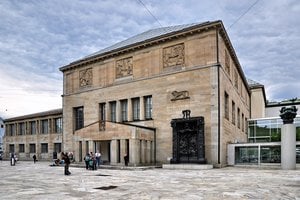
1831 – 1910, Ins Realismo Più opere: Kunsthaus Zürich

I 10 capolavori di Albert Anker: le opere più celebri

Continua a esplorare Albert Anker: da 11 a 83

11The Milk Soup at Kappel (1869) di Albert AnkerThe Milk Soup at Kappel1869 · Kunsthaus Zürich 12Bathers (1865) di Albert AnkerBathers1865 13The song of the homeland (1874) di Albert AnkerThe song of the homeland1874 14The little knitters (1875) di Albert AnkerThe little knitters1875 · Kunst Museum Winterthur | Reinhart am Stadtgarten 15Porträt der Emilie Weiss (1874) di Albert AnkerPorträt der Emilie Weiss1874 16An Old Huguenot (1875) di Albert AnkerAn Old Huguenot1875 17Young mother contemplating her sleeping child in candlelight (1875) di Albert AnkerYoung mother contemplating her sleeping child in candlelight1875 18The artist's daughter Louise (1874) di Albert AnkerThe artist's daughter Louise1874 · Kunst Museum Winterthur | Reinhart am Stadtgarten 19Queen Bertha and the Spinners (1881) di Albert AnkerQueen Bertha and the Spinners1881 · Musée cantonal des Beaux-Arts 20Children at Breakfast (1879) di Albert AnkerChildren at Breakfast1879 · Kunstmuseum Basel 21Girl with a cat (1881) di Albert AnkerGirl with a cat1881 22Boy in a red waistcoat (1885) di Albert AnkerBoy in a red waistcoat1885 23Knitting girl watching the toddler in a cradle (1885) di Albert AnkerKnitting girl watching the toddler in a cradle1885 24Portrait of a girl (1885) di Albert AnkerPortrait of a girl1885 25Schoolgirl doing homework (1879) di Albert AnkerSchoolgirl doing homework1879 26The Genius of Death (1890) di Albert AnkerThe Genius of Death1890 27Fleissig / Appliquée (1886) di Albert AnkerFleissig / Appliquée1886 28Knitting girl (1888) di Albert AnkerKnitting girl1888 29Girl playing with cat (1887) di Albert AnkerGirl playing with cat1887 30Girl peeling potatoes (1886) di Albert AnkerGirl peeling potatoes1886 31Girl Braiding Her Hair (1887) di Albert AnkerGirl Braiding Her Hair1887 32Civil marriage (1887) di Albert AnkerCivil marriage1887 · Kunsthaus Zürich 33Portrait of a Girl in Bernese Costume (1897) di Albert AnkerPortrait of a Girl in Bernese Costume1897 34The Poor Man's Soup (1893) di Albert AnkerThe Poor Man's Soup1893 · Museo delle Arti Visive di Berna 35Girl eating soup (1898) di Albert AnkerGirl eating soup1898 36Bertha Gugger with daughter (1898) di Albert AnkerBertha Gugger with daughter1898 37The Zaeslin siblings (1896) di Albert AnkerThe Zaeslin siblings1896 38Old Man drinking Herbal Tea (1895) di Albert AnkerOld Man drinking Herbal Tea1895 39Reading Girl (1905) di Albert AnkerReading Girl1905 40Old man eating Mid-Morning Snack (Gyp) (1901) di Albert AnkerOld man eating Mid-Morning Snack (Gyp)1901 41Boy with Slate Tablet (1910) di Albert AnkerBoy with Slate Tablet1910 42Girl with Loaf of Bread (1910) di Albert AnkerGirl with Loaf of Bread1910 43Reading Old Farmer (1910) di Albert AnkerReading Old Farmer1910 44Girl with Slate Tablet (1910) di Albert AnkerGirl with Slate Tablet1910 45The Convalescent (1908) di Albert AnkerThe Convalescent1908 46Boy with a hat eating (1910) di Albert AnkerBoy with a hat eating1910 47Old farmer at the table (22 April 1907) (1907) di Albert AnkerOld farmer at the table (22 April 1907)1907 48Still Life: Two Glass of Red Wine, a Bottle of Wine, a Corkscrew and a Plate of Biscuits on a Tray di Albert AnkerStill Life: Two Glass of Red Wine, a Bottle of Wine, a Corkscrew and a Plate of Biscuits on a Tray 49The LIttle Musician (1873) di Albert AnkerThe LIttle Musician1873 50The Whistle Carver (1858) di Albert AnkerThe Whistle Carver1858 51An Interior with Mother and Children (1870) di Albert AnkerAn Interior with Mother and Children1870 52Still-life: Tea and Melted Bread (1873) di Albert AnkerStill-life: Tea and Melted Bread1873 53Still life with coffee setting and cognac bottle (1882) di Albert AnkerStill life with coffee setting and cognac bottle1882 54Sierre (1880) di Albert AnkerSierre1880 55Farmhouse parlor with green stove (1883) di Albert AnkerFarmhouse parlor with green stove1883 56Portrait of a Young Boy (1890) di Albert AnkerPortrait of a Young Boy1890 57Still life: Tasteful tea (1897) di Albert AnkerStill life: Tasteful tea1897 58Still Life with Wine and Chestnuts (1897) di Albert AnkerStill Life with Wine and Chestnuts1897 59Still-Life with Coffee, Milk and Potatoes (1896) di Albert AnkerStill-Life with Coffee, Milk and Potatoes1896 · Museo delle Arti Visive di Berna 60Der alte Feissli mit Kind auf Ofenbank (1898) di Albert AnkerDer alte Feissli mit Kind auf Ofenbank1898 61Still life, herrings (1899) di Albert AnkerStill life, herrings1899 62Strickende junge Frau mit Blumenstrauss (1903) di Albert AnkerStrickende junge Frau mit Blumenstrauss1903 63Der Schaffner (1899) di Albert AnkerDer Schaffner1899 64At the cemetery di Albert AnkerAt the cemetery 65Knitting Bernese woman with child di Albert AnkerKnitting Bernese woman with child 66Sitting bioy peeling vegetables di Albert AnkerSitting bioy peeling vegetables 67Portrait of a Girl di Albert AnkerPortrait of a Girl 68Portrait of a girl di Albert AnkerPortrait of a girl 69Sleeping girl on a wooden bench di Albert AnkerSleeping girl on a wooden bench 70Farmer reading in Bed I di Albert AnkerFarmer reading in Bed I 71Unterwalden (traditional costumes after Josef Reinhart) di Albert AnkerUnterwalden (traditional costumes after Josef Reinhart) 72A Farmer's Wife, Sewing di Albert AnkerA Farmer's Wife, Sewing 73Portrait of boy di Albert AnkerPortrait of boy 74Farmer with his cap holding his pen in his mouth and reading a letter di Albert AnkerFarmer with his cap holding his pen in his mouth and reading a letter 75Portrait of a Young Girl di Albert AnkerPortrait of a Young Girl 76Child at a Table (1908) di Albert AnkerChild at a Table1908 77Portrait of a girl with red necklace di Albert AnkerPortrait of a girl with red necklace 78Due ragazze sulla panca della stufa (1895) di Albert AnkerDue ragazze sulla panca della stufa1895 · Kunsthaus Zürich 79Corner of a Room with Laundry Basket di Albert AnkerCorner of a Room with Laundry Basket 80Peasant Woman di Albert AnkerPeasant Woman 81A Seated Farmer with a Pipe di Albert AnkerA Seated Farmer with a Pipe 82Portrait of a girl di Albert AnkerPortrait of a girl 83Creche (1890) di Albert AnkerCreche1890 · Kunst Museum Winterthur | Reinhart am Stadtgarten

Le opere più celebri di Albert Anker

I quattro soggetti che compaiono più spesso in queste opere, ognuno con il suo esempio più celebre.

Dove puoi ammirare i dipinti di Albert Anker

I 7 musei che ospitano la maggior parte dei dipinti presenti in questa pagina.

Museo Città Opere di Albert Anker Opere di questo elenco
Kunsthaus Zürich, ZurigoKunsthaus Zürich Zurigo 3 The Milk Soup at Kappel, Civil marriage, Due ragazze sulla panca della stufa
Kunst Museum Winterthur | Reinhart am Stadtgarten, WinterthurKunst Museum Winterthur | Reinhart am Stadtgarten Winterthur 3 The little knitters, The artist's daughter Louise, Creche
Museo di arte e storia, NeuchâtelMuseo di arte e storia Neuchâtel 2 Sunday afternoon, The Bourbakis
Museo delle Arti Visive di Berna, BernaMuseo delle Arti Visive di Berna Berna 2 The Poor Man's Soup, Still-Life with Coffee, Milk and Potatoes
Palais des Beaux-Arts, LillePalais des Beaux-Arts Lille 1 In the Woods
Musée cantonal des Beaux-Arts, LosannaMusée cantonal des Beaux-Arts Losanna 1 Queen Bertha and the Spinners
Kunstmuseum Basel, BasileaKunstmuseum Basel Basilea 1 Children at Breakfast

Un'opera famosa di Albert Anker per ogni decennio

Opere per decennio

Scegli un decennio per scoprire il suo capolavoro.

I dipinti di Albert Anker: cosa vogliono sapere le persone

Per quale dipinto è più conosciuto Albert Anker?Vedi la risposta

In cima alla lista c'è Writing lessons (also known as Schreibunterricht) (1865). Subito dopo: The Prodigal Son (1858) e Sunday afternoon (1862).

Che età aveva Albert Anker al momento di Writing lessons (also known as Schreibunterricht)?Vedi la risposta

34 anni. Albert Anker è nato/a nel 1831 e Writing lessons (also known as Schreibunterricht) risale al 1865.

Quali sono i 10 dipinti più famosi di Albert Anker?Vedi la risposta

Writing lessons (also known as Schreibunterricht), The Prodigal Son, Sunday afternoon, The Bourbakis, In the Woods, The Wine Festival, Betende im Beinhaus von Stans, Baptism, Boy at table II e Girl, drinking coffee. Troverai l'anno e il museo di ciascuna nella lista sopra.

Quante opere di Albert Anker ci sono?Vedi la risposta

Nel nostro catalogo sono presenti 83 opere di Albert Anker, datate dal 1858 al 1910.

In quali musei si trovano i dipinti più famosi di Albert Anker?Vedi la risposta

Ne troverai la maggior parte in Kunsthaus Zürich (Zurigo), Kunst Museum Winterthur | Reinhart am Stadtgarten (Winterthur) e Museo di arte e storia (Neuchâtel). L'elenco dei musei sopra riportato contiene il dettaglio completo.

Quando sono state dipinte le opere più famose di Albert Anker?Vedi la risposta

In 1890s, più di in qualsiasi altro momento: 16 delle 83 opere in questa pagina risalgono a quel periodo, tra cui The Genius of Death.

Quali sono i dipinti più antichi e i più recenti di Albert Anker?Vedi la risposta

L'opera più antica qui presente risale al The Prodigal Son (1858); la più recente è del Boy with Slate Tablet (1910).

Qual è il soggetto più dipinto da Albert Anker?Vedi la risposta

Rural life (3), Swiss art (3) e Portraits (3) su un totale di 83 opere in questa pagina.

A quale movimento artistico è associato Albert Anker?Vedi la risposta

Realismo e Contemporary realism, come puoi vedere nelle opere in questa pagina.

Cosa puoi vedere di Albert Anker al Kunsthaus Zürich?Vedi la risposta

Su questa pagina puoi vedere 3 delle opere presso il Kunsthaus Zürich, Zurigo, tra cui The Milk Soup at Kappel, Civil marriage e Due ragazze sulla panca della stufa.

Posso ordinare una riproduzione di Albert Anker per la mia casa?Vedi la risposta

Sì. Ogni dipinto in questa pagina è disponibile come riproduzione a olio dipinta a mano o come stampa, nelle dimensioni più adatte alle tue esigenze. Ti basta aprire la pagina del dipinto per procedere con l'ordine.

Scopri Albert Anker

Primi Anni e Formazione

Albert Samuel Anker nacque il 1° aprile 1831 a Ens, in Svizzera. Suo padre, Samuel Anker, era veterinario e ricoprì una carica nell'assemblea costituzionale del Canton Berna. La famiglia si trasferì poi a Neuchâtel nel 1836 quando il padre assunse un ruolo simile lì. Anker dimostrò fin da subito un’attitudine per l’arte, ricevendo le prime lezioni di disegno da Frédéric-Wilhelm Moritz. Continuò la sua formazione artistica con Louis Wallinger dal 1845 al 1848 insieme ad Auguste Bachelin. Dopo aver frequentato il Gymnasium a Berna e conseguito la maturità nel 1851, intraprese inizialmente studi teologici all'Università di Berna e successivamente all'Università di Halle in Germania. Tuttavia, ispirato dalle collezioni d’arte che incontrò in Germania, Anker scelse infine di dedicarsi a una carriera artistica, ottenendo l'approvazione del padre nel 1854.

Sviluppo Artistico e Influenze

Anker si trasferì a Parigi dove studiò con Charles Gleyre all’École nationale supérieure des Beaux-Arts. Questo periodo fu cruciale per il suo sviluppo artistico, esponendolo alle tendenze artistiche francesi contemporanee. Pur essendo influenzato dal Realismo, Anker sviluppò uno stile distintivo caratterizzato da un meticoloso dettaglio, una sottile espressione emotiva e un focus sulla rappresentazione di scene quotidiane della vita rurale svizzera. La sua opera riflette un apprezzamento per la semplicità e la dignità dell’esistenza contadina. Spesso raffigurava bambini, agricoltori e interni domestici con notevole realismo e tenerezza. L'influenza dei maestri olandesi come Johannes Vermeer si può osservare nella sua attenzione alla luce e al dettaglio, così come nella sua rappresentazione di ambientazioni interne intime.

Opere Principali e Temi

Anker è noto soprattutto per i suoi dipinti che raffigurano scene della vita rurale svizzera del XIX secolo. Tra le sue opere più celebrate figurano "Il Piccolo Musicista", un'affascinante rappresentazione di un giovane ragazzo che suona il violino, “Ritratto di una Giovane”, che mostra l’innocenza giovanile, e "La Moglie di un Contadino, Mentre Cuce", che cattura un momento di tranquilla serenità domestica. "Unterwalden (costumi tradizionali dopo Josef Reinhart)" dimostra il suo interesse nel documentare il patrimonio culturale svizzero attraverso studi a acquerello sugli abiti tradizionali. Ha prodotto anche ritratti, nature morte e scene di genere che riflettono i valori e l'estetica del suo tempo. Il suo studio a carboncino "Vecchio Contadino al Tavolo (22 aprile 1907)” offre uno sguardo sul suo processo artistico e sulla sua capacità di trasmettere emozioni con semplici linee. I temi ricorrenti nella sua opera includono l’infanzia, la vita familiare, le tradizioni rurali e la bellezza del paesaggio svizzero.

Riconoscimenti e Significato Storico

Albert Samuel Anker ottenne un notevole riconoscimento durante la sua vita, diventando noto come il "pittore nazionale" della Svizzera grazie alla popolarità e al fascino duraturo delle sue rappresentazioni della cultura svizzera. Le sue opere furono esposte in numerose mostre nazionali e internazionali, guadagnandosi apprezzamento critico e un fedele seguito. L'arte di Anker ha svolto un ruolo significativo nel plasmare l’immagine della Svizzera del XIX secolo, presentando una visione romantica ma realistica della vita rurale. Ha contribuito allo sviluppo del Realismo svizzero, influenzando le generazioni successive di artisti. I suoi dipinti continuano ad essere ammirati per la loro abilità tecnica, la profondità emotiva e il significato storico, offrendo preziose intuizioni sul panorama sociale e culturale della sua epoca. Anker morì il 16 luglio 1910 a Ins, in Svizzera, lasciando dietro di sé un’eredità come uno dei più amati e importanti artisti svizzeri.

Tutte le 83 opere di Albert Anker →