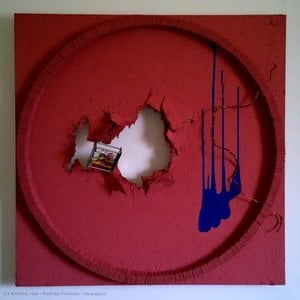
Rodrigo Franzão: Esplorare la Trama e la Geometria attraverso Materiali Sostenibili
Rodrigo Franzão è un artista brasiliano contemporaneo riconosciuto per la sua arte tessile e multimediale innovativa, che scava profondamente nei temi della sostenibilità, dell'astrazione geometrica e della riflessione sociale. Nato a San Paolo nel 1982, il percorso artistico di Franzão ha avuto inizio con un radicamento nella letteratura e nelle arti, seguito da studi avanzati in museologia e storia dell'arte: una base che ha plasmato profondamente il suo approccio all'espressione visiva. L'artista si distingue per una maestria meticolosa e un impegno incrollabile verso pratiche artistiche etiche, utilizzando materiali eco-compatibili, come la carta tedesca certificata FSC e i colori acrilici, come componenti fondamentali del suo processo creativo.- Formazione Iniziale e Influenze Letterarie: Gli anni formativi di Franzão sono stati segnati da un profondo coinvolgimento con la letteratura brasiliana, che ha favorito l'apprezzamento per il linguaggio poetico ed esplorato le complessità dell'esperienza umana. Questa curiosità intellettuale si è successivamente tradotta nelle sue esplorazioni artistiche, informando il suo quadro concettuale e le sue scelte stilistiche.
- Studi Architettonici e Percezione Spaziale: Il percorso in architettura ha ampliato la comprensione di Franzão dell'organizzazione spaziale e della comunicazione visiva, competenze affinate durante i suoi studi presso l'United Metropolitan College. Queste esperienze gli hanno instillato una sensibilità verso la forma e la struttura, influenzando il modo in cui traduce idee astratte in opere d'arte tangibili.
- Psicopedagogia e Arteterapia: La sua formazione in psicopedagogia e arteterapia ha approfondito la consapevolezza di Franzão riguardo alla psicologia umana e all'espressione emotiva. Questa prospettiva multidisciplinare ha arricchito la sua pratica artistica, permettendogli di considerare l'impatto psicologico del suo lavoro sugli spettatori, con l'intenzione deliberata di provocare contemplazione e stimolare il dialogo.
Stile Artistico e Tecniche: Astrazione Geometrica ed Esplorazione Tessile
Lo stile distintivo di Franzão si concentra sull'astrazione geometrica combinata con la manipolazione materica, utilizzando principalmente elementi tessili — strisce di tessuto piegate e stratificate su tela — per creare sculture dinamiche che esplorano l'interazione tra luce e ombra. Influenzato da artisti del calibro di Josef Albers, Kansuke Yamamoto, Sheila Hicks, Paolo Scheggi, Lucio Fontana, Turi Simeti e Roberto Burle Marx, egli trae ispirazione sia dai precedenti storici che dalle tendenze artistiche contemporanee. La sua tecnica prevede un processo deliberato di piegatura della carta — una pratica radicata nei ricordi d'infanzia del laboratorio di cucito di sua madre — che produce trame e texture intricate capaci di evocare movimento e ritmi organici.- Astrazione Geometrica: L'opera di Franzão incarna i principi dell'astrazione geometrica, privilegiando la chiarezza della forma e l'armonia visiva rispetto all'immagine rappresentativa. Egli cerca di distillare idee complesse in forme semplificate, enfatizzando le relazioni strutturali ed esplorando il potenziale estetico della pura geometria.
- Manipolazione Tessile: La maestria dell'artista nel maneggiare materiali tessili — principalmente carta tedesca certificata FSC — trasforma questi oggetti quotidiani in forme scultoree che sfidano le categorizzazioni convenzionali. Attraverso la piegatura, la stratificazione e la manipolazione delle texture, egli raggiunge straordinari effetti visivi che ricordano l'arte cinetica.
Mostre Notevoli e Riconoscimenti
La visione artistica di Franzão ha ottenuto un ampio riconoscimento internazionale, culminato in esposizioni presso prestigiosi luoghi come la Biennale Internazionale di Carta e Arte Tessile (Belgio, 2024) e la Biennale Internazionale sull'Arte Tessile – Fibremen 5 (Ucraina, 2015). Partecipa costantemente alle principali fiere d'arte come Art Miami (2024), Expo New York (20int 2024) e Art Palm Beach (2025), dimostrando il suo impegno nel dialogare con la comunità artistica globale. Inoltre, è stato onorato per i suoi sforzi artistici attraverso iniziative come ART FOR LIFE per la salvaguardia del patrimonio del French Quarter a New Orleans (2024) e VCPORA per la promozione di pratiche artistiche etiche, affermando il suo ruolo di artista socialmente consapevole. La sua mostra personale “The Soul of the Water” presso la Jillian Mac Fine Arts di New Orleans, curata da Jill McGaughey, ha consolidato la sua posizione nell'arte contemporanea. È apparso inoltre in ART NOW alla Hearst Tower di Manhattan, sotto la cura di Betty Levin.Eredità e Considerazioni Filosofiche
La pratica artistica di Rodrigo Franzão trascende la mera bellezza estetica; essa incarna una profonda posizione filosofica — una dedizione alla sostenibilità e un'esplorazione del rapporto tra natura, arte e società. Il suo uso meticoloso di materiali eco-compatibili sottolinea la sua convinzione che la creatività debba armonizzarsi con la responsabilità ambientale, spingendo gli spettatori a contemplare temi senza tempo come l'equilibrio, l'interconnessione e il passare del tempo. Attraverso le sue molteplici imprese artistiche — dalle mostre museali ai progetti collaborativi — Franzão continua a ispirare il dialogo e ad avanzare il discorso sull'arte tessile come mezzo di commento sociale e innovazione estetica.Domande e risposte
Come posso trovare tutte le opere di Rodrigo Franzão per un determinato medium?
La pagina Tutti i media raggruppa le opere di Rodrigo Franzão per tecnica.
Posso esplorare le opere di Rodrigo Franzão per soggetto?
L'Atlante dei soggetti di Rodrigo Franzão è una pagina che mappa le opere dell'artista in base ai loro soggetti.
Come posso trovare le opere di Rodrigo Franzão su un tema specifico?
La pagina Per parole chiave di Rodrigo Franzão raggruppa le opere dell'artista in base alle loro parole chiave.