The Prodigy of the Canvas: The Life and Legacy of Peggy Somerville
In the annals of British art history, few names evoke as much wonder as Margaret Scott Somerville, known to many as Peggy. Her story is not merely one of artistic achievement, but a rare tale of innate genius that manifested almost simultaneously with her first words. Born in 1918 into an environment saturated with creativity—the daughter of accomplished painters Charles and Rose Garnett Somerville—Peggy did not merely learn to paint; she seemed to inhabit the medium from her earliest infancy. By the tender age of three, her delicate watercolors were already finding their way into professional exhibitions at the Royal Society of Drawing, marking the arrival of a child prodigy who would captivate the art world long before she reached maturity.
The meteoric rise of this young talent reached a fever pitch during her childhood. At just seven years old, her work Happy Days by the Sea was selected for the New Irish Salon in Dublin, chosen by judges who were entirely unaware of the artist's youth. This period of early fame culminated in a breathtaking one-woman retrospective at the Claridge Gallery in London when she was only nine. The event was nothing short of a phenomenon; all one hundred paintings on display were sold within days, and newspapers from Britain to Boston hailed her as a true child genius. Yet, beneath this whirlwind of public acclaim lay a deeply private soul, an artist who would eventually step away from the spotlight of early celebrity to find her true voice in the quiet landscapes of the English countryside.
A Journey Through Light and Landscape
As she transitioned from the precocious child of the London galleries to a mature painter, Somerville’s work underwent a profound evolution, shaped by both duty and devotion. During the Second World War, she set aside formal studies at the Royal Academy Schools to serve in the Land Girl movement, an experience that undoubtedly deepened her connection to the earth and the seasonal rhythms of the British landscape. This period of service anchored her artistic vision, moving it away from the novelty of childhood talent toward a sophisticated, mature exploration of light, texture, and atmosphere.
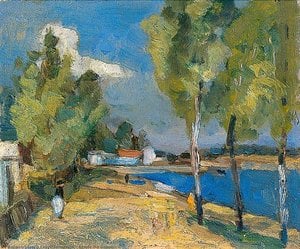
In the latter decades of her life, Somerville found her spiritual and creative home in Aldeburgh, Suffolk. It was here, amidst the salt marshes and coastal breezes, that she truly flourished as an Impressionist. Her style became a beautiful dialogue between the traditions of British masters like Constable and the vibrant, sensory explorations of French Impressionists such as Bonnard. She possessed a rare ability to capture the ephemeral—the way sunlight dances across a summer beach or the delicate translucency of a petal in a still life. Her brushwork, often loose and vigorous, breathed life into her subjects, whether they were the sweeping vistas of the Suffolk coast or the intimate, colorful abundance of her floral arrangements.
Artistic Mastery and Enduring Significance
The technical brilliance of Peggy Somerville lies in her ability to balance movement with serenity. Her works, ranging from spirited oils to delicate pastels and watercolors, share a common thread of unpretentious beauty. She did not seek to overwhelm the viewer with complexity, but rather to invite them into a moment of pure perception. In pieces such as Summer, one can feel the warmth of the sun and the rhythmic movement of the tide, while her still lifes, like Strawberries, radiate a Post-Impressionist vitality through their use of light and saturated color.
Though her national reputation experienced periods of quietude following her early fame, the rediscovery of her work by art historians has ensured that her contribution to British Impressionism remains vital. Her legacy is defined by several key artistic pillars:
- Innate Vision: A rare, lifelong connection to the medium that began in early childhood.
- Impressionistic Spirit: A masterful command of light and atmosphere, heavily influenced by the French masters.
- Regional Connection: An enduring devotion to the landscapes of Suffolk and Aldeburgh, which provided her most profound subject matter.
- Versatility: The ability to move seamlessly between the delicate precision of watercolor and the textured energy of oil painting.
Peggy Somerville remains a singular figure—a painter who survived the pressures of early stardom to cultivate a mature, soulful body of work that continues to resonate with anyone who finds beauty in the fleeting moments of the natural world.