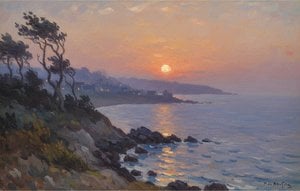
Maxime Emile Louis Maufra: Un Pittore di Luce e Atmosfera
Maxime Emile Louis Maufra (1861 – 1918) si erge come una figura di spicco nella pittura di paesaggio francese, celebre in particolare per la sua magistrale rappresentazione delle vedute costiere bretoni e delle scene marine. Nato a Nantes il 17 maggio, intraprese un percorso artistico in gran parte autodidatta, nutrito dall'incoraggiamento di colleghi artisti di Nantes — Charles Leduc e Alfred Leduc — e influenzato dallo stile espressivo di Charles Le Roux. I suoi anni formativi gli infondevano un profondo apprezzamento per l'osservazione e il dettaglio meticoloso, plasmando il suo approccio distintivo nel catturare l'essenza stessa della natura.- Giovinezza e Formazione: Le prime inclinazioni artistiche di Maufra sbocciarono durante l'adolescassa, alimentate da un'innata curiosità verso la rappresentazione visiva. Nonostante la mancanza di una formazione accademica formale, affinò le sue abilità attraverso la sperimentazione indipendente e il coinvolgimento nel vibrante ambiente artistico di Nantes.
- Influenze e Stile Artistico: La sensibilità estetica di Maufra fu profondamente influenzata dall'Impressionismo e dal Simbolismo. Ammirava in particolare la tecnica puntinista sostenuta da Georges Seurat e Camille Pissarro, adottandone il metodo per ottenere effetti luminosi e sfumature materiche. Inoltre, trasse ispirazione dalle audaci tavolozze cromatiche e dalle pennellate dinamiche della Scuola di Pont-Aven, affermandosi come un contributore chiave di questo influente movimento.
Il Paesaggio Bretone: Un Santuario per la Visione Artistica
Il focus artistico di Maufra si consolidò nel 1890, quando si trasferì a Pont-Aven, in Bretagna — una regione che sarebbe diventata sinonimo della sua opera. Questa decisione cruciale coincise con l'arrivo di altri artisti come Paul Gauguin e Paul Sérusier al Bateau-Lavoir, favorendo un ambiente collaborativo propizio alla sperimentazione e all'innovazione. La selvaggia costa bretone funse da fonte inesauribile di ispirazione per le tele di Maufra — studi di cieli drammatici, paesaggi marini turbolenti e porti sereni — ognuno intriso di un'emozione palpabile e di profondità atmosferica. Opere notevoli includono “La Houle à Donant Belle Ile en Mer” (189amento) e “La Grande Houle à Donant (Belle île)” (1898), che esemplificano la sua capacità di trasmettere la sublime grandezza del mondo naturale.Tecnica e Innovazione: Il Puntinismo e Oltre
La tecnica artistica di Maufra era caratterizzata da un impegno deliberato nel catturare la luce e il colore con una precisione senza pari. Egli abbracciò il metodo puntinista — sviluppato da Seurat e Sisley — impiegando minuscoli punti di pigmento per costruire variazioni tonali e creare superfici vibranti. Questo approccio richiedeva un'attenzione meticolosa al dettaglio, ma produceva risultati mozzafiato, a testimonianza della costante dedizione di Maufra nel padroneggiare la sua arte. Oltre al puntinismo, utilizzò abilmente tecniche di velatura e pennellate espressive per infondere ai suoi dipinti dinamismo e risonanza emotiva.Grandi Traguardi ed Eredità
Nel corso della sua prolifica carriera, Maufra produsse un corpus di opere impressionante — oltre 300 dipinti — che continuano a affascinare il pubblico di tutto il mondo. I suoi paesaggi sono celebrati per la loro bellezza evocativa e la magistrale resa delle condizioni atmosferiche, consolidando il suo posto tra i più importanti pittori della fine del XIX secolo. “Studio per il Cielo Rosso di Pont-Aven (Titolo Precedente: L)” rimane una pietra miliare della storia dell'arte bretone, conservata al Musée de Pont-Aven — un toccante promemoria del contributo duraturo di Maufra all'estetica impressionista e simbolista. La sua eredità si estende oltre la sua produzione artistica; egli sostenne il Bateau-Lavoir come rifugio per gli artisti e favorì uno spirito di collaborazione creativa che plasmò il panorama culturale di Montmartre. L'arte di Maxime Emile Louis Maufra continua a ispirare ammirazione per la sua bellezza luminosa e il profondo legame con il mondo naturale.Domande e risposte
In quale periodo storico ha operato Maxime Maufra?
Maxime Maufra ha operato nel periodo XIX secolo. Tale epoca colloca storicamente l'attività dell'artista.
Dove posso vedere le opere di Maxime Maufra in una galleria 3D?
La Museo 3D di Maxime Maufra è una pagina che presenta le opere dell'artista all'interno di una galleria virtuale tridimensionale.
Esiste un elenco completo delle opere di Maxime Maufra?
Ogni opera di Maxime Maufra su questo sito può essere consultata nella pagina Tutte le opere d'arte dell'artista.