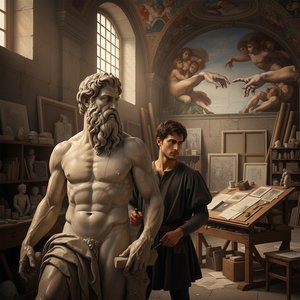
L'Architetto Silenzioso dell'Eredità di Michelangelo
Nel panorama vibrante e spesso turbolento della Roma di metà Cinquecento, certi nomi risuonano con la forza tuonante della creazione, mentre altri abitano lo spazio delicato ed essenziale del raffinamento. Marcello Venusti appartiene a questa profonda seconda categoria: un pittore le cui mani lavorarono all'ombra dei giganti, ma la cui visione possedeva una grazia correttiva singolare. Nato vicino a Como, nelle aspre terre di Mazzo di Valtellina intorno al 1512, Venusti emerse dalle pendici italiane per diventare un condotto vitale per l'estetica manierista. Il suo percorso fu fatto di un profondo apprendistato e di un'assimilazione intellettuale, plasmato significativamente dalla sua formazione precoce sotto l'estimato Perino del Vaga. Questo legame formativo lo ancorò alle sofisticate correnti stilistiche di Roma, preparandolo a tradurre il linguaggio monumentale del Rinascimento maturo nel vocabolario più stilizzato, allungato ed emotivo del Manierismo.
L'importanza storica di Venusti è indissolubilmente legata al suo straordinario rapporto con le opere di Michelangelo Buonarroti. Mentre molti artisti della sua epoca cercavano solo di imitare i maestri, Venusti agì come un ponte meticoloso tra visione e realtà. Il suo traguardo più celebre rimane la copia a olio in scala del Giudizio Universale, commissionata dal Cardinale Alessandro Farnese. Non si trattava di una mera riproduzione; era un impegno erudito completato durante la vita dello stesso Michelangelo e, cosa cruciale, con il suo esplicito approvazione. Attraverso quest'opera, Venusti catturò un momento fugace della storia dell'arte, preservando la purezza cruda e muscolare degli affreschi della Cappella Sistina prima che le successive e più conservative aggiunte di drappeggi ne alterassero l'impatto originale. In questo modo, divenne uno storico accidentale, offrendo agli studiosi moderni la finestra più accurata sulla maestosità non adornata del capolavoro tardo di Michelangelo.
Una Maestria di Devozione e Dettaglio
Al di là del suo ruolo di fedele interprete di Michelangelo, l'opera indipendente di Venusti rivela un artista profondamente impegnato con le esigenze spirituali e drammatiche delle commissioni ecclesiastiche romane. La sua pennellata navigava spesso la tensione tra il rigore anatomico della sua formazione e l'elegante, talvolta artificiale, grazia caratteristica del movimento manierista. In opere come il Cristo nel Giardino, conservato nella Galleria Doria Pamphilj, si osserva una profonda capacità di evocare profondità psicologica attraverso la luce e la forma. Egli non dipingeva semplicemente figure; orchestrava scene di intenso peso teologico, lavorando spesso su disegni forniti dallo stesso Michelangelo, come la sua Annunciazione per la chiesa di Santa Maria della Pace o il Cristo che porta la Croce presente in Palazzo Borghese.
L'ampiezza dei contributi di Venusti al panorama romano è testimoniata dalla varietà dei suoi soggetti sacri:
- Narrazioni Bibliche: La sua capacità di rendere scene complesse come la Sacra Famiglia e il Cristo che scaccia i mercanti dal Tempio dimostra un dominio sia della composizione su grande scala che dell'intima emozione umana.
- Pale d'Altare Ecclesiastiche: Venusti era una mano ricercata per le chiese romane, decorando spazi come Santa Maria sopra Minerva con raffigurazioni del Cristo Risorto e contribuendo alla Cappella di San Giacomo Apostolo.
- Raffinatezza Stilistica: Il suo talento risiedeva nelle sue "correzioni silenziose", in cui rettificava sottilmente le discrepanze di scala tra le figure, assicurando che, anche seguendo il disegno di un maestro, la composizione finale raggiungesse una realtà armoniosa e bilanciata.
Riflettendo sulla vita di Marcello Venusti, vediamo un artista che ha trovato la grandezza non oscurando i suoi predecessori, ma illuminandoli. Fu un pittore di precisione e un custode della bellezza, assicurando che le visioni monumentali del Rinascimento fossero preservate, raffinate e tramandate alle generazioni future con incrollabile fedeltà.
Domande e risposte
Posso sfogliare le opere di Marcello Venusti in base alla palette di colori?
La pagina Per palette di colori raggruppa le opere di Marcello Venusti in base alle loro palette di colori.
Posso ordinare le opere di Marcello Venusti per colore?
La pagina Indice dei colori di Marcello Venusti organizza le opere dell'artista in base al colore.
È disponibile un elenco completo delle opere di Marcello Venusti?
Tutte le opere di Marcello Venusti presenti su questo sito web sono consultabili nella pagina Tutte le opere dell'artista.