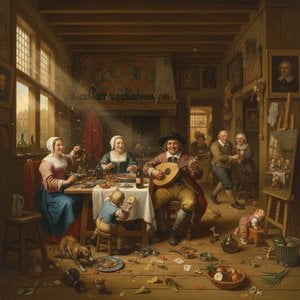
Il Visionario dell'Età dell'Oro Olandese
Jan Baptist Weenix si staglia come una figura singolare all'interno dell'Età dell'Oro olandese, celebrato per la sua distintiva fusione di meticolosa osservazione e visione immaginativa. Sebbene la sua produzione artistica sia stata relativamente modesta rispetto a contemporanei come Rembrandt o Vermeer, il contributo di Weenix alla storia dell'arte olandese è innegabile, in particolare per la sua pionieristica esplorazione dei paesaggi italiani infusi di figure umane, stabilendo un precedente stilistico che avrebbe risuonato attraverso le generazioni successive. Nato ad Amsterdam nel 1621, nei pressi del vivace porto, Weenix discendeva da una famiglia di architetti, un lignaggio che probabilmente ha plasmato i suoi anni formativi nel pieno del fermento intellettuale e strutturale dell'epoca.
Nonostante le sfide personali — alcune testimonianze suggeriscono che avesse difficoltà nell'esprimersi a causa di una condizione medica — Weenix possedeva un ardente amore per la letteratura e l'arte, coltivato da una madre che si occupò con lungimiranza di farlo apprendere sotto la guida di Jan Micker, cognato di Rembrandt. Questa formazione precoce gli instillò un approccio disciplinato al disegno e all'osservazione, che sarebbero diventati i tratti distintivi della sua opera. Perfezionò ulteriormente le sue abilità a Utrecht, sotto la guida di Abraham Bloemaert, e tornò ad Amsterdam per studiare con Claes Corneliszoon Moeyaert, consolidando le sue basi nelle correnti artistiche prevalenti dei Paesi Bassi.
Un Viaggio tra Luce e Paesaggio
La traiettoria della carriera di Weenix fu profondamente alterata dai suoi viaggi, in particolare dal suo soggiorno a Roma nel 1643 insieme a Nicolaes Pieterszoon Berchem. Questa escursione gli permise di incontrare il vibrante ambiente intellettuale e artistico della gilda dei Bentvueghels, un'esperienza che lo spinse verso una gamma stilistica più ampia. A Roma, abbracciò lo stile italianizzante, caratterizzato da una luce calda e dorata e da paesaggi classici che contrastavano magnificamente con le tonalità più fredde e sobrie della pittura olandese tradizionale. Questo periodo di influenza romana gli permise di padroneggiare l'arte del "paesaggio italianizzante", dove la bellezza selvaggia dell'Europa meridionale veniva reinterpretata attraverso una lente nord-europea.
Le sue opere durante questo periodo fondevano spesso la grandezza delle ambientazioni classiche con elementi umani intimi. Che stesse ritraendo scene portuali che sussurravano di commercio marittimo o ampie vedute che evocavano un senso di atemporalità, Weenix possedeva una capacità unica di catturare l'atmosfera di un luogo. La sua maestria non si limitava ai vasti orizzonti; era altrettanto abile nel catturare la realtà silenziosa e spesso viscerale della vita attraverso le sue nature morte. Le sue raffigurazioni di selvaggina e animali erano segnate da un realismo sorprendente, in cui ogni consistenza — dalla ruvida pelliccia di un cane da caccia alla delicata lucentezza delle piume — veniva resa con una precisione mozzafiato.
L'Eredità del Realismo e dell'Arte
Il significato di Jan Baptist Weenix risiede nella sua capacità di colmare il divario tra il crudo realismo della tradizione olandese e la bellezza idealizzata del movimento italianizzante. La sua versatilità gli permise di navigare tra soggetti diversi, dalla tensione drammatica presente in opere come Dopo la caccia all'intensità silenziosa e quasi cupa dei suoi studi animali. Attraverso il suo pennello, lo spettatore è invitato in un mondo in cui i confini tra il mondo naturale osservato e il passato classico immaginato si sfumano magnificamente.
Riflettendo sulla sua vita e sulla sua opera, diversi elementi chiave ne definiscono l'eterna importanza:
- Innovazione Stilistica: Fu un pioniere nell'integrare elementi del paesaggio italianizzante nella tradizione olandese, creando un nuovo linguaggio visivo per i suoi contemporanei.
- Maestria Tecnica: La sua formazione disciplinata permise un livello straordinario di dettaglio sia nei paesaggi su larga scala che nelle intime nature morte.
- Versatilità: La sua capacità di muoversi senza soluzione di continuità tra scene portuali, motivi venatori e ritratti animali dimostra una rara ampiezza di talento.
- Impatto Storico: Come membro dei Bentvueghels, contribuì a favorire lo scambio internazionale di idee artistiche che definirono il mondo dell'arte del XVII secolo.
Sebbene la sua vita sia stata relativamente breve, concludendosi nel 1661, l'impronta lasciata da Jan Baptist Weenix rimane visibile nell'evoluzione della pittura di paesaggio. Egli ha insegnato alle generazioni future come guardare l'orizzonte non solo come un limite, ma come una tela per la luce, la storia e l'emozione umana.
Domande e risposte
Esiste una linea del tempo delle opere di Jan Baptist Weenix?
La pagina Cronologia opere dell'artista presenta le opere di Jan Baptist Weenix ordinate per data, anno dopo anno.
Quali sono il luogo e l'anno di nascita di Jan Baptist Weenix?
Jan Baptist Weenix è nato a Amsterdam nel 1621.
Come posso vedere tutte le opere realizzate da Jan Baptist Weenix?
Ogni opera di Jan Baptist Weenix su questo sito può essere consultata nella pagina Tutte le opere d'arte dell'artista.