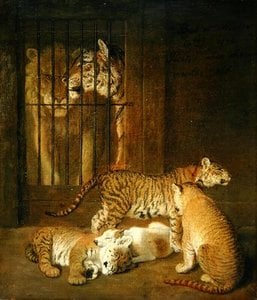
Jacques Laurent Agasse: A Pioneer of Animal Painting
Jacques Laurent Agasse (1767-1849) stands as a singular figure in the annals of Swiss art history, celebrated primarily for his unparalleled dedication to capturing the essence of equine anatomy and portraying animals with breathtaking realism. Born in Geneva amidst the burgeoning Enlightenment, Agasse’s artistic journey began with formal training at the École des Beaux-Arts de Genève, establishing him firmly within the classical tradition. However, his ambition extended far beyond Switzerland's borders; recognizing the transformative potential of Parisian influence, he embarked on a formative period of study at veterinary school, immersing himself in the intricacies of animal physiology and furthering his understanding of musculature—a knowledge that would become foundational to his artistic practice.- Early Life & Education: Agasse’s upbringing instilled in him a profound appreciation for observation and meticulous detail, qualities he would carry throughout his life and translate into his artwork. He possessed an innate curiosity about the natural world, fostering a lifelong fascination with animal behavior and anatomy—a passion that would prove instrumental in shaping his artistic vision.
Notable Achievements & Artistic Style
Agasse’s artistic style is characterized by an unwavering devotion to anatomical realism combined with a masterful command of chiaroscuro—the dramatic interplay of light and shadow—techniques honed during his veterinary studies. He eschewed sentimentality, prioritizing scientific observation over emotional embellishment; instead, he sought to depict animals as they truly existed, conveying their physicality and dynamism with remarkable fidelity. His canvases pulsate with life, imbued with a palpable sense of movement and texture that distinguishes him from many of his contemporaries. The artist’s meticulous attention to detail extended beyond mere anatomical accuracy—he painstakingly rendered textures like fur, muscle fibers, and hoof coverings, creating images that were both scientifically informative and aesthetically compelling. He achieved this remarkable feat by meticulously dissecting animal specimens and studying their musculature under magnification—a practice that profoundly influenced his artistic approach.Major Works & Recognition
Among Agasse's most celebrated paintings are “Portrait Von Philippe Agasse,” a striking depiction of his son showcasing the artist’s exceptional skill in capturing human likeness; "A View In Smithfield," an evocative panorama of a bustling London market scene brimming with horses and people, reflecting Agasse’s fascination with urban life; and “Arab Horse, The Second Sire,” a monumental oil painting demonstrating his unparalleled ability to convey the majesty and power of equine musculature. His work garnered considerable acclaim during his lifetime and continues to inspire admiration for its technical brilliance and artistic integrity. He was recognized as one of Switzerland's most gifted artists—a testament to his unwavering dedication to mastering his craft and translating scientific knowledge into breathtaking visual representations.Legacy & Historical Significance
Jacques Laurent Agasse’s contribution to art history transcends mere stylistic innovation; he represents a pivotal moment in the shift towards scientific observation informing artistic representation. He championed the idea that artists could elevate their craft by grounding it in anatomical knowledge—a concept that foreshadowed developments in later academic painting and influenced generations of animal artists. His unwavering dedication to his vocation, coupled with his remarkable talent for capturing the essence of animal life, secures his place as a true visionary—a testament to the transformative power of combining artistic passion with scientific rigor. He remains an enduring symbol of intellectual curiosity and artistic excellence—a figure whose legacy continues to resonate within the annals of Swiss art history.Domande e risposte
Esiste una cronologia della carriera di Jacques Laurent Agasse?
Un resoconto cronologico delle opere di Jacques Laurent Agasse è disponibile nella pagina Cronologia artistica dell'artista, dove le opere sono presentate in ordine di creazione, capitolo dopo capitolo.
Posso sfogliare le opere di Jacques Laurent Agasse per tecnica?
Le opere di Jacques Laurent Agasse possono essere consultate per tecnica nella pagina Per tecnica dell'artista.
Posso esplorare le opere di Jacques Laurent Agasse in base allo spettro dei colori?
La pagina Indice dei colori di Jacques Laurent Agasse organizza le opere dell'artista in base al colore.