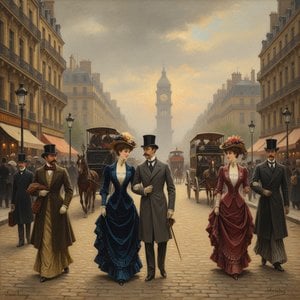
James Jacques Joseph Tissot (1836-1902): Un Visionario Vittoriano tra Realismo e Impressionismo
James Jacques Joseph Tissot, nato il 15 ottobre 1836 a Parigi, in Francia, è stato un pittore prolifico la cui carriera si è estesa per decenni, consolidando il suo posto come uno degli artisti più celebrati dell'era vittoriana. Sebbene inizialmente si fosse formato come architetto, Tissot abbandonò rapidamente questa strada per lasciarsi al fascino avvolgente della pittura, dedicandosi a catturare la grandezza e le complessità della società parigina insieme a profonde narrazioni bibliche. Il suo stile distintivo—una magistrale fusione di realismo e tecniche impressioniste—continua a affascinare storici dell'arte e collezionisti allo stesso modo.- Gli anni della formazione e l'addestramento artistico:
Gli anni formativi di Tissot furono segnati da un'educazione privilegiata all'interno di una famiglia facoltosa, che gli permise di accedere a un'eccezionale istruzione artistica. Studiò architettura presso l'École Polytechnique prima di passare al disegno sotto la guida di Alexandre Cabanel e Jean-Léon Gérôme, assorbendo le influenze stilistiche del realismo accademico prevalente nel suo tempo. Queste esperienze fondamentali gli trasmisero un'attenzione meticolosa al dettaglio e un approccio disciplinato alla composizione, tratti che avrebbero caratterizzato l'intera sua opera. - Parigi Vittoriana e il Ritratto Sociale:
Il grande successo artistico di Tissot arrivò con le sue rappresentazioni della vita parigina durante la Belle Époque. Egli documentò meticolosamente scene provenienti da teatri, opere e incontri mondani, catturando non solo lo splendore visivo ma anche le sottili sfatiature del comportamento sociale. Le sue tele—come “Il cappello di Rubens” e “Il tè”—diventarono rappresentazioni iconiche dell'eleganza e della raffinatezza vittoriana, riflettendo le ansie e le aspirazioni di una società in rapido mutamento. - Narrazioni Bibliche e Composizione Drammatica:
Oltre ai paesaggi urbani, Tissot eccelse nel ritrarre storie bibliche con una straordinaria teatralità. Approcciò queste narrazioni con un impegno incrollabile verso l'accuratezza storica, combinato con una pennellata espressiva—caratteristica distintiva dell'Impressionismo—creando immagini emotivamente risonanti che catturavano il pubblico. Opere notevoli includono “Il ritrovamento del Sacro Graal” e “L'Ultima Cena”, che dimostrano la sua capacità di trasmettere profondità spirituale insieme a dinamismo visivo. - Tecnica ed Evoluzione Artistica:
La tecnica artistica di Tissot si evolse considerevolmente nel corso della sua carriera. Inizialmente favorendo il realismo accademico, abbracciò gradualmente le influenze impressioniste, sperimentando con pennellate più libere e catturando momenti fugaci di luce e colore. Questo spostamento stilistico gli permise di infondere nei suoi dipinti un senso palpabile di atmosfera ed emozione, allontanandosi dalla staticità formale delle sue opere precedenti. - Eredità e Significato Storico:
Jacques Joseph Tissot morì l'8 agosto 1902, lasciando dietro di sé un impressionante corpo di opere che continua a ispirare ammirazione. I suoi dipinti sono custoditi in importanti musei di tutto il mondo, tra cui la Bibliothèque Nationale Centrale e il Getty Museum, testimonianza della sua duratura eredità artistica. Più che limitarsi a documentare la sua epoca, Tissot elevò la pittura a una forma di narrazione: una potente fusione di osservazione e immaginazione che ha consolidato la sua posizione come uno degli artisti più influenti del periodo vittoriano.
Ulteriori Approfondimenti
È possibile approfondire il viaggio artistico di Tissot visitando queste risorse:- James Tissot - Wikipedia: https://en.wikipedia.org/wiki/James_Tissot
- Jacques Joseph Tissot - Getty Museum: https://www.getty.edu/art/collection/person/103KY1
- Jacques Joseph Tissot: Una cronaca della vita parigina e dell'evoluzione narrativa: /en/articles/jacques-joseph-tissot-a-chronicle-of-parisian-life-narrative-evolution-en/
- James Tissot (1836-1902), Ambiguamente moderno | Musée d’Orsay: https://www.musee-orsay.fr/en/whats-on/exhibitions/presentation/james-tissot-1836-1902-ambiguously-modern
Domande e risposte
È disponibile un tour virtuale 3D delle opere di Jacques Joseph Tissot?
È possibile effettuare una visita virtuale: la pagina Museo 3D di Jacques Joseph Tissot presenta le opere dell'artista in una galleria tridimensionale.
Dove si trovano le opere di Jacques Joseph Tissot raggruppate per parole chiave?
Le opere di Jacques Joseph Tissot possono essere esplorate tramite parole chiave nella pagina Per parole chiave dell'artista. Ogni parola chiave raggruppa le opere correlate.
Posso sfogliare le opere di Jacques Joseph Tissot per tecnica?
Le opere di Jacques Joseph Tissot possono essere consultate per tecnica nella pagina Tutti i media dell'artista.