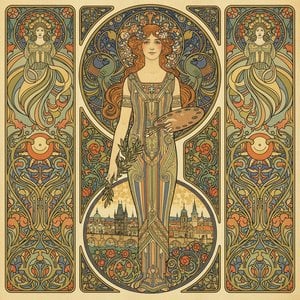
L'Architetto dell'Identità Ucraina
Heorhiy Ivanovych Narbut si erge come una figura monumentale negli annali della storia dell'arte, in particolare nel regno del graphic design. Più che un semplice artigiano della comunicazione visiva, egli fu senza dubbio il designer più influente dell'Ucraina per la sua epoca e per le generazioni a venire, plasmando il linguaggio visivo della nazione durante la sua tumultuosa ricerca di indipendenza. Nato nel 1886 a Narbutivka, vicino a Hlukhiv, Narbut discendeva dall'antica nobiltà lituana, un retaggio che coltivò in lui un profondo apprezzamento per la tradizione e la continuità storica, influenze che avrebbero profondamente informato la sua visione artistica.
Il suo percorso fu fatto di autodiscoperta e di rigorosa ricerca accademica. Sebbene le sue prime esplorazioni artistiche fossero in gran parte autodidatte, successivamente cercò una formazione formale a San Pietroburgo tra il 1906 e il 1917. Sotto la tutela di stimati pittori come Ivan Bilibin e Mikhail Dobuzhinsky, Narbut affinò una precisione che sarebbe diventata il suo marchio di fabbrica. Questo periodo lo espose anche alle correnti d'avanguardia dell'arte russa, in particolare al movimento Acmeista, che enfatizzava la chiarezza e l'immagine tangibile rispetto alle nebulose astrazioni del Simbolismo. Il suo repertorio artistico fu ulteriormente arricchito da un breve ma trasformativo soggiorno presso la Scuola di Simon Hollósy a Monaco nel 1909, dove assorbì le linee fluide, le forme organiche e l'opulenta ornamentazione caratteristiche dell'Art Nouveau.
Un Visionario del Modernismo Grafico
Il trasferimento di Narbut a Kyiv nel 1917 coincise con la nascita di una nuova era per la Repubblica Nazionale Ucraina. Fu durante questi anni cruciali che il suo talento confluì nella necessità nazionale, permettendogli di creare un marchio visivo contemporaneo per uno stato appena indipendente. Egli divenne un maestro nella sintesi di stili diversi, fondendo l'eleganza decorativa dell'Art Nouveau con la dignità strutturata del Neoclassicismo, per forgiare un'estetica unica che appariva allo stesso tempo antica e moderna.
I suoi contributi non furono meramente estetici, ma fondamentali per le infrastrutture di una nazione. Il suo lavoro abbracciò una varietà sbalorditiva di media, tra cui:
- Simboli di Stato: Gli viene attribuito con particolare celebrità il disegno dello Stemma dell'Ucraina, un simbolo che rimane un'icona duratura della sovranità.
- Valuta e Commercio: Narbut progettò le prime banconote della nazione, come i 100 karbovanets, e vari francobolli, infondendo arte alta negli oggetti di uso quotidiano.
- Tipografia e Illustrazione: Attraverso il suo lavoro sull'album dell'alfabeto ucraino e numerose illustrazioni librarie, portò un linguaggio grafico sofisticato alla parola stampata.
- Periodici: Le sue straordinarie xilografie, come la copertina della rivista Art, mostrarono la sua capacità di utilizzare immagini audaci e caratteri tradizionali per catturare lo zeitgeist culturale.
Eredità e Influenza Duratura
Tragicamente, la vita di Narbut fu interrotta dal tifo nel 1920, all'età di soli trentaquattro anni. Nonostante la sua breve carriera, l'impatimento del suo lavoro fu sismico. Egli non si limitò a decorare; costruì un'identità visiva che fornì un senso di permanenza e dignità a una nazione in mutamento. La sua capacità di intrecciare motivi popolari in design moderni e sofisticati assicurò che la cultura ucraina potesse partecipare al dialogo modernista globale senza perdere la propria anima unica.
Oggi, Narbut è ricordato come un brillante graphic designer del modernismo ucraino la cui influenza si estende ben oltre la sua epoca. La precisione delle sue linee e la forza delle sue composizioni continuano a ispirare designer e storici allo stesso modo. La sua eredità vive in ogni francobollo, banconota ed emblema che porta l'impronta inconfondibile della sua mano visionaria, fungendo da testimonianza di un artista che ha veramente contribuito a disegnare il volto di una nazione.
Domande e risposte
In quale città e in quale paese è nato/a Heorhiy Narbut?
Heorhiy Narbut è nato a Kharkiv, in Ucraina.
Quali opere di Heorhiy Narbut sono le più visualizzate?
Le statistiche relative alle opere di Heorhiy Narbut sono disponibili nella pagina Statistiche dell'artista.
Posso esplorare le opere di Heorhiy Narbut in base allo spettro dei colori?
Le opere di Heorhiy Narbut possono essere esplorate per colore nella pagina Indice Spettrale dell'artista.