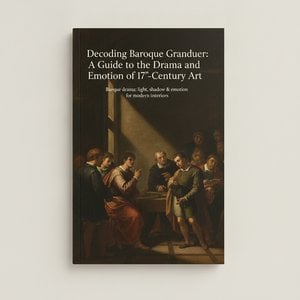
Gerard Douffet: A Master of Light and Detail in the Dutch Golden Age
Gerard Douffet (6 August 1594 – 1660/1661), also known as Doufeet or Duffeit, was a Flemish painter born at Liège in Belgium. His artistic journey began amidst the flourishing Mannerist traditions of Jean Taulier, shaping his early style and establishing him within the influential Antwerp School of Rubens. Subsequent studies in Italy further enriched his understanding of Renaissance ideals and techniques, propelling him towards a distinctive Baroque aesthetic characterized by unparalleled realism and dramatic chiaroscuro—a hallmark of Dutch Golden Age art.
Early Life and Training
Douffet’s formative years were spent honing his skills under the tutelage of Rubens and other masters in Antwerp, immersing himself in the vibrant artistic milieu of the era. This exposure instilled a profound appreciation for observation and meticulous rendering, principles that would permeate his entire oeuvre. His dedication to anatomical accuracy and masterful use of light—a technique known as tenebrism—became defining features of his distinctive style. Rubens’s influence was paramount; Douffet absorbed the grandeur and emotional intensity of Rubens's monumental canvases, mastering the expressive power of color and composition while simultaneously cultivating a meticulous attention to detail.
Notable Works and Artistic Style
Douffet’s artistic reputation rests upon a remarkable body of work encompassing portraits, historical paintings, and genre scenes. Among his most celebrated achievements are ‘Pope Nicholas V. at the Tomb of St. Francis of Assisi,’ a monumental depiction capturing the solemn grandeur of papal piety; ‘St. Helena and the True Cross,’ commissioned for the Abbey Saint Lawrence in Liège—a testament to religious devotion rendered with breathtaking detail; and two striking male portraits, one dated 1624, showcasing his ability to convey psychological nuance alongside technical brilliance. These paintings exemplify Douffet’s mastery of chiaroscuro, skillfully manipulating light and shadow to create dramatic effects and heighten emotional impact. His meticulous attention to texture and surface qualities—particularly in depictions of fabrics—further cemented his position as a pioneer of realism within the Baroque tradition. He achieved this remarkable level of detail through painstaking layering of glazes and impasto techniques, creating surfaces that seemed to shimmer with life and luminosity.
Influences and Legacy
Douffet’s artistic vision was undeniably shaped by Caravaggio’s revolutionary approach to illumination and theatrical staging, which he skillfully adopted and adapted for the Dutch context. However, Douffet transcended mere imitation, forging his own path toward a uniquely expressive style that resonated deeply with contemporaries and continues to inspire artists today. His influence extended beyond technique; he championed an ideal of humanist observation—a commitment to capturing the human condition with unflinching honesty and sensitivity—that aligns perfectly with the broader intellectual currents of the Baroque period. He was recognized as one of the foremost painters of his time, securing commissions from prominent patrons and establishing himself as a leading figure in Antwerp’s artistic community.
Recognition and Historical Significance
Douffet’s paintings are housed in prestigious institutions such as the Munich Gallery, where ‘Pope Nicholas V.’ and ‘St. Helena and the True Cross’ stand as enduring symbols of artistic excellence. His contribution to Dutch art history is undeniable—he represents a pivotal figure bridging Late Medieval tradition with Early Renaissance humanism—a testament to the transformative power of artistic innovation and unwavering dedication to craft. Gerard Douffet's legacy persists in the appreciation for light, detail, and psychological realism that characterizes Baroque painting and continues to captivate audiences worldwide.