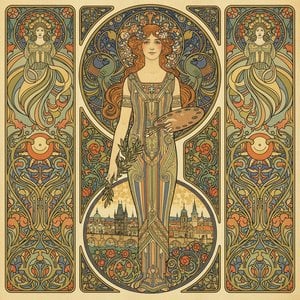
L'Architetto dell'Affiche Americana
Nel panorama vibrante e in piena espansione dell'America di fine Ottocento, un nuovo linguaggio visivo veniva scritto tra le strade e nelle pagine delle riviste più prestigiose della nazione. Al cuore di questa rivoluzione si stagliava Edward Penfield, un artista il cui nome è diventato sinonimo della nascita del moderno graphic design. Spesso venerato come “il padre dell'affiche americana”, Penfield possedello una capacità singolare di distillare emozioni complesse e narrazioni sociali in forme d'impatto e semplificate. La sua opera non si limitava a decorare; essa comunicava, colmando il divario tra le belle arti e i mass media con un'eleganza capace di catturare l'essenza stessa dell'Età dell'Oro dell'illustrazione.
Nato il 2 giugno 1866 a Brooklyn, New York, Penfield era destinato a una vita plasmata dalla precisione estetica. Figlio di Josiah B. Penfield, un rispettato architetto, questo legame familiare con il design strutturale gli infuse probabilmente una precoce maestria nelle relazioni spaziali e nell'equilibrio compositivo. La sua formazione accademica presso la prestigiosa Art Students League di New York lo mise in contatto con i mentori più influenti dell'epoca, tra cui George de Forest Brush. Fu proprio durante questi anni formativi che Penfield iniziò ad allontanarsi dal denso realismo accademico dei suoi predecessori, guardando invece verso un futuro più lineare, dove contorni audaci e sfondi essenziali potessero catturare l'attenzione dello spettatore in mezzo al caos urbano.
Un Maestro della Pagina Stampata
L'apice della carriera di Penfield fu raggiunto attraverso il suo rapporto trasformativo con la rivista Harper’s Magazine. Ricoprendo il ruolo di Direttore Artistico della pubblicazione, egli sfruttò i progressi della tecnologia di stampa a colori per creare una serie di manifesti mensili che divennero veri e propri punti di riferimento culturali. A differenza delle volute eccessivamente ornate del movimento europeo dell'Art Nouveau, visibili nelle opere di contemporanei come Will Bradley, Penfield sviluppò un'estetica più misurata e unicamente americana. Trasse una profonda ispirazione dalle campiture piatte e dalle silhouette decise delle stampe giapponesi su legno, così come dalle composizioni magistrali di maestri francesi quali Henri de Toulouse-l'Autre e Jules Chéret.
Il suo stile distintivo — caratterizzato da una deliberata riduzione del dettaglio e da un uso assertivo del tratto — permetteva ai suoi soggetti di risuonare con immediata chiarezza. Che ritraesse un gentiluomo assorto in una tranquilla contemplazione in "Harper's August" o catturasse l'energia ritmica di una carrozza trainata da cavalli in "Heller ^ Bachrach", l'opera di Penfield incarnava un senso di raffinato ozio e vitalità moderna. La sua capacità di sintetizzare diverse influenze stilistiche in un marchio coeso e accessibile per Harper’s contribuì a stabilire la rivista come un'autorità visiva, rendendo i suoi poster non semplici annunci pubblicitari, ma opere d'arte da collezione che adornavano le pareti delle case in tutto il paese.
Eredità e Influenza Duratura
Sebbene il suo incarico presso Harper's si sia concluso nel 1901, l'impulso creativo di Penfield non venne mai meno. Continuò a plasmare il panorama visivo attraverso un lavoro prolifico per altre importanti testate come Scribner's e Collier's, oltre a progettare copertine per numerosi libri e pubblicità commerciali. La sua influenza si estese ben oltre la pagina stampata, lasciando un segno indelebile nell'evoluzione del design grafico. Dimostrando che la semplicità poteva essere più potente della complessità, egli aprì la strada ai movimenti minimalisti del XX secolo.
Oggi, l'importanza di Edward Penfield risiede nel suo ruolo di pioniere che ha democratizzato l'arte. Attraverso i suoi manifesti, l'arte alta non era più confinata nelle silenziose gallerie dei musei, ma veniva portata direttamente agli occhi del pubblico, integrandosi nel tessuto stesso della vita quotidiana. La sua eredità rimane visibile in ogni design moderno che dia priorità alla chiarezza, all'impatto e alla bellezza della linea essenziale.
Domande e risposte
Posso sfogliare le opere di Edward Penfield in base all'umore?
La pagina Spazi d'atmosfera dell'artista presenta le opere di Edward Penfield suddivise per atmosfera.
Dove posso esplorare le opere di Edward Penfield suddivise per soggetto?
L'Catalogo per soggetti di Edward Penfield è una pagina che organizza le opere dell'artista in base ai loro soggetti.
In quale città e in quale paese è nato/a Edward Penfield?
Edward Penfield è nato a Brooklyn, in Stati Uniti d'America.