L'eredità vibrante di Edward Atkinson Hornel
Edward Atkinson Hornel si staglia come una figura luminosa nel mosaico dell'arte scozzese della tarda epoca vittoriana e dei primi del Novecento, un pittore il cui pennello ha saputo catturare la delicata intersezione tra natura e cultura. Sebbene il suo viaggio sia iniziato a Bacchus Marsh, nel Victoria, in Australia, la sua anima era profondamente radicata nella bellezza selvaggia della Scozia. Dopo il ritorno della sua famiglia a Kirkcudbright nel 1866, l'identità artistica di Hornel iniziò aな consolidarsi attraverso un rigoroso percorso formativo presso la Edinburgh Art School e successivamente ad Anversa, sotto la guida del Professor Verlat. Questo periodo fondamentale gli trasmise un profondo rispetto per la precisione botanica e l'integritamente strutturale del paesaggio, elementi che sarebbero rimasti centrali anche quando il suo stile si sarebbe evoluto verso forme più sperimentali e atmosferiche.
Al suo ritorno in Scozia nel 1885, Hornel trovò un'anima affine in George Henry, una partnership che sarebbe diventata uno dei pilastri dell'influente movimento dei Glasgow Boys. Insieme, cercarono di distaccarsi dalle stantii tradizioni accademiche dell'epoca, favorendo invece un approccio audace ed espressivo al colore e alla consistenza materica. Il loro capolavoro collaborativo, “Druids Bringing In The Mistletoe” (1890), funge da testimonianza di questo periodo di radicale sperimentazione. In quest'opera, Hornel dimostrò un'extraordinaria maestria sulla superficie pittorica stessa, utilizzando tecniche come la stratificazione, la raschiatura, la rugosità e la macchiatura per creare una qualità tattile e ritmica che privilegiava la risonanza emotiva e l'effetto espressivo rispetto alla mera accuratezza fotografica.
L'influenza del Japonisme e il raffinamento estetico
Un'epoca trasformativa nella carriera di Hornel giunse tra il 1893 e il 1894, quando lui e Henry intrapresero un viaggio in Giappone. Questa immersione nella cultura nipponica agì da profondo catalizzatore, rimodellando la sua sensibilità artistica attraverso la lente del Japonisme. I principi del design decorativo, le composizioni spaziali bidimensionali e l'uso poetico dello spazio negativo tipici delle stampe giapponesi iniziarono a permeare le sue tele. La sua opera transitò dalle texture pesanti dei primi anni verso un'estetica più raffinata e atmosferica, caratterizzata da palette cromatiche armoniose e un approccio sfumato al disegno.
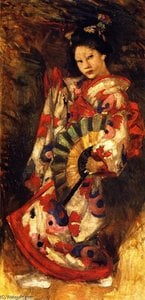
Questo periodo di perfezionamento è magnificamente catturato in opere come “Japanese Figures in a Garden” (1896) e “Dancing Geisha.” In questi dipinti, l'artista va oltre la semplice rappresentazione per evocare un senso di bellezza serena e fugace. Egli impiega magistralmente colori tenui e pennellate delicate per ritrarre gli abiti tradizionali giapponesi e tranquilli giardini, creando scene che appaiono allo stesso tempo intime e ultraterrene. L'influenza dell'Oriente permise a Hornel di fondere la lussureggiante vitalità del paesaggio scozzese con un'eleganza decorativa e sofisticata, rendendo il suo lavoro unicamente riconoscibile all'interno del più ampio movimento impressionista.
Una vita immersa nell'arte e nella tradizione
L'impegno di Hornel verso la sua arte era pari alla sua devozione per la propria casa e la propria comunità. La sua residenza, Broughton House a Kirkcudbright, divenne molto più di un semplice domicilio; era un santuario dove l'architettura e la passione estetica erano inestricabilmente legate. Avendo ristrutturato la dimora nel 1901, visse in uno spazio che rifletteva la sua stessa evoluzione artistica: una fusione tra grandezza vittoriana e un tocco decorativo personale. Nonostante la crescente fama, Hornel rimase un membro dedito del Glasgow Art Club, scegliendo di esporre lì annualmente piuttosto che cercare la validazione formale della Royal Scottish Academy.
Il significato storico di Edward Atkinson Hornel risiede nella sua capacità di colmare il divario tra la pittura di paesaggio tradizionale e gli impulsi decorativi moderni del primo Novecento. La sua eredità è definita da diversi contributi artistici fondamentali:
- Innovazione materica: L'uso pionieristico di tecniche di manipolazione come la raschiatura e la macchiatura per creare superfici espressive e tattili.
- Sintesi culturale: L'integrazione fluida dei principi estetici giapponesi — come l'organizzazione spaziale e l'armonia cromatica — nella tradizione del paesaggio scozzese.
- Il movimento Glasgow Boys: Il suo ruolo nel rivitalizzare l'arte scozzese, allontanandosi dal realismo accademico verso una visione più vibrante e impressionistica.
- Sensibilità botanica: Una dedizione vitale nel catturare l'intricata bellezza della flora e del fogliame con dettaglio scientifico e grazia poetica.
Attraverso le sue evocative rappresentazioni di giardini, fiori e figure, Hornel ha lasciato un corpus di opere che continua ad incantare gli spettatori con il suo senso di pace, movimento ed eterna bellezza.
Domande e risposte
Quali opere di Edward Atkinson Hornel sono le più visualizzate?
La pagina Statistiche di Edward Atkinson Hornel presenta statistiche calcolate a partire dalle opere dell'artista elencate su questo sito.
Quante opere di Edward Atkinson Hornel sono disponibili per la consultazione?
Puoi sfogliare 26 opere d'arte opere di Edward Atkinson Hornel nella pagina Tutte le opere d'arte.
È disponibile un tour virtuale 3D delle opere di Edward Atkinson Hornel?
È possibile effettuare una visita virtuale: la pagina Museo 3D di Edward Atkinson Hornel presenta le opere dell'artista in una galleria tridimensionale.