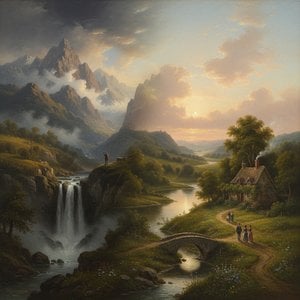
L'Anima del Paesaggio Tedesco: La Vita di August Albert Zimmermann
August Albert Zimmermann si erge come una profonda testimonianza dello spirito duraturo del Romanticismo tedesco, un'epoca in cui la tela divenne una finestra sull'anima umana attraverso il mezzo della natura. Nato nel 1808 a Zittau, in Slesia—una regione che oggi fa parte della Polonia—il viaggio artistico di Zimmermann si è sviluppato sullo sfondo di correnti culturali in mutamento, che privilegiavano l'emozione pura e l'immaginazione senza confini rispetto alle rigide convenzioni accademiche del passato. La sua giovinezza fu profondamente intrecciata con un ricco arazzo familiare di talenti; era infatti fratello dei compiuti pittori Max, Richard e Robert Zimmermann. Questa discendenza condivisa gli fornì una comprensione fondamentale dei principi artistici, eppure fu la sua sensibilità unica verso il sublime a distinguere infine la sua mano da quella dei suoi congiunti.
Sebbene la sua formazione formale abbia compreso prestigiosi studi presso l'Accademia di Belle Arti di Dresda e l'Accademia di Belle Arti di Monaco, il vero genio di Zimmermann emerse attraverso un'esplorazione autodidatta. Possedeva uno spirito inquieto e curioso che cercava l'ispirazione ben oltre i confini stabiliti, permettendogli di coltivare uno stile distintivo caratterizzato da un realismo atmosferico. Questo periodo di sviluppo fu segnato da un intenso studio della luce e dell'ombra, mentre imparava a tradurre le qualità effimere del mondo naturale in permanenti ed evocativi dipinti a olio e delicati acquerelli. La sua capacità di fondere la precisione tecnica con una profonda connessione spirituale con i suoi soggetti gli permise di trascendere la mera rappresentazione, trasformando i paesaggi in profonde esperienze emotive.
La Maestria della Luce e il Sublime Romantico
L'opera di Zimmermann è celebrata principalmente per la sua capacità di catturare sia la grandezza che la quieta tranquillità del paesaggio tedesco, con un focus particolare sui panorami mozzafiato della Baviera. Le sue tele non sono semplici immagini statiche, ma ambienti pulsanti dove colori vibranti e una pennellata magistrale convergono per raccontare una storia del potere della natura. Fu un maestro del chiaroscuro, utilizzando l'interazione drammatica tra luce e ombra per intensificare la profondità atmosferica ed evocare sentimenti di stupore, contemplazione e persino un tocco di malinconia. Attraverso i suoi occhi, una semplice vista montana poteva trasformarsi in un monumentale confronto con l'infinito.
Motivi ricorrenti all'interno del suo lavoro fungono da finestre sulla preoccupazione romantica per il sublime. Uno spettatore potrebbe trovarsi perso tra:
- Vette innevate che evocano la maestosità silenziosa e gelida delle alte Alpi;
- Fiumi impetuosi e cascate che catturano l'energia indomita della natura selvaggia;
- Vaste vedute immerse nel crepuscolo, dove il tenue bagliore del sole calante crea un senso di bellezza fugace e nostalgia;
- Intimi studi naturalistici, come le sue dettagliate rappresentazioni di uccelli quali il Picchio testabianca, che mostrano le sue acute capacità osservative.
Questa dualità—la capacità di muoversi tra la scala epica di un massiccio montuoso e il dettaglio delicato di un singolo ramo—è ciò che definisce la sua eredità tecnica. Che dipingesse la silhouette distante dell'Etna o la quieta immobilità di una scena invernale con raccoglitori di legna, Zimmermann mantenne un impegno incrollabile verso la verità atmosferica.
Eredità e Significato Storico
Con il progredire del XIX secolo, l'opera di Zimmermann divenne una pietra miliare della tradizione del paesaggio romantico. La sua influenza si estese attraverso il suo ruolo di insegnante—servendo notevolmente come mentore per suo fratello Max—e attraverso la sua capacità di catturare il volto mutevole dell'Europa, dai terreni impervi della Germania ai ritmi pastorali della vita rurale. I suoi dipinti fanno molto più che documentare la geografia; essi documentano un'epoca di profonda indagine filosofica sul rapporto tra l'umanità e il mondo naturale.
Oggi, le opere di August Albert Zimmermann continuano a risuonare sia nei collezionisti che negli storici dell'arte. La sua capacità di evocare il sublime—quella specifica miscela di bellezza e terrore che si trova nella grandezza della natura—assicura il suo posto nel canone dei grandi maestri tedeschi. Attraverso la sua maestria della luce, la sua profondità emotiva e la sua incrollabile devozione al paesaggio, Zimmermann ha lasciato un'eredità visiva che continua a invitarci a fermarci, respirare e contemplare la magnifica, e spesso travolgente, bellezza del mondo che ci circonda.
Domande e risposte
Quali colori ha usato più spesso August Albert Zimmermann?
L'uso del colore di August Albert Zimmermann nelle opere elencate su questo sito può essere approfondito consultando la pagina Genoma della Palette dell'artista.
Come posso seguire l'evoluzione dell'opera di August Albert Zimmermann anno dopo anno?
La pagina Cronologia opere dell'artista presenta le opere di August Albert Zimmermann ordinate per data, anno dopo anno.
Dove si trovano le opere di August Albert Zimmermann raggruppate per tecnica?
La pagina Tutti i media raggruppa le opere di August Albert Zimmermann per tecnica.