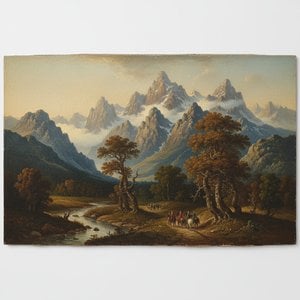
Andreas Rickenbacher: A Landscape Painter Rooted in Tradition
Andreas Rickenbacher’s artistic journey began in Basel, Switzerland, where he honed his skills as a locksmith before discovering the transformative power of painting—a passion ignited in the mid-1980s. Influenced initially by Surrealist masters like Salvador Dali and René Magritte, whose meticulous attention to detail captivated him, Rickenbacher embraced photo realism as his primary artistic approach, guided by training at Basel School of Design. This dedication to precision reflects a broader commitment to mastering craft—a characteristic evident throughout his oeuvre. Early Influences: Dali and Magritte instilled in Rickenbacher an appreciation for meticulous observation and symbolic representation. He was particularly drawn to their ability to convey profound emotions through seemingly simple visual elements, recognizing the importance of conveying deeper meanings beyond mere surface appearance. This fascination with symbolism would become a recurring theme in his later works—a testament to his intellectual curiosity and artistic sensitivity. Formal Training: Basel School of Design provided foundational knowledge in artistic technique, shaping his visual vocabulary. The rigorous curriculum instilled in him a disciplined approach to mastering craft—emphasizing meticulous execution and fostering an understanding of the principles underlying successful artistic representation. He excelled in nude figure drawing and lithography, honing his skills in capturing human form and translating ideas onto stone—skills that would prove invaluable throughout his career. Photorealism as Method: Embracing photo realism allowed Rickenbacher to translate the beauty of nature onto canvas with unparalleled accuracy. He meticulously studied photographs of Alpine landscapes—analyzing light, color, and texture—to recreate these vistas in stunning detail. This painstaking process demanded patience and perseverance—reflecting his unwavering commitment to achieving artistic excellence. His canvases became windows into the grandeur of the Alps—capturing their majesty and resilience with breathtaking realism. His artistic output centers around evocative landscapes and still lifes—primarily featuring elements of iron and steel—a testament to his formative profession. He joined Visarte, Switzerland’s Professional Association Visual Artist, furthering his engagement within the Swiss art community. Rickenbacher's work explores themes of solitude and contemplation, mirroring the grandeur of Alpine vistas and capturing fleeting moments of natural beauty. Alpine Landscapes: Recurring motifs of mountains dominate Rickenbacher’s canvases, conveying a sense of majesty and resilience. He skillfully rendered the jagged peaks of the Alps—capturing their imposing presence with remarkable precision—creating images that inspire awe and reverence for the power of nature. His landscapes are imbued with an atmosphere of serenity—inviting viewers into moments of contemplation amidst breathtaking scenery. Still Lifes with Metallic Accents: Incorporating iron and steel into his compositions adds textural complexity and symbolizes strength—a deliberate artistic choice. He juxtaposed polished metal surfaces against muted tones—creating striking visual contrasts that drew attention to the materiality of his subjects. This technique served as a reminder of his roots in craftsmanship—honoring the traditions of blacksmithing while elevating his art to new heights of sophistication. Symbolic Representation: Like Dali and Magritte before him, Rickenbacher employs symbolism to convey deeper meanings beyond mere visual depiction. He utilized recurring motifs—such as solitary trees and weathered stone—to evoke feelings of introspection and resilience—suggesting that beauty can be found even in the face of adversity. This artistic approach underscored his belief in the power of art to communicate ideas and emotions—enriching viewers’ understanding of his work. Rickenbacher’s artistic career has spanned decades, marked by consistent dedication to his craft and a profound connection with the natural world. He achieved recognition as an artist through exhibitions showcasing his landscapes and still lifes—establishing himself as a respected figure in contemporary Swiss art. His work stands apart for its meticulous execution and emotive resonance—capturing the essence of Alpine grandeur and inviting viewers into moments of serene contemplation.Domande e risposte
È disponibile un tour virtuale 3D delle opere di Andreas Rickenbacher?
È possibile effettuare una visita virtuale: la pagina Museo 3D di Andreas Rickenbacher presenta le opere dell'artista in una galleria tridimensionale.
Di dove è Andreas Rickenbacher?
Andreas Rickenbacher è nato/a in Svizzera.
Posso ordinare le opere di Andreas Rickenbacher per colore?
L'indice spettrale di Andreas Rickenbacher, consultabile tramite Indice Spettrale, è una pagina che organizza le opere dell'artista in base ai loro colori.
Come posso trovare tutte le opere di Andreas Rickenbacher per un determinato medium?
Per trovare tutte le opere di Andreas Rickenbacher in una determinata tecnica, consulta la pagina Tutti i media dell'artista.
Dove posso vedere tutte le opere di Andreas Rickenbacher?
Ogni opera di Andreas Rickenbacher su questo sito può essere consultata nella pagina Tutte le opere d'arte dell'artista.
Dove posso vedere le opere di Andreas Rickenbacher in ordine cronologico?
Le opere di Andreas Rickenbacher possono essere visualizzate in ordine cronologico nella pagina Cronologia opere dell'artista.
Quante opere di Andreas Rickenbacher sono disponibili per la consultazione?
Puoi sfogliare 3 opere d'arte opere di Andreas Rickenbacher nella pagina Tutte le opere d'arte.