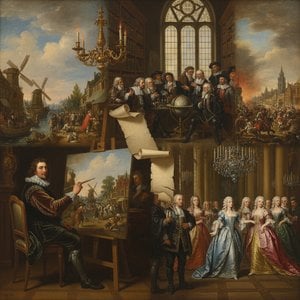
Ambrosius Brueghel: Un Visionario del Paesaggio Fiammingo
Ambrosius Brueghel (1617-1675) si erge come una figura cardine nel panorama artistico di Anversa e nel più ampio contesto dell'Età dell'Oro olandese, celebre per le sue magistrali rappresentazioni della vita rurale. Le sue opere, in particolare i paesaggi, sono infuse di un dettaglio meticoloso e permeate da una profonda comprensione della prospettiva aerea. A differenza di molti suoi contemporanei, che si concentravano sul ritratto o su soggetti mitologici, Brueghel dedicò se stesso alla cattura dell'essenza della campagna fiamminga, elevando la pittura di genere a nuove vette di sofisticatezza artistica.- Giovinezza e Formazione: Nato ad Anversa, gli anni formativi di Brueghel coincischi con un periodo di significativo fermento artistico all'interno della città, ereditando l'eredità di Pieter Bruegel il Vecchio, suo padre, che aveva stabilito una formidabile tradizione nella pittura di paesaggio. Ambrosius apprese l'arte sotto la guida di Jan Brueghel III e Peter Paul Rubens, assorbendo influenze da entrambi i maestri che avrebbero plasmato profondamente la sua traiettoria stilistica. Le composizioni dinamiche di Rubens e il suo uso magistrale del colore infondono in Brueghel un desiderio di grandezza e di dinamismo espressivo.
- Stile e Tecnica: Lo stile distintivo di Brueghel è caratterizzato da un'attenzione senza pari all'accuratezza topografica; egli ricercava con cura i luoghi, creando paesaggi che ricordano mappe in miniatura. Le sue tele sono popolate da figure impegnate in attività quotidiane — contadini che si prendono cura dei campi, cacciatori alla ricerca della selvaggina — presentate all'interno di ambienti riccamente strutturati. Fondamentalmente, egli impiegò la prospettiva atmosferica — una tecnica perfezionata da Rubens — per conferire profondità e realismo, utilizzando sottili sfumature di colore e variazioni tonali per simulare gli effetti della distanza.
Paesaggi che Parlano: Temi e Simbolismo
I paesaggi di Bruegello trascendono la mera rappresentazione visiva; essi fungono da veicoli per trasmettere commenti morali e filosofici. Motivi ricorrenti — come corvi, mulini a vento e scheletri — sono carichi di significato simbolico, riflettendo le ansie legate alla mortalità e alla precarietà dell'esistenza umana. Le sue scene spesso ritraggono i cicli stagionali — l'arrivo della primavera, la maturazione dei raccolti — evidenziando i ritmi della natura e ricordando agli spettatori i modelli ciclici di vita e morte. Queste immagini non erano semplicemente belle; erano progettate per provocare una contemplazione profonda sulla condizione umana.- Opere Notevoli: Tra i dipinti celebrati di Brueghel figurano “I Cacciatori in Paradiso”, una rappresentazione monumentale di una battuta di caccia in un paesaggio idilliaco popolato da creature fantastiche, e “Il Matrimonio dei Contadini”, che ritrae una vivace celebrazione accompagnata da strumenti musicali e figure danzanti. Le sue nature morte — in particolare quelle con fiori — sono altrettanto impressionanti per la loro meticolosa precisione e le loro luminose tavolozze cromatiche.
- Influenza ed Eredità: L'influenza di Brueghel si estese ben oltre la sua stessa vita, ispirando generazioni successive di paesaggisti. Egli stabilì una distinta stirpe artistica che persistette fino al diciottesimo secolo, consolidando il suo posto come una delle figure più importanti dell'arte barocca fiamminga. Il suo uso pionieristico della prospettiva atmosferica continua a risuonare negli artisti di oggi, dimostrando il potere duraturo dell'osservazione e della tecnica sapiente.
Un Riflesso dell'Estetica dell'Età dell'Oro Olandese
La visione artistica di Brueghel si allinea perfettamente con le più ampie sensibilità estetiche dell'Età dell'Oro olandese, un periodo segnato dalla curiosità intellettuale, dagli ideali umanisti e da un fervente abbraccio del naturalismo. Come Rubens e Rembrandt, egli cercò di catturare la grandezza e la complessità dell'esperienza umana, utilizzando tecniche innovative per trasmettere sia la bellezza che la serietà morale. I suoi paesaggi rimangono una testimonianza dell'impegno di quest'epoca nel ritrarre il mondo con onestà incrollabile e profonda intuizione artistica.Significato Storico
Il contributo di Ambrosius Brueghel alla storia dell'arte è indiscutibile. Egli non si limitava a documentare la vita rurale; la elevava a un livello di contemplazione artistica raramente raggiunto prima di lui. I suoi dipinti offrono visioni inestimabili della visione del mondo delle Fiandre del XVII secolo, riflettendo le ansie sulla mortalità e celebrando la bellezza del mondo naturale — temi che continuano a emozionare il pubblico contemporaneo. Attraverso la sua meticolosa osservazione e la sua esecuzione magistrale, Brueghel ha assicurato la sua eredità come vero innovatore e pietra miliare della pittura di paesaggio barocca.Domande e risposte
A quali movimenti appartiene l'opera di Ambrosius Brueghel?
Le opere di Ambrosius Brueghel possono essere consultate per movimento nella pagina Tutti i movimenti dell'artista.
Posso esplorare le opere di Ambrosius Brueghel per soggetto?
La pagina Catalogo per soggetti permette di esplorare le opere di Ambrosius Brueghel suddivise per soggetto.
Di dove è Ambrosius Brueghel?
Ambrosius Brueghel è nato/a in Belgio.