Menu
CONSULENZA D'ARTE GRATUITA

Alexandre Denis Abel de Pujol

1825 - 1861

Brevi note biografiche

  • Top-ranked work: L'EGYPTE SAUVEE PAR JOSEPH
  • Copyright status: Public domain
  • Museums on APS:
    • Musée du Louvre
    • Musée du Louvre
    • Musée du Louvre
    • Musée du Louvre
    • Musée du Louvre
  • Born: 1825, Francia
  • Nationality: Francia
  • Works on APS: 29
  • Also known as: Pujol
  • Espandi dettagli…
  • Movements: neoclassical
  • Died: 1861
  • Top 3 works:
    • L'EGYPTE SAUVEE PAR JOSEPH
    • MEDAILLONS REPRESENTANT PLUSIEURS HOMMES CELEBRES DE LA RENAISSANCE
    • Ixion Enchained in Tartarus
  • Lifespan: 36 years
  • Art period: XIX Secolo
  • Creative periods:
    • neoclassical
    • mature period

Quiz d'arte

Per ogni domanda è presente una sola risposta corretta.

Domanda 1:
Q1
Domanda 2:
Q2
Domanda 3:
Q3
Domanda 4:
Q4
Domanda 5:
Q5

Alexandre Denis Abel de Pujol: A Neoclassical Visionary

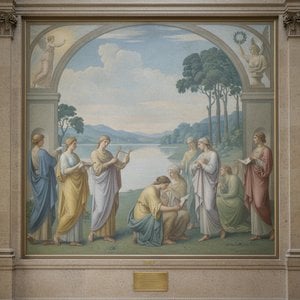
Alexandre Denis Abel de Pujol (1785-1861) stands as a prominent figure in French Neoclassical art, remembered primarily for his monumental commissions that graced the halls of Parisian institutions – notably the Louvre and Fontainebleau. Though overshadowed by contemporaries like Jacques-Louis David, Pujol’s distinctive style and unwavering dedication to classical ideals cemented his place within the artistic landscape of the early 19th century. Born into a noble family with connections to the Bourbon monarchy, Pujol received an aristocratic education that instilled in him a profound appreciation for humanist values and artistic tradition. He studied under David at the École Royale Supérieure des Beaux-Arts in Paris, absorbing the master’s meticulous attention to detail and his commitment to portraying historical narratives with dramatic grandeur. This formative influence profoundly shaped Pujol's artistic sensibilities, guiding him toward a stylistic approach characterized by clarity of form, balanced compositions, and idealized figures imbued with moral significance. He was particularly drawn to the heroic spirit of antiquity—a fascination that would permeate throughout his oeuvre. Pujol’s prolific output spanned across various genres, including portraits, landscapes, and mythological scenes. However, he achieved lasting fame through his ambitious decorative projects undertaken for the French state. The ceiling of the Grand Staircase at the Louvre depicts a scene from Virgil's Aeneas—a powerful allegory exploring themes of Roman virtue and destiny—demonstrating Pujol’s masterful command of color and perspective. This monumental fresco wasn’t merely aesthetically pleasing; it served as a didactic reminder of Rome’s moral authority, reflecting the broader intellectual debates surrounding republican ideals versus monarchical rule. Similarly, the Galerie de Diane at Fontainebleau showcases a monumental fresco portraying Julius Caesar returning to Rome after defeating Pompey, capturing the pivotal moment with breathtaking realism and conveying a palpable sense of triumph. The artist meticulously rendered every detail—from Caesar’s armor to the expressions on his soldiers' faces—creating an immersive experience for viewers that transported them back to the tumultuous events of antiquity. Perhaps his most celebrated achievement was the ceiling of the Bourse de Paris, which portrays Hercules battling Hydra—a symbolic representation of courage and perseverance against overwhelming adversity. This ambitious undertaking demanded exceptional technical skill and artistic vision, resulting in a dramatic tableau that captivated audiences and solidified Pujol’s reputation as one of France's foremost decorative painters. Beyond his formal training and stylistic influences, Pujol possessed an innate curiosity about the natural world—a characteristic evident in his landscapes, which often captured serene vistas bathed in golden light. He skillfully employed atmospheric perspective to convey depth and grandeur, mirroring the principles championed by Leonardo da Vinci and other Renaissance masters. His artistic endeavors were underpinned by a deep conviction that art should serve as a vehicle for moral instruction—a belief reflected in his choice of subjects and his meticulous attention to detail. Pujol’s paintings are not simply visual spectacles; they are meditations on human experience, inviting contemplation and fostering an appreciation for the beauty and wisdom inherent in classical culture. Throughout his career, Pujol received numerous accolades recognizing his artistic merit—including membership into the Institut de France and the Légion d'honneur—testament to his unwavering dedication to excellence and his contribution to French cultural heritage. Alexandre Denis Abel de Pujol died peacefully in Paris in 1861, leaving behind a legacy of magnificent artworks that continue to inspire admiration for their elegance, ambition, and enduring faithfulness to classical ideals. His influence extended beyond the realm of painting itself, shaping artistic sensibilities and fostering a shared appreciation for humanist values—a testament to the transformative power of art as a force for intellectual and moral enrichment.