Aert van der Neer: Maestro della luce lunare e dei paesaggi invernali
Aert van der Neer (ca. 1603 – 9 novembre 1677) si staglia come una figura singolare nella pittura di paesaggio del Secolo d'Oro olandese, celebrato per le sue descrizioni di una bellezza struggente, capaci di evocare scene notturne immerse in un'eterea luce lunare e la quiete cristallina dei paesaggi invernali, in particolare quelli che si affacciano su canali e fiumi. A differenza di molti suoi contemporanei, che prediligerevano ampie vedute o ideali pastorali, van der Neer si concentrò sulla cattura di sottili effetti atmosferici e momenti intimi all'interno della natura, affermandosi come un pioniere del realismo psicologico nella pittura di genere. La sua capacità di evocare il gelo pungente di un canale ghiacciato o il bagliore argenteo di un cielo di mezzanotte permette allo spettatore di immergersi direttamente nella quiete delle Province Unite del XVII secolo.
Giovinezza e fondamenta artistiche
Le informazioni riguardanti gli anni formativi di van der Neer rimangono avvolte nelle nebbie della storia, eppure la sua essenza artistica è profondamente radicata nel suolo olandese. Sebbene i resoconti biografici suggeriscano che sia nato a Gorinchem intorno al 1604, la sua vera stirpe si ritrova nelle pennellate dei suoi contemporanei. La sua educazione artistica derivò probabilmente dall'esposizione a pittori influenti come Rafael e Jochem Govertsz Camphuysen, le cui sensibilità stilistiche hanno senza dubbio influenzato il suo talento nascente. Questo legame con una prominente famiglia artistica favorì un ambiente propizio al perfezionamento delle abilità e all'esplorazione di approcci innovativi alla rappresentazione visiva. Attraverso questa precoce immersione, egli iniziò a sviluppare un occhio unico per l'interazione tra luce e ombra, un tratto che sarebbe diventato il suo marchio di fabbrica per tutta la vita.
Il linguaggio della luna e la tecnica
Lo stile distintivo di Van der Neer è immediatamente riconoscibile per la sua magistrale manipolazione della luce — specificamente quella lunare — e la sua delicata interazione con la luce del fuoco. Egli evitava composizioni drammatiche e imponenti a favore di paesaggi misurati, popolati da figure impegnate nelle attività ritmamente quotidiane della vita di tutti i giorni. Nelle sue opere, si possono incontrare:
- Pattinatori che scivolano con grazia su corsi d'acqua ghiacciati nel pieno dell'inverno.
- Giocatori di kolf intenti a seguire i propri tiri tra morbidi accumuli di neve.
- Pescatori in attesa paziente della loro preda sotto lo sguardo vigile di una luna nascente.
- Slitte trainate da cavalli che percorrono i sentieri silenziosi e ghiacciati di una città addormentata.
La sua tecnica prevedeva una meticolosa stratificazione di velature per ottenere straordinarie gradazioni tonali e una delicata resa delle texture. Questo metodo gli permise di catturare la bellezza effimera di un tramonto o la qualità argentea e traslucida della luce lunare che si riflette sul ghiaccio. Concentrandosi su questi sottili effetti atmosferici, trasformò semplici paesaggi in profonde meditazioni sul tempo e sulla tranquillità.
Eredità e significato storico
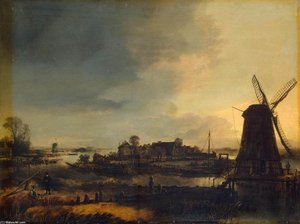
Il significato storico di Aert van der Neer risiede nella sua capacità di elevare il paesaggio "piccolo" a una dimensione di alta risonanza emotiva. Mentre altri maestri cercavano il monumentale, van der Neer trovava la grandezza nell'effimero e nel silenzioso. Le sue opere, come il mozzafiato
Paesaggio al tramonto o le sue vivaci scene invernali vicino alle città olandesi, fungono da visioni senza tempo della vita del XVII secolo. Egli rimane una pietra miliare del Secolo d'Oro olandese, ricordato non solo per la sua maestria tecnica, ma per la sua capacità di catturare l'anima stessa del mondo notturno. La sua influenza persiste nel modo in cui percepiamo la bellezza della notte, ricordandoci che anche nelle ore più oscure, si può trovare una grazia profonda e luminosa nel mondo naturale.