Discover 'En Plein Air' by Edward Arthur Walton (1885). This Impressionistic landscape showcases rural beauty with loose brushstrokes & soft light. A captivating piece of Scottish art.
The pursuit of light is a technical challenge that transcends the canvas, finding a modern parallel in the way we manipulate lumens and shadows within a hotel lobby or a private dining room. Long before the advent of portable paint tubes allowed for true mobility, the landscape was often relegated to a secondary role—a constructed backdrop for religious or mythological narratives. Artists like Claude Lorrain created idealized, studio-bound versions of nature that felt permanent and static. The shift toward en plein air painting changed the fundamental chemistry of the viewer's experience. By moving outdoors, painters began to record the actual, unmediated atmosphere of a specific hour.
This commitment to capturing the ephemeral—the way morning mist lifts or how sunlight filters through a canopy—provides a blueprint for contemporary environmental design. When we select works that emphasize these fleeting qualities, we are not merely decorating; we are introducing a sense of temporal depth. The technique of en plein air, as seen in the works of Edward Arthur Walton, relies on loose brushstrokes to suggest movement and the passage of time. For a designer, this translates to an ability to anchor a space with a palpable sense of presence, using the light-drenched textures of Impressionism to soften the hard edges of modern architecture.
The Social Anchor: Reinterpreting Belle Époque Gatherings for Modern Lounges
A Glimpse into Belle Époque Society Claude Monet’s Fête at Argenteuil is a vibrant and captivating oil on canvas that beautifully encapsulates the joy and leisure of Parisian society during the Belle Époque. Painted circa 1873, this large-scale work ...
A well-designed lounge functions as a stage for human interaction, much like the lively scenes captured by Claude Monet during the Belle Époque. In his work Fête at Argenteuil, the focus is not on a singular narrative but on the collective energy of Parisian society enjoying the banks of the Seine. The figures are rendered with loose, impressionistic strokes that suggest conversation and movement rather than frozen portraits. This approach to composition creates an atmosphere of effortless leisure, where the subject is the social interaction itself.
This historical echo finds its place in modern hospitality through the curation of art that promotes a sense of community. Just as Monet used bright palettes of blues, greens, and whites to reflect the river and sky, a designer can use such works to establish a light, airy mood in high-traffic areas. The presence of a charming dog or a group of elegantly dressed figures provides an anecdotal layer to a room, offering guests a focal point that feels lived-in and welcoming. It is about creating a space where the atmosphere encourages guests to linger, much like the festive crowds at Argenteuil.
Dissolving Boundaries: Using Landscape Vistas to Expand Urban Interiors
The Architectural Impact of Landscape Art: Enhancing Hospitality Interiors Landscape painting Landscape painting, also known as landscape art, is the depiction in painting of natural scenery such as mountains, valleys, rivers, trees, and forests, esp...
In the dense, often claustrophobic environments of urban hotel developments, landscape art serves as an essential architectural tool. A strategically placed vista can dissolve physical constraints, offering a psychological escape into the infinite. This concept finds its roots in the early 19th-century shift led by John Constable and J.M.W. Turner. While earlier masters like Jacob van Ruysdael focused on meticulous, constructed perspectives, the Romantics began to imbue landscapes with personal connection and emotional intensity, treating the natural world as a subject of independent study.
By integrating large-scale landscapes, a designer can effectively expand the perceived boundaries of a room. A panoramic view of a valley or a tranquil river acts as a window to another world, mitigating the limitations of a concrete structure. This is particularly effective when using multi-panel configurations that stretch across wide walls or staircases. The goal is to replace the urban grind with the restorative power of nature, using the depth provided by Impressionist landscapes to create an illusion of limitless space within a fixed footprint.
Tactile Leisure: Integrating the Details of Outdoor Dining into Hospitality Spaces
A Sun-Dappled Afternoon on the Havel To gaze upon Max Liebermann's Outdoor Garden on the Havel, Nikolskoe is to be instantly transported to a moment suspended in golden light—a quintessential Parisian or Berlin afternoon reimagined by an Impressionis...
The sensory experience of dining is heightened when the surrounding art reflects the textures of conviviality. Max Liebermann’s Outdoor Garden on the Havel, Nikolskoe offers a masterclass in this integration. The painting captures a moment of communal leisure, where sunlight dapples tables laden with the accoutrements of a meal—delicate cups and gleaming glassware. The visible brushwork does not just describe the scene; it vibrates with the energy of a sunny afternoon, making the viewer feel the warmth of the light filtering through the trees.
For the procurement professional, selecting works that feature these fine, tactile details can ground a restaurant or cafe in a sense of tradition and comfort. The inclusion of small, humanizing elements—such as figures holding umbrellas to guard against a sudden shower—adds a layer of narrative complexity that engages the guest. These paintings do more than fill a wall; they provide a thematic resonance that complements the physical setting of a dining space, reinforcing the idea of the meal as a shared, sensory event.
Architectural Continuity: Multi-Panel Configurations for Large-Scale Installations
Large-scale hospitality projects often demand art that can match the structural ambition of the building. The trend toward multi-panel or "split" paintings allows for a seamless integration of fine art into modern architectural languages. This method is particularly useful for covering expansive corridors or grand entryways where a single canvas might feel undersized. By dividing an image across three, four, or five panels, the artwork becomes part of the wall itself, creating a cohesive, modern aesthetic that directs movement and establishes a sense of place.
This approach requires technical precision to ensure that colors and brushstrokes flow uninterrupted across the gaps between panels. Our studio specializes in this type of engineering, ensuring that the structural integrity of the composition remains intact regardless of the layout. Whether it is a minimalist contemporary boutique or a neo-classical estate, these large-format installations allow for a customized approach to volume and scale, turning a transient corridor into a curated experience of grandeur.
Curating Identity: Utilizing Period Shifts to Anchor Brand Narratives
The ability to manipulate historical styles allows designers to tailor the emotional resonance of a space to a specific brand identity. Through our "Period Shift" service, it is possible to take contemporary imagery and reimagine it through the lens of a different era—transforming a modern scene into something that carries the weight and texture of an Impressionist study. This level of customization ensures that the artwork does not merely sit on the wall but actively participates in the storytelling of the property.
This flexibility is vital for maintaining brand consistency across global portfolios. A hotel chain can utilize a unified aesthetic, perhaps employing the light-drenched style of Monet or the bold, expressive energy of German Impressionism, to create a recognizable atmosphere in every location. By treating art as a customizable element of the interior design, professionals can move beyond simple decoration and toward the creation of a truly bespoke environment that leaves a lasting impression on every guest.
For professional inquiries regarding bulk orders, custom sizing for large-scale projects, or technical specifications for hospitality installations, please visit ArtsDot.com.
Scopri come elevare il tuo interno con l'armonia dei capolavori impressionisti. Guida esclusiva sull'uso del colore e della luce per creare spazi eleganti attraverso riproduzioni dipinte a mano di altissima qualità artistica.
Scopri come l'arte impressionista può trasformare gli hotel di lusso in destinazioni iconiche e virali. Guida esclusiva per designer sull'uso strategico di dipinti a mano per creare esperienze sensoriali indimenticabili e un brand identity di prestigio.
Explore the profound connection between Impressionist masterpieces and cultural identity. Discover how the luminous works of Monet, Renoir, and Cézanne capture the soul through light, color, and emotion in this deep dive into art history's most beloved movement.



 En Plein Air
 Fete at Argenteuil
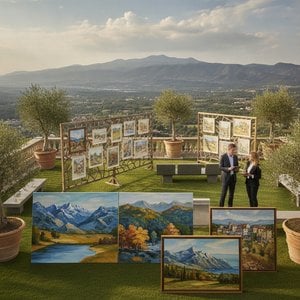 Mastering the Outdoors: A Professional Buyer's Guide to Iconic Landscape and En Plein Air Artworks for Hospitality Design
 Outdoor Garden on the Havel, Nikolskoe


