


The Mask of Authority: From Roman Imperialism to the Individual Portrait
The depiction of a leader often begins with the intent to project an image of unshakeable stability. In the Roman Republic, the focus was frequently placed on the civic duty and the stern, weathered features of commanders, where a sense of character was found in the very imperfections of the face. This veristic approach sought to communicate strength through experience rather than through an idealized, youthful beauty. As the empire transitioned into the imperial age, the purpose of portraiture shifted toward the divine. The Blacas Cameo, for instance, presents Augustus not as an aging statesman, but as a man in his prime, approximately thirty-five years old, using a standardized, youthful visage to signal eternal vitality and authority. This tension between the real and the ideal finds a striking parallel in the way we perceive leadership today. We often look to portraits to find the essence of a person, yet we are always aware of the curated nature of the image. Just as the Romans used marble to freeze a specific version of an emperor, modern portraiture continues to grapple with the balance between the person and the persona they wish to project to the world.The Scale of Conquest: From Pompeian Mosaics to Grand Narrative Painting
History is frequently written in the grand, sweeping gestures of large-scale compositions. The Alexander Mosaic, excavated from the ruins of Pompeii, offers a dramatic glimpse into the ancient world, capturing the decisive moment Alexander the Great defeated Darius III of Persia. Such works were never merely decorative; they were instruments of power, designed to intimidate and to celebrate the inevitability of victory. This tradition of using scale to convey the magnitude of a campaign continued through the centuries, from the long, winding reliefs of Trajan’s triumphal columns in Rome to the elaborate Portuguese Pastrana Tapestries of the 1470s. The impulse to document victory through grand scale remains a constant in our visual culture. Whether it is a massive tapestry depicting the victories of the Duke of Marlborough or a modern mural, the desire to capture the momentum of history through expansive, detailed imagery persists. We still seek out those large-scale narratives that allow us to lose ourselves in the movement of a significant moment, feeling the weight of the events through the sheer physical presence of the work.The Human Element: Shifting from Heroic Idealism to Vulnerable Reality
There is a profound difference between the depiction of a soldier as a symbol and the depiction of a soldier as a human being. During the Renaissance, artists like Michelangelo utilized the study of the human form to explore the tension of combat, famously depicting a group of nude soldiers caught in a moment of surprise while bathing. This focus on anatomy and the physical reality of the body allowed for a new level of dynamism and vulnerability. Later, in the 19th century, artists like Ernest Meissonier and Edouard Detaille moved away from the purely allegorical, establishing military genre painting in the Paris Salon by focusing on the specificities of life in the field. This shift toward the human element finds a quiet echo in the works of Edward Ardizzone, whose pictures concentrated on soldiers in moments of routine or relaxation. We see a move away from the untouchable hero and toward the individual experiencing the mundane or the difficult. It is a reminder that behind every grand historical movement, there are individuals navigating the complexities of fatigue, duty, and the quiet moments between the chaos.The Language of Regalia: Meticulous Detail and the Identity of Command
 Richard Simkin
Explore Richard Simkin's detailed watercolors of British military uniforms & campaigns (1850-1926). Discover his War Office illustrations & captivating recruiting posters.
The Weight of Silence: Reflecting on the Psychological Aftermath of War
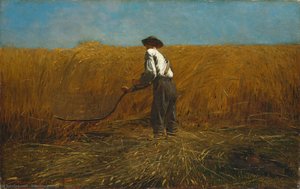 The Veteran in a New Field
, Winslow Homer


