The Post-War Crucible: The Emergence of Color Field from Abstract Expressionism Beyond the Brushstroke: A Definitive Guide to the Emotional Power of Color Field Painting The Genesis of Abstraction: From Post-War Trauma to the Rise of Color Field Beyo...
The mid-twentieth century was a period of profound psychological fracture. In the wake of global conflict, the New York art scene became a crucible for an unprecedented rupture from tradition. Initially, this revolution manifested through the visceral, spontaneous energy of Action Painting. Artists like Jackson Pollock turned the canvas into an arena of physical event, using drips and energetic gestures to externalize inner anxieties and the subconscious mind. It was a movement defined by the struggle, where every splatter served as a record of an existential moment.
Yet, as the movement matured, a distinct current began to emerge—one that sought to move away from the theatricality and self-consciousness of the gestural brushstroke. This was the birth of Color Field painting, a shift born not from a desire for chaos, but from a search for a more fundamental, unmediated truth within the medium itself. Where the earlier painters emphasized the physical act of creation, this new generation sought to capture the essence of being through the power of color alone.
This transition finds a historical echo in the evolution of the Abstract Expressionist canon itself. While Harold Rosenberg championed the virtues of the "action" and the artist's struggle, the critic Clement Greenberg observed a different tendency toward all-over color. He identified a dichotomy between the turbulent, painterly works and a more disciplined approach that would eventually define the next era of abstraction.
Color as Subject: The Liberation from Narrative and Form
--- title: Colour field painting | Tate url: https://www.tate.org.uk/art/art-terms/c/colour-field-painting hostname: tate.org.uk description: Tate glossary definition for colour field painting: Term used to describe the work of abstract painters work...
To engage with Color Field painting is to witness the moment color was finally freed from objective context. In this discipline, color ceases to be a tool used to depict a sky or a figure; it becomes the subject in itself. This movement represented a deliberate, disciplined stripping away of all extraneous elements. By eliminating both the emotional, mythic, or religious content found in earlier Abstract Expressionism and the highly personal application of paint, artists achieved a state of pure perception.
This liberation allowed for a new kind of visual language, one where large areas of flat, solid color could create an unbroken surface. The focus shifted from what a painting represented to how its chromatic depth could vibrate against the retina. It was an exploration of weight, temperature, and the capacity of a single hue to envelop the human spirit.
We see this pursuit of purity in the works of artists like Kenneth Noland, whose concentric circles examined the relationships between hues with mathematical clarity. This echoes the earlier intentions of Wassily Kandinsky, who sought to use color as a spiritual force, though the Color Field painters achieved this through a much more radical reduction of form.
The Architecture of Presence: Scale, Space, and the Viewer
Introduction To stand before a canvas by Mark Rothko is not merely to view a painting, but to enter a sanctuary of light and shadow. His work does not ask for your attention; it demands your presence. As you prepare to journey through these top 25 ma...
A defining characteristic of these works is their monumental scale, which demands a bodily engagement from the observer. These are not merely paintings to be looked at; they are environments to be entered. The large-scale canvases create a sense of depth that feels almost architectural, inviting the viewer into a deep, meditative state of reflection. The boundaries between the canvas and the surrounding space begin to blur, pulling the spectator into an abstract abyss.
This scale is essential for creating what some have described as a sanctuary of light and shadow. When a painting occupies the viewer's entire field of vision, it offers a rare opportunity for stillness in an age of constant distraction. The work does not ask for attention; it demands presence.
This sense of immersive space finds a parallel in the architectural philosophy of Tadao Ando, whose minimalist structures use light and concrete to dissolve the boundaries between the built environment and the soul. Just as Ando’s pavilions invite the sky to become an active participant in the viewing experience, the large-scale Color Field canvases use their sheer size to make the surrounding atmosphere part of the artwork itself.
Surface and Substance: Navigating Texture and Flatness
A Symphony of Azure: The Immersive World of Blue Color Field In the vast landscape of contemporary abstraction, few works command the room with such quiet authority as Amelia Amorim Toledo’s Blue Color Field . Created in 1999, this masterpiece serves...
While much of Color Field painting is characterized by flat, unmodulated areas of color, the movement also explored a fascinating tension between flatness and texture. Some artists utilized techniques such as staining paint directly into an unprimed canvas to create areas of unbroken, pure color, effectively erasing the presence of the brushstroke. This created a sense of "all-overness," where the painting appeared as a self-sufficient entity and a fragment of a larger continuum.
Conversely, other practitioners explored the tactile topography of the medium. Through the heavy application of impasto or the strategic use of a palette knife, they sculpted surfaces that caught the light in raised ridges and shadowed crevices. This interplay of texture ensures that an artwork is never static; it shifts and breathes depending on the angle of the observer.
This tension between the smooth and the rugged is evident in works like Amelia Amorim Toledo’s Blue Color Field, where heavy impasto creates a rhythmic movement across a deep blue expanse. It mirrors the distinction made by the historian Heinrich Wölfflin between the "linear" and the "painterly"—the former characterized by lucid organization and the latter by turbulent, textured energy.
Enduring Resonance: Color Field Principles in Contemporary Curation
A Sanctuary of Modern Vision Nestled within the serene heart of Fort Worth’s Cultural District, the Modern Art Museum of Fort Worth stands as a breathtaking testament to the transformative power of post-World War II creativity. What began in 1892 as ...
The principles of Color Field painting continue to inform how we curate and experience art today. The movement's emphasis on the economy of means—testing how stripped-down a picture can be before it ceases to be moving—remains a benchmark for excellence. In contemporary collections, from the Daros Collection in Zurich to the Modern Art Museum of Fort Worth, the presence of these works provides a necessary anchor of stability and profound emotional honesty.
Today, we see the legacy of this movement in artists who continue to play with the relationship between light and pigment. Whether through the use of computer-driven color relationships or the layering of encaustic wax to create incandescence, the fundamental goal remains the same: to use color as a vessel for human experience.
As we navigate an era defined by fragmented perceptions, the stillness offered by these chromatic landscapes remains vital. They remind us that meaning is not always something to be decoded through narrative, but something to be experienced through pure, unmediated perception. At ArtsDot.com, we celebrate this enduring power of abstraction, offering hand-painted reproductions and custom commissions that bring this profound sense of color and calm into the modern home.
Explore the profound emotional landscapes of Color Field painting. From Rothko's meditative hues to post-war abstraction, discover how pure color transcends the brushstroke to touch the human soul. A deep dive into art history for the true connoisseur.
Explore the profound world of Color Field painting with ArtsDot. Discover key artists like Rothko & Newman, its philosophical roots, and lasting impact on modern art. Expert insights for collectors.
Explore the profound emotional depth of Color Field painting. Discover the history of mid-century abstraction, from Rothko to Newman, and learn how pure color transforms the viewer's experience through our expert art history guide.
Esplora i 25 capolavori di Mark Rothko: un viaggio emozionante tra l'Espressionismo Astratto e il potere del colore. Scopri la storia dietro ogni opera e trova riproduzioni d'arte di qualità museale per i tuoi interni su ArtsDot.com. Esplora l'intera collezione online.



 Color Field Painting: The Emotional Power of Pure Abstraction and Chromatic Depth
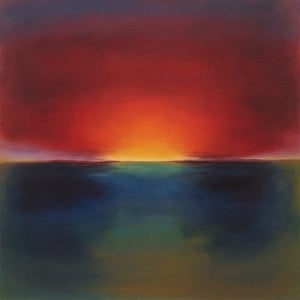 Color & Emotion: The Top 25 Masterpieces by Mark Rothko
 Blue Color Field
 Modern Art Museum of Fort Worth


