Introduction There is a profound, almost sacred intimacy found in the ritual of a morning coffee. It is a moment suspended in time—a quiet pause amidst the urban rush where the aroma of roasted beans meets the soft hum of conversation. To curate a co...
A coffee shop is a sanctuary of small rituals. The warmth of a ceramic mug, the rhythmic hiss of steaming milk, and the quiet hum of morning conversation create a delicate balance of energy. To design this space is to manage more than just furniture; it is to curate an atmosphere that invites guests to linger. This is where the philosophy of Impressionism offers a profound advantage. Founded by Claude Monet, this movement was never about rigid lines or photographic accuracy. Instead, it focused on expressing perceptions before nature—capturing how light dances across a surface at a specific moment in time.
When you introduce these works into your cafe, you are bringing in the ability to manipulate mood through color and luminosity. Unlike the heavy, dark tones of some classical eras that can make a small corner feel enclosed, Impressionist palettes often utilize light-drenched landscapes and soft, atmospheric hues. This creates a sense of openness and airiness. A well-placed landscape can act as a window, providing a visual escape for a patron seated in a windowless nook, effectively expanding the perceived boundaries of your shop through the sheer power of light and color.
Capturing the Fleeting Moment: Using Monet's Series to Create Visual Rhythm
This is a list of works by Claude Monet (1840–1926), including all the extant finished paintings but excluding the Water Lilies, which can be found here, and preparatory black and white sketches. Monet was a founder of French impressionist painting, ...
There is a unique way that repetition can drive design without becoming monotonous. Claude Monet achieved this through his famous series paintings, where he revisited subjects like Haystacks, Water Lilies, or the Houses of Parliament at different hours of the day. He used these studies to show how sunlight and weather transform a single subject into a completely different emotional experience. For a cafe owner, this concept provides a blueprint for creating visual rhythm throughout a large floor plan.
Imagine a long hallway or a series of connected seating areas. Rather than one singular, overwhelming piece, you might use a sequence of related works that follow a progression of light—perhaps moving from the cool, blue tones of dawn to the warm, golden hues of late afternoon. This creates a narrative flow that guides the eye through your space. It allows the decor to breathe, offering different points of interest that reward a guest for looking closer, much like the way a recurring melody supports a piece of music.
Texture and Depth: The Tactile Appeal of Oil Paint in Modern Interiors
Oil painting is a painting method involving the procedure of painting with pigments combined with a drying oil as the binder. It has been the most common technique for artistic painting on canvas, wood panel, or copper for several centuries. The adva...
In an era dominated by flat, digital screens, guests are increasingly drawn to things they can almost feel with their eyes. This is the inherent advantage of a true oil painting. Unlike a smooth, computer-printed poster that lacks dimension, oil on canvas offers a physical presence. The method involves pigments combined with drying oils like linseed or poppy seed, allowing artists to build layers. When an artist uses techniques such as impasto—applying paint thickly enough to create visible brushstrokes—the artwork gains a sculptural quality.
This texture provides a necessary "visual friction" in a room. In a space filled with smooth surfaces like marble countertops, glass windows, and polished wood, a textured oil painting adds much-needed depth. The way light hits the raised ridges of a brushstroke creates tiny shadows that change as the sun moves through your shop. This subtle movement ensures that your decor feels alive and reactive to its environment, rather than static and lifeless.
From Landscapes to Focal Points: Selecting the Right Scale for Your Walls
The Historical Canvas: Wall Decor from Ancient Frescoes to Victorian Papers Wikipedia: Interior design Interior design is the art and science of enhancing the interior of a building to achieve a healthier and more aesthetically pleasing environment f...
The scale of your art must respect the architecture of your business. A massive, sweeping landscape can anchor a large, high-ceilinged room, acting as the definitive centerpiece that gives the space its identity. However, in smaller, more intimate seating areas, an oversized work might feel imposing or claustrophobic. The goal is to find a balance where the art commands attention without overwhelming the senses.
Consider the impact of a multi-panel arrangement. Splitting a single composition across three or four panels—a trend known as group set painting—is an excellent way to cover wide walls or staircases. This approach maintains the integrity of the original image while creating a modern, architectural look that feels integrated into the building itself. It allows you to fill a large void with a sense of organized, rhythmic beauty that complements your structural design.
Beyond the Canvas: Integrating Art Deco Accents with Impressionist Tones
A Modern Echo of Art Deco Elegance This striking wall sculpture reimagines the glamour of the Art Deco era for contemporary interiors. Crafted from layered wooden slats, this piece evokes the stylized forms of palm leaves radiating outwards from a ce...
While Impressionism provides the atmosphere, contemporary accents can provide the structure. You might find that a soft, light-drenched Monet landscape pairs unexpectedly well with the sharp, geometric precision of Art Deco elements. A rose gold stainless steel sculpture or a piece of modern geometric relief art can act as a sophisticated counterpoint to the fluid, organic shapes found in Impressionist works.
This interplay between the soft and the structured is what creates a truly professional interior. For instance, an abstract relief painting featuring muted pinks or peaches can bridge the gap between a classical landscape and a modern, minimalist furniture set. By mixing these eras, you avoid the "museum" look that can feel too formal for a casual cafe, instead creating a layered, curated environment that feels both historical and current.
The Durability of Beauty: Maintaining High-Impact Art in High-Trafic Spaces
Modern Geometric Relief Wall Art – A Celebration of Texture and Color This striking piece embodies the elegance of minimalist design infused with tactile richness. Crafted from sustainably sourced MDF (Medium Density Fiberboard) and adorned with acry...
For an owner, beauty must be paired with durability. A cafe is a high-traffic environment where dust, moisture from steam, and changing temperatures are constant factors. When selecting reproductions, the quality of materials is paramount. True oil paintings are finished with protective layers, such as Damar varnish, which shields the pigment from atmospheric pollutants and dust.
Maintenance should be simple enough to fit into a daily cleaning routine. Most high-quality canvases require nothing more than gentle dusting with a microfiber cloth. By choosing works that are built to last—using stable supports like cotton canvas or reinforced wood—you ensure that your investment continues to serve its purpose of attracting and retaining guests for years, rather than becoming a faded afterthought that requires frequent replacement.
Customizing Your Atmosphere: Personalizing History Through Bespoke Commissions
Interior design is the art and science of enhancing the interior of a building to achieve a healthier and more aesthetically pleasing environment for the people using the space. With a keen eye for detail and a creative flair, an interior designer is...
The most successful spaces are those that tell a unique story. If you find that a particular historical style almost fits but the colors do not match your brand's palette, there is the possibility of "remixing" history. Custom commissions allow you to request changes that align with your specific vision. You might ask an artist to take a modern photograph and render it in the light-drenched, impressionistic style of Monet, or perhaps transform a family heirloom into a piece that matches the tones of your upholstery.
This level of personalization turns your walls into a bespoke extension of your brand. Whether you are looking for a large-scale mural to cover a feature wall or a specific color match for a new seasonal decor theme, the ability to direct the artistic process ensures that your cafe remains a one-of-a-kind destination. It moves the conversation from mere decoration to true interior design, where every element is an intentional part of the guest experience.
At ArtsDot.com, we believe that everyone should feel confident in discovering and displaying art that speaks to them. Whether you are looking for a ready-to-hang print or a complex, hand-painted commission, our goal is to help you build a space that inspires.
Elevate your home with bespoke Impressionist masterpieces. From custom Van Gogh-style portraits to hand-painted Monet reproductions, our expert artisans transform your space with timeless elegance and personalized artistry. Discover the luxury of intentional art curation today.



 10 Iconic Masterpieces to Elevate Your Coffee Shop Decor
 List of paintings by Claude Monet
 Oil painting
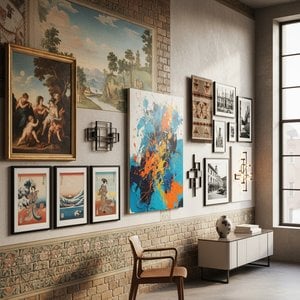 Transforming Spaces: A Comprehensive Exploration of Wall Decor Through Art History & Contemporary Practice
 Art Deco Palm Leaf Wood Wall Sculpture
 Elegant Abstract Relief Wall Art - Handmade MDF Wooden Decorative Painting | Modern Geometric Canvas Print for Living Room Bedroom Home Decor
 Interior design


