


 Condividi
 Condividi
 Dettagli
 Guida stampabile

 Scarica
 Articoli simili
 Slideshow
 Statistiche
Dora Maar


 Leggi tutto
L'opera d'arte visualizzata in questa pagina è protetta dalle leggi sul diritto d'autore, il che significa che non possiamo legalmente creare o vendere una riproduzione identica. Tale protezione è garantita da accordi internazionali quali la Convenzione di Berna e dalle leggi nazionali, incluse quelle stabilite da Legge sul copyright degli Stati Uniti - Titolo 17. Tutti i diritti riservati. Le immagini presenti su questo sito sono protette da copyright e non possono essere riprodotte o utilizzate senza l'autorizzazione scritta di WahooArt.com o dei rispettivi proprietari del copyright.
Questo metodo è pienamente conforme alle normative sul diritto d'autore poiché non prevede la copia o la duplicazione dell'opera protetta. Si tratta invece di una rielaborazione creativa: un nuovo dipinto che trae ispirazione dall'originale, senza tuttavia esserne identico.
Giclée / Stampe d'arte
Stampa giclée o su tela di qualità museale, con produzione rapida e diverse opzioni di finitura. ( Ordina la riproduzione dipinta a mano Passa all'immagine digitale)




































Scegli tra le nostre dimensioni predefinite, che rispettano le proporzioni originali dell'opera d'arte.

È possibile inserire dimensioni personalizzate per adattare l'opera a una cornice o a uno spazio specifico. Se la dimensione selezionata non corrisponde alle proporzioni dell'immagine originale, procederemo al ritaglio dell'opera o all'estensione dell'immagine con un bordo specchiato o a tinta unita. Un mockup digitale ti verrà inviato per approvazione prima dell'inizio della produzione.
Si prega di notare che l'anteprima a schermo non riflette il ritaglio o l'estensione effettivi. Solo il mockup mostrerà accuratamente la composizione finale.
Sebbene siano disponibili dimensioni personalizzate, si raccomanda di selezionare una dimensione dall'elenco predefinito per preservare le proporzioni originali.
Consegna in tutto il mondo () in 2 settimane invece delle normali 4/5 settimane. (11 Ottobre)

Spedizione espressa gratuita in tutto il mondo

Tela in lino di alta qualità

Assicurazione completa sulla spedizione

Garanzia di rimborso dei dazi doganali

Garanzia di perfetta fedeltà cromatica

Politica di reso entro 100 giorni (solo per difetti di fabbricazione)

Garanzia di rimborso al 100%

Sconto per acquisti multipli
 L'opzione vetro è disponibile solo per dimensioni inferiori a 110 cm

Dora Maar
Giclée / Stampe d'arte
Dimensioni della riproduzione
-


Prezzo totale
€ 53
Man Ray’s Dora Maar: A Portrait of Surrealist Intensity
Dora Maar, Picasso's muse and enigmatic collaborator, occupies a singular place in the canon of 20th-century art. Man Ray’s photograph captures not merely her likeness but an essence—a palpable stillness punctuated by fleeting glances that hint at unspoken emotions. This image transcends simple representation; it embodies the spirit of Surrealism itself, demonstrating how photography could be elevated to artistic expression beyond mere documentation.- The Context: Picasso and Surrealism Pablo Picasso’s relationship with Dora Maar was turbulent yet profoundly influential. Their affair unfolded against the backdrop of Surrealist fervor—a movement dedicated to exploring the subconscious mind and challenging rational thought. Man Ray, deeply immersed in Dada and Surrealist circles, recognized Maar's significance as a subject for artistic investigation.
- Technical Innovation: Rayographs Ray’s technique – rayographs – represents a radical departure from conventional photography. Instead of relying on light to capture an image, he employed photograms—images created by placing objects directly onto photographic paper and exposing it to sunlight. This process deliberately disrupts the illusion of reality, mirroring the Surrealist preoccupation with dreams and irrationality.
Composition and Symbolism: Capturing Emotion Through Stillness
The photograph’s composition is deceptively simple yet meticulously crafted. Maar sits rigidly upright, her gaze averted from the camera—a posture that conveys both vulnerability and defiance. The hat she wears adds a layer of visual intrigue, concealing her eyes and subtly framing her face. These deliberate choices contribute to an atmosphere of contemplative melancholy, reflecting the complexities of Maar’s inner life and Picasso's tumultuous emotions during their collaboration.- Color Palette: Monochrome Elegance The photograph utilizes a stark monochrome palette—primarily shades of gray—which amplifies its emotional impact. Absence of color lends an air of timelessness, emphasizing the psychological portrait rather than superficial visual details.
- Light and Shadow: Dramatic Contrast Ray skillfully employs dramatic lighting to sculpt Maar’s face and heighten the sense of drama. Shadows accentuate her features, creating a chiaroscuro effect that draws attention to her expression and reinforces the photograph's mood.
Emotional Resonance: Beyond Representation
More than just a likeness, Man Ray’s Dora Maar is an embodiment of Surrealist ideals. It speaks to the anxieties and desires inherent in human experience—the tension between composure and vulnerability, observation and introspection. The photograph invites viewers to contemplate Maar's gaze, prompting questions about her thoughts and feelings. Ultimately, it succeeds in conveying a profound emotional resonance that transcends the boundaries of visual representation.- Legacy: Surrealist Icon Dora Maar’s portrait remains an enduring symbol of Surrealism’s artistic ambition—a testament to Man Ray's ability to capture not just what is seen but what is felt. It continues to inspire artists and collectors alike, cementing its place as a cornerstone of 20th-century art history.
Reproductions & Inspiration
High-quality reproductions of Man Ray’s Dora Maar offer an opportunity to experience the photograph's captivating aesthetic and emotional depth. Consider framing it in a minimalist setting—perhaps alongside other Surrealist artworks—to maximize its impact and honor the artist’s vision. Let this iconic image serve as a catalyst for creative exploration, prompting reflection on themes of emotion, perception, and the power of artistic innovation.Domande e risposte
Dove posso acquistare una stampa di "Dora Maar" di Man Ray?
È possibile ordinare una stampa di "Dora Maar" di Man Ray direttamente su questa pagina: una stampa fine art su tela di cotone o carta canvas d'archivio.
Per chi è un buon regalo "Dora Maar" di Man Ray?
Il consiglio regalo per "Dora Maar" di Man Ray unisce Anniversary con Accent.
"Dora Maar" di Man Ray è un ritratto, un paesaggio o una composizione quadrata?
Il formato di "Dora Maar" è Portrait. Questo è utile quando si pianifica dove posizionare una riproduzione.
Chi ha creato "Dora Maar"?
"Dora Maar" è attribuito a Man Ray.
Quale posto occupa "Dora Maar" all'interno della produzione artistica di Man Ray?
All'interno della produzione di Man Ray, "Dora Maar" si inserisce nello stile Surrealism, affiancandosi ai temi di picasso collaboration, surrealist experimentation, female portraiture, guernica reflection, avant-garde legacy.
Chi vende copie dipinte a mano di "Dora Maar" di Man Ray?
"Dora Maar" è disponibile come una riproduzione a olio dipinta a mano su tela di lino. L'ordine può essere effettuato su questa pagina, con la possibilità di scegliere diverse dimensioni.
A quale fase dello sviluppo di Man Ray appartiene "Dora Maar"?
"Dora Maar" rappresenta il Mature Period di Man Ray.


Biografia dell'artista
Una vita illuminata dalle ombre
Emmanuel Radnitzky, conosciuto al mondo come Man Ray, era uno spirito inquieto che sfidava ogni facile categorizzazione. Nato nel 1890 a Philadelphia da genitori immigrati ebrei russi, il suo percorso da aspirante pittore a fotografo e cineasta pionieristico incarna il radicale fermento artistico dell'inizio del XX secolo. Il passaggio da “Manny” Radnitzello all'enigmatico “Man Ray” dice molto di per sé su un artista determinato a forgiare una nuova identità, libera da ogni convenzione. Il trasferimento della sua famiglia a New York si rivelò decisivo, esponendolo alla nascente scena modernista e instillandogli una fascinazione per l'esperimento che lo avrebbe accompagnato per tutta la vita. Le prime influenze includevano l'avanguardia europea esposta nella galleria 291 di Alfred Stieglitz e il crudo realismo della Ashcan School – un connubio che avrebbe influenzato sottilmente le sue opere successive. Sebbene inizialmente dedito alla pittura, fu la fotografia a diventare infine il mezzo più potente per Ray per esplorare i confini della percezione e della realtà. Non si limitava a catturare immagini; stava inventando nuovi modi di *vedere*. Le sue prime imprese artistiche furono segnate dal desiderio di rompere con gli stili tradizionali, influenzate dall'incontro sia con il modernismo europeo che con l'energia vitale della vita di New York. Il Ferrer Centre, con le sue tendenze anarchiche e l'enfasi sulla libera espressione, si rivelò particolarmente formativo in questo periodo, favorendo un ambiente in cui la sperimentazione non era solo incoraggiata, ma attesa.Dada, Surrealismo e la ricerca dell'impossibile
La traiettoria artistica di Man Ray prese una svolta drammatica con l'incontro con Marcel Duchamp a New York intorno al 1915. Questo incontro accese una comune fascinazione per la sfida alle nozioni tradizionali d'arte, portando alle esplorazioni dei “ready-mades” – oggetti comuni e manufatti elevati allo status di opera d'arte. Questo spirito ribelle spinse Ray nel cuore del movimento Dada, una protesta anti-arte nata dal disincanto della Prima Guerra Mondiale. Nel 1921, prese la monumentale decisione di trasferirsi a Parigi, diventando una figura centrale sia nei circoli Dada che in quelli Surrealisti che vi fiorivano. Pur non allineandosi mai completamente ad alcun rigido dogma artistico, Ray abbracciando l'esplorazione surrealista dell'inconscio, dei sogni e dell'irrazionale. La sua opera durante questo periodo è caratterizzata da una qualità onirica, spesso inquietante ma innegabilmente affascinante. Non era interessato a ritrarre la realtà così com'è, ma piuttosto come si *percepisce* – frammentata, distorta e intrisa di significati nascosti. Questo abbraccio del subconscio gli permise di andare oltre la mera rappresentazione verso un'esplorazione degli stati psicologici e della risonanza emotiva all'interno della sua arte. Le sue collaborazioni con altri artisti surrealisti, come Salvador Dalí, consolidarono ulteriormente la sua posizione all'interno del movimento, sebbene egli abbia sempre mantenuto un certo grado di indipendenza nella sua visione artistica.Le rayografie e l'alchimia della luce
Forse Man Ray è celebrato soprattutto per l'invenzione della “rayografia”, una tecnica fotografica senza fotocamera scoperta quasi per caso. Queste immagini – create posizionando oggetti direttamente sulla carta fotosensibile ed esponendoli alla luce – producevano composizioni eteree e spettrali che sfidavano la rappresentazione fotografica convenzionale. La rayografia non era semplicemente un metodo alternativo; era una dichiarazione filosofica sulla natura stessa della fotografia. Eliminando l'obiettivo della macchina fotografica, Ray spogliò l'illusione dell'oggettività, rivelando la soggettività intrinseca del mezzo. Queste non erano rappresentazioni *di* cose, ma piuttosto impronte dirette *provenienti* da esse, infuse di un senso di mistero e di un'altrove dimensione. Oltre alle rayografie, i suoi ritratti fotografici – in particolare quelli di artiste come Lee Miller (che sarebbe diventata sia la sua musa che la sua collaboratrice) – sono rinomati per le loro composizioni sorprendenti e la profondità psicologica. Sperimentò incessantemente con la solarizzazione, le esposizioni multiple e la manipolazione in camera oscura, spingendo i limiti di ciò che la fotografia poteva raggiungere. La solarizzazione, in particolare, divenne una tecnica distintiva, creando drammatici ribaltamenti di tono che aggiungevano un elemento di perturbante ai suoi ritratti.Oltre l'immobilità: il cinema e un'eredità duratura
La curiosità artistica di Man Ray si estese oltre le immagini fisse al regno del cinema. I suoi film sperimentali, come *Le Retour à la Raison* (1923) e *L'Étoile de Mer* (1928), erano caratterizzati da un'immaginario surrealista, tecniche di montaggio non convenzionali e il rifiuto delle convenzioni narrative. Non si trattava di storie raccontate in senso tradizionale; erano poesie visive, esplorazioni di forma, ritmo e subconscio. Utilizzò spesso tecniche innovative come l'animazione stop-motion e la sovrapposizione per creare effetti disorientanti e onirici. Sebbene la sua produzione cinematografica sia rimasta relativamente limitata in volume, fu profondamente influente sulle generazioni successive di cineasti d'avanguardia. Durante la sua lunga carriera, Man Ray continuò a sfidare le norme artistiche, rifiutandosi di essere confinato da etichette o aspettative. Morì a Parigi nel 1976, lasciando dietro di sé un corpus di opere che continua a ispirare e provocare. La sua eredità risiede non solo nelle sue innovazioni tecniche, ma anche nel suo incrollabile impegno per la libertà artistica e nella sua incessante ricerca dell'impossibile – un vero pioniere che ha alterato per sempre la nostra percezione dell'arte e della realtà. La sua influenza può essere vista in varie discipline, dalla fotografia e dal cinema contemporanei alla moda e al design, dimostrando il potere duraturo della sua visione.Un'influenza continua
- Fotografia: Le tecniche di Man Ray, in particolare la rayografia e la solarizzazione, continuano a essere esplorate dai fotografi contemporanei.
- Surrealismo: I suoi contributi hanno consolidato il linguaggio visivo del movimento e ispirato innumerevoli artisti in diverse discipline.
- Cinema Sperimentale: Il suo lavoro pionieristico nel cinema ha gettato le basi per le future generazioni di cineasti d'avanguardia.
- Fotografia di Moda: L'approccio innovativo di Ray al ritratto e alla composizione ha influenzato lo sviluppo della fotografia di moda moderna.

Man Ray
1890 - 1976 , Stati Uniti d'America
Informazioni rapide
- Artistic Movement Or Style: Dada, Surrealismo
- Artists Or Movements Influenced By This Artist: ['Surrealismo']
- Artists Who Influenced This Artist: ['Marcel Duchamp']
- Date Of Birth: 27 agosto 1890
- Date Of Death: 18 novembre 1976
- Full Name: Emmanuel Radnitzky
- Nationality: American
- Notable Artworks:
- Rayografie
- Le Retour à la Raison
- L'Étoile de Mer
- Place Of Birth: Philadelphia, USA
Articoli correlati

Paul Klee: Le 25 Opere Più Iconiche per Arricchire la Tua Casa con l'Arte
Esplora le 25 opere più iconiche di Paul Klee, maestro dell'arte astratta e del colore. Scopri la storia, lo stile unico e il significato dei suoi capolavori. Trova riproduzioni d'arte di alta qualità per decorare casa con ArtsDot.com.

Echoes of Time: Exploring the Enduring Appeal & Historical Context of Vintage Art Prints
Explore the captivating world of vintage art prints! Discover their history, collecting tips & enduring appeal. Expert insights on chromolithography and building a legacy collection with ArtsDot.

The Enduring Legacy of Fine Art Prints: Technique, History & Aesthetic Impact
Explore the rich history & techniques of fine art prints. Discover investment potential, assess authenticity, and learn how to preserve your collection with expert guidance. Trusted insights for discerning collectors.

Giclée Prints: Archival Quality & Aesthetic Nuances for the Discerning Collector
Explore the world of giclée prints with ArtsDot. Learn about archival quality, aesthetic nuances & investment potential. Expert guidance for discerning art collectors seeking museum-quality reproductions and lasting value.
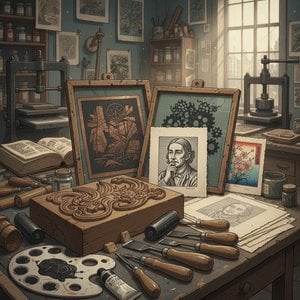
The Enduring Legacy of Printmaking: Techniques, Themes & Artistic Innovation Across Centuries
Explore the rich history of printmaking with ArtsDot. Discover techniques from intaglio to lithography, learn about collecting valuable prints & find museum-quality reproductions. Expert insights for art enthusiasts and collectors.


