Anteprima in scala reale
 Condividi
 Condividi
 Dettagli
 Guida stampabile

 Scarica
 Articoli simili
 Radiografia
 Slideshow
 Statistiche
Stańczyk
 Oil On Canvas
- WallArt
- Romanticism
 1862
1862- 19th Century
 88.0 x 120.0 cm
 Museo Nazionale
 Leggi tutto
Riproduzione a olio fatta a mano
Olio su tela dipinto a mano nelle tue dimensioni e con la tua cornice, realizzato su ordinazione dai nostri artisti. ( Passa alle stampe Passa all'immagine digitale)




P118B €10

P118H €10

P118W €10

P438Z €10

P508JH €12

P508YH €12

P805H €10

P805Z €10

P919BZ €10

P919G €10

P919XJ €10

P959ZH €10

P968JZ €12

W106C €8

W218G €10

W218JH €8

W218Y €10

W307PJ €10

W316G €10

W316PJ €8

W316Y €10

W398PJ €8

W4111J €10

W500HY €15

W500JH €15

W692G €12

W849H €8

W940BG €15

W953PJ €8




Scegli tra le nostre dimensioni predefinite, che rispettano le proporzioni originali dell'opera d'arte.

È possibile inserire dimensioni personalizzate per adattare l'opera a una cornice o a uno spazio specifico. Se la dimensione selezionata non corrisponde alle proporzioni dell'immagine originale, provvederemo a ritagliare l'opera o a estendere il dipinto con elementi aggiuntivi dipinti a mano. Un mockup digitale ti sarà inviato per approvazione prima dell'inizio della produzione.
Si prega di notare che l'anteprima a schermo non riflette il ritaglio o l'estensione effettivi. Solo il mockup mostrerà accuratamente la composizione finale.
Sebbene siano disponibili dimensioni personalizzate, consigliamo di selezionare una dimensione dall'elenco predefinito per preservare le proporzioni originali.
Dopo l'ordine, il team di ArtsDot.com contatterà il cliente via e-mail per ricevere le istruzioni e fornirà un'anteprima del mockup
Consegna in tutto il mondo () in 3/4 settimane anziché nelle normali 5 settimane. (11 Ottobre). Nessun compromesso sulla qualità.

Spedizione espressa gratuita in tutto il mondo

Tela in lino di alta qualità

Assicurazione completa sulla spedizione

Garanzia di rimborso dei dazi doganali

Garanzia di perfetta fedeltà cromatica

Politica di reso entro 100 giorni (solo per difetti di fabbricazione)

Garanzia di rimborso al 100%

Sconto per acquisti multipli
 L'opzione vetro è disponibile solo per dimensioni inferiori a 110 cm

Stańczyk
Tecnica di riproduzione
Dimensioni della riproduzione
-


Prezzo totale
€ 226
A Portrait of Solitude and National Soul
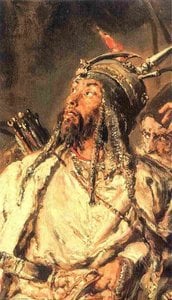
In the quiet, heavy atmosphere of Jan Matejko’s 1862 masterpiece, Stańczyk, one does not merely encounter a portrait, but a profound psychological landscape. The painting presents us with the legendary court jester, not in the midst of a comedic performance or a moment of levity, but captured in a state of deep, melancholic introspection. Seated alone amidst the opulence of a grand interior, his hands are tightly clasped, and his gaze wanders toward an unseen horizon, heavy with the weight of foreknowledge. This is not the face of a fool, but that of a visionary—a man who perceives the gathering shadows of political decline while those around him remain lost in the festivities of the moment.
The composition is a masterclass in Romantic Grandeur, where every element serves to heighten the emotional tension. Matejko utilizes a striking color palette dominated by the vibrant, commanding crimson of Stańczyk’s robe. This deep red acts as the visual heartbeat of the canvas, symbolizing both the resilience of the Polish spirit and the simmering passion of a man burdened by duty. The brilliance of this hue is set against a backdrop of somber, shadowy drapery and muted tones, creating a chiaroscuro effect that pulls the viewer’s eye directly into the sitter's contemplative expression. Through his expert use of impasto, Matejko breathes life into the fabric; the thick, textured layers of paint give the heavy velvet of the cloak a palpable weight, making the physical presence of the figure feel almost overwhelming.
Historical Echoes and Symbolic Depth
To understand Stańczyk is to understand the heartbeat of 19th-century Poland. Painted during a period of profound national mourning following the territorial losses of the Austro-Prussian War, the work serves as a silent, powerful protest. The setting—a scholarly and courtly environment suggested by the presence of manuscripts and fine furniture—contrasts sharply with the internal turmoil of the protagonist. While figures in the distant background appear engaged in the trivialities of social life, Stańczyk remains isolated by his wisdom. He embodies the "intellectual's burden," representing a nation that possesses the dignity and history to endure, yet faces an uncertain, fragmented future.
For the discerning collector or interior designer, this painting offers more than mere decoration; it provides a focal point of intellectual and emotional gravity. The meticulous attention to detail—from the intricate patterns on the floor to the subtle light reflecting off the scholarly documents—makes it an ideal centerpiece for spaces that demand character and narrative depth. Whether placed in a private library or a sophisticated contemporary salon, a high-quality reproduction of this work brings with it an aura of historical importance and a timeless conversation about resilience, wisdom, and the enduring strength of the human spirit.
Domande e risposte
Chi ha creato "Stańczyk"?
"Stańczyk" è attribuito a Jan Matejko.
In quale stanza si consiglia di collocare "Stańczyk" di Jan Matejko, considerando i suoi colori?
Considerando i suoi colori Earthy, si consiglia di inserire "Stańczyk" in un/una Living Room.
Chi è l'autore e in che anno è stata realizzata "Stańczyk"?
Jan Matejko ha realizzato "Stańczyk" nel 1862.
Quanti anni aveva Jan Matejko quando è stata creata "Stańczyk"?
Quando "Stańczyk" fu creata nel 1862, Jan Matejko - nato nel 1838 - aveva 24 anni.
"Stańczyk" presenta forti contrasti chiaroscurali?
"Stańczyk" di Jan Matejko mostra un contrasto Serene tra le sue zone chiare e scure.
Quali stati d'animo ed emozioni si fondono in "Stańczyk"?
L'atmosfera impressa in "Stańczyk" di Jan Matejko è Romantic, e il suo tono emotivo è Melancholic.
In che anno è stata realizzata "Stańczyk"?
"Stańczyk" risale al 1862. La data colloca l'opera all'interno della carriera di Jan Matejko e della sua epoca.
Opere correlate


Biografia dell'artista
Primi anni e formazione
Jan alojzy matejko, un rinomato pittore polacco, nacque il 24 giugno 1838 nella Città Libera di Cracovia. Suo padre, Franciszek Ksawery Matejko, era un tutore e insegnante di musica nato in Cecchia. La vita giovanile di Jan fu segnata dalla rivoluzione di Cracovia del 1846 e dall'assedio di Cracovia da parte degli austriaci nel 1848, eventi che avrebbero successivamente influenzato i suoi temi artistici. Matejko frequentò la scuola superiore di St. Ann ma abbandonò nel 1851 a causa dei cattivi voti. Tuttavia, dimostrò un talento eccezionale per l'arte fin dalla tenera età. Studiò presso la Scuola di belle arti di Cracovia dal 1852 al 1858, specializzandosi in pittura storica sotto la guida di Wojciech Korneli Stattler e Władysław Łuszczkiewicz.Carriera artistica
Il suo primo lavoro importante, Tsars Shuyski prima di Zygmunt III, fu completato nel 1853. Iniziò a esporre i suoi dipinti storici alla Società degli amici delle belle arti di Cracovia nel 1855. Opere notevoli includono:- Rejtan (1866): un grande dipinto ad olio su tela che raffigura un momento cruciale nella storia polacca.
- Unione di Lublino (1869): un'opera significativa che mette in mostra l'abilità di Matejko nel catturare eventi storici.
- Battaglia di Grunwald (1878): un capolavoro che evidenzia la sua capacità di trasmettere l'intensità delle scene di battaglia.
Influenze e sviluppo artistico
Lo stile di Matejko è fortemente radicato nel Romanticismo, con una predilezione per le rappresentazioni epiche e drammatiche della storia polacca. Fu influenzato dai maestri storici europei, ma sviluppò un approccio distintivo caratterizzato da un'attenzione meticolosa ai dettagli storici, un uso audace del colore e una composizione dinamica. La sua arte riflette il nazionalismo polacco del XIX secolo e il desiderio di celebrare l'identità culturale e la resilienza del paese durante un periodo di occupazione straniera.Contributi museologici ed eredità
Matejko trascorse gran parte della sua vita a Cracovia, diventando infine direttore all’Accademia delle belle arti Jan Matejko, precedentemente nota come Accademia delle belle arti di Cracovia. I suoi studenti includevano pittori importanti come Maurycy Gottlieb, Jacek Malczewski, Józef Mehoffer e Stanisław Wyspiański. Opere notevoli disponibili su ArtsDot:- Jan Matejko: Varna (romanticismo)
- Jan Matejko: Natura morta (romanticismo)
- Jan Matejko: L'Unione di Lublino (298 x 512 cm, romanticismo, olio su tela)
Riferimenti
Scoprire i capolavori del Muzeum Narodowe di Cracovia, Polonia (wikipedia.org)
Jan Matejko
1838 - 1893 , Polonia
Informazioni rapide
- Artisti Influenti: ['Wojciech Weiss']
- Artisti Influenzati:
- Stanisław Wyspiański
- Józef Mehoffer
- Data Di Nascita: 24 giugno 1838
- Luogo Di Nascita: Cracovia, Polonia
- Movimento Artistico: Romanticismo
- Nazionalità: Polacca
- Nome Completo: Jan Matejko
- Opere Notevoli:
- Rejtan (1866)
- Unione di Lublino (1869)
- Battaglia di Grunwald (1878)
Articoli correlati

Jan Matejko e la Narrazione Storica: Identità Nazionale nella Pittura Polacca dell'Ottocento
Esplora la vita e le opere di Jan Matejko, il pittore che incarnò l'identità nazionale polacca nell'Ottocento. Analisi approfondita del suo stile romantico e delle sue tele più iconiche.

Oil on Canvas: A Historical & Technical Exploration of a Timeless Artistic Medium
Explore the rich history & enduring techniques of oil painting on canvas. Discover the science behind its longevity, conservation practices, and contemporary relevance. Expert insights for art enthusiasts.

Crimson Threads of Narrative: Exploring Symbolism & Representation in Artworks Featuring the Red Dress
Explore the rich symbolism of the red dress in art history! From ancient power displays to iconic portraits like Cézanne’s 'Madame Cezanne', discover the cultural and artistic significance behind this captivating color. Expert analysis & insights.

The Enduring Power of Painting: A Historical & Contemporary Exploration of Form and Emotion
Explore the rich history & enduring techniques of oil painting with ArtsDot. Discover masterpieces, learn about art collecting, and find authentic handmade reproductions crafted by skilled artists.

The Enduring Legacy of Oil on Canvas: Technique, History & Aesthetic Impact
Explore the rich history & techniques of oil painting – from Renaissance masters to Impressionism. Discover pigments, layering methods, and why this timeless medium endures. Expert insights for artists & art enthusiasts.