


The picture follows your choices: , .
Descrizione del reperto
Curiosità di Gerard ter Borch ritrae tre donne e un cane con realismo magistrale. Scopri questo capolavoro dell'Età dell'Oro olandese.
 Espandi i dettagli
Biografia dell'artista
Scopri Gerard ter Borch (1617-1681), maestro olandese dell'età dell'oro! Esplora i suoi intimi generi pittorici, realismo e dettagli che catturano la vita quotidiana. Ammira 'La Lettera' e molto altro!
Riproduzione a olio fatta a mano
Olio su tela dipinto a mano nelle tue dimensioni e con la tua cornice, realizzato su ordinazione dai nostri artisti. ( Passa alle stampe Passa all'immagine digitale)
More about this painting
 Anteprima in scala reale
 Invia
Invia Condividi
 Dettagli opera
 Guida
Guida

 Scarica
 Simili
 Radiografia
 Slideshow
 Q&A
Q&A Statistiche
Order your painting in four simple steps
Take your time. You can change any answer; the price in your order card follows each choice.
1 Step one of four
Which size would you like?
These sizes keep the proportions of the original painting. The drawing shows your choice on a wall, above a two-metre sofa.
Or give your own measurements
Scegli tra le nostre dimensioni predefinite, che rispettano le proporzioni originali dell'opera d'arte.

Inserisci la larghezza e l'altezza desiderate, per adattarle alla tua cornice o alla tua parete. Trattandosi di un'opera dipinta a mano, in caso di dimensioni con un formato differente, l'artista può estendere leggermente il dipinto oltre i bordi dell'immagine o ritagliare una piccola parte — la scelta spetta a te. Ti invieremo un mockup digitale da approvare prima che la realizzazione abbia inizio. L'immagine mostrata in questa pagina non rappresenta il risultato finale — solo il mockup lo fa.
2 Step two of four
How should it be prepared: rolled, stretched or framed?
The prices below are for the size you chose in step one.
Choose the edges of the stretched canvas
Choose your frame

White €1

Blurside €1

Extended €1

P118B €10

P118H €10

P118W €10

P438Z €10

P508JH €12

P508YH €12

P805H €10

P805Z €10

P919BZ €10

P919G €10

P919XJ €10

P959ZH €10

P968JZ €12

W106C €8

W218G €10

W218JH €8

W218Y €10

W307PJ €10

W316G €10

W316PJ €8

W316Y €10

W398PJ €8

W4111J €10

W500HY €15

W500JH €15

W692G €12

W849H €8

W940BG €15

W953PJ €8

H24-GOLD €30

H24-SILVER €30

H36-GOLD €45

H36-SILVER €45
Con cornice
Moulding: . Overall size with the frame: .
3 Step three of four
Would you like anything changed in the painting?
Most people answer no. Because each painting is made by hand, our artist can also adapt it for you.
After order, ArtsDot.com team will email client for instructions and provide a mockup preview
4 Step four of four
A few finishing options
All of them are optional. The answers already selected cost nothing extra.
Who paints it?
Consegna in tutto il mondo () in 3/4 settimane anziché nelle normali 5 settimane. (30 Ottobre). Nessun compromesso sulla qualità.
A nameplate, as in a museum?
Dettagli della targhetta in bronzo inciso
This elegant plaque features the artist's name and the title of the artwork, finely engraved for a timeless presentation.
It is made from bronze with a refined, elegant finish. The text is precisely laser-engraved for a sharp and permanent result. Measuring 9x2 cm, the plaque is compact yet easy to read. It's built to be durable and scratch-resistant, offering a professional, museum-quality look. Mounting is simple thanks to the included adhesive backing.
Dettagli della targhetta in acrilico trasparente
The plaque includes essential engraved details such as the artist's name, the title of the artwork, the date it was created, the type of media used-like oil on canvas or watercolor-a brief description of the piece, and a QR code that links to the complete artwork information.
It is crafted from clear acrylic, offering a sleek, modern appearance. The text is UV-engraved in black to ensure strong visual contrast. With a size of 10x15 cm, it ensures optimal readability. It comes equipped with two metal hooks for secure wall mounting. The plaque is designed to be weather-resistant, making it suitable for various environments, and it includes interactive features that work seamlessly with smartphone scanning.
Dettagli della targhetta in acrilico nero
This elegant plaque includes engraved information such as the artist's name, the title of the artwork, the date it was created, the type of media used (like oil on canvas or watercolor), a short description of the artwork, and a QR code for quick access to more information.
The plaque itself is made from refined black acrylic with a premium finish. The text is laser-engraved in white for high contrast and readability. Its size is 10x15 cm, designed to be easy to read. It comes with two metal hooks for professional mounting. The design is sleek and fits any interior style. It is also weather-resistant and durable, with built-in digital integration for mobile compatibility.
A protective varnish?
When do you need it?
✓ Check and order
Your painting, as you ordered it

Curiosità
Tecnica di riproduzione
Dimensioni riproduzione
-

Artisti di alto livello
Maggiore dettaglio, finezza e tempi di produzione dedicati
-

Cornice per riproduzione
-
-
Per opere d'arte o riproduzioni con un lato superiore a 105 cm (circa 41 pollici), la cornice verrà spedita in forma di kit smontato. Questo metodo garantisce una consegna sicura e previene danni durante il trasporto.
Montaggio professionale richiesto - non è un prodotto fai-da-te.
Il kit deve essere assemblato e la tela tesa da un esperto cornice professionista, utilizzando colla per legno (non inclusa), una pinza per tendere la tela e morsetti per mantenere i listelli in squadra durante l'asciugatura della colla. Un montaggio errato o una tensione non uniforme della tela possono danneggiare permanentemente l'opera d'arte e non sono coperti dalla nostra garanzia.
 Per opere d'arte o riproduzioni con un lato superiore a 105 cm (circa 41 pollici), la cornice verrà spedita in forma di kit smontato. Questo metodo garantisce una consegna sicura e previene danni durante il trasporto.
Tutte le barre in legno massello sono incluse, tagliate con precisione alle dimensioni corrette.
Da assemblare con le viti fornite e con la colla per legno per gli incastri degli angoli, che non è inclusa e dovrà essere reperita dal vostro corniceio.
Sono necessari strumenti professionali non inclusi: una pinza tendicanvas (tenditore) e dei morsetti per mantenere i listelli in squadra durante l'asciugatura della colla.
Importante:
Gli incastri d'angolo richiedono colla per legno, i listelli devono essere mantenuti in posizione con dei morsetti finché la colla non è completamente asciutta, e il tensionamento della tela sulla cornice assemblata richiede una pinza per tendere la tela. Nessuno di questi strumenti è incluso nel kit. Si prega di consultare un incorniciatore professionista esperto prima di ordinare questa misura.

Didascalia
-
-

Vernice protettiva
Vernice lucida (esalta i colori, protegge da luce e umidità)
-

Personalizza la mia opera
Esempi di personalizzazione: sostituire il volto con una foto del cliente; aggiungere un animale domestico (ad esempio, sostituire un gatto con un cane); inserire un messaggio nascosto nello sfondo; cambiare il paesaggio o gli elementi dello sfondo.
-

Consegna rapida
Consegna in tutto il mondo () in 3/4 settimane anziché nelle normali 5 settimane. (30 Ottobre). Nessun compromesso sulla qualità.
-
Spedizione espressa
Spedizione in tutto il mondo () in 5 settimane. (6 Novembre).
Spedizione inclusa
Prezzo finale calcolato
€ 233
L'opzione vetro è disponibile solo per dimensioni inferiori a 110 cm
Included with every order
- Spedizione espressa gratuita in tutto il mondo
- Tela in lino di alta qualità
- Assicurazione completa sulla spedizione
- Garanzia di rimborso dei dazi doganali
- Garanzia di fedeltà cromatica assoluta
- Politica di reso entro 100 giorni (solo per difetti di fabbricazione)
- Garanzia di rimborso al 100%
- Offerta per acquisti multipli


Lo Sguardo Enigmatico: "Curiosità" di Gerard ter Borch
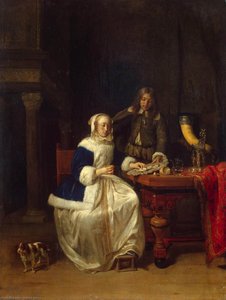
“Curiosità” di Gerard ter Borch, dipinta intorno al 1660-62, non è una grandiosa scena storica né un ritratto drammatico; offre invece uno scorcio profondamente intimo della tranquilla domesticità dell'Età dell'Oro olandese. Quest'opera straordinaria, dalle dimensioni di soli 76 x 62 cm, cattura immediatamente lo spettatore con il suo uso magistrale di luci e ombre, creando un'atmosmofera di sottile tensione e connessione non detta. Il dipinto ritrae tre donne – una sarta intenta a lavorare meticolosamente al suo ago, una dama assorbita in un libro e una terza figura che le osserva da lontano – all'interno di una stanza modestamente arredata. È una scena ricca di osservazione discreta, capace di cogliere le sfumature dell'interazione umana con una straordinaria profondità psicologica.
Ter Borch fu un pioniere della pittura di genere olandese, rinomato per la sua capacità di ritrarre la vita quotidiana con un livello di realismo e sensibilità emotiva senza pari. A differenza di molti dei suoi contemporanei che prediligevano soggetti eroici o composizioni elaborate, Ter Borch si concentrò sull'ordinario: i momenti di quieta contemplazione, i gesti sottili e le relazioni silenziose che definiscono l'esperienza umana. “Curiosità” esemplifica perfettamente questo approccio; non si tratta di ostentare ricchezza o status, quanto piuttosto di esplorare le complessità della compagnia femminile e il dramma silenzioso della vita domestica.
Una Sinfonia di Luce e Texture
La forza del dipinto risiede nell'extraordinaria abilità tecnica di Ter Borch. Egli impiega la tecnica nota come “chiaroscuro”, contrastando drammaticamente le aree di luce e ombra per creare un senso di profondità e volume. Si noti come la luce morbida e diffusa illumini i volti e le mani delle donne, mentre lo sfondo rimane avvolto nell'oscurità, attirando la nostra attenzione sulla loro presenza immediata. Anche le trame sono altrettanto affascinanti: la delicata trama dell'abito della sarta, la superficie liscia del libro, il tessuto ruvido della sedia, tutto reso con una cura minuziosa.
L'approccio meticoloso di Ter Borch è evidente nella resa dei tessuti e dei drappeggi. Egli non si limita a raffigurarli; ne cattura la qualità tattile, permettendoci di percepire quasi il peso e la consistenza di ogni indumento. Questa attenzione al dettaglio si estende a ogni elemento della scena, creando un'esperienza straordinariamente immersiva per lo spettatore. Le sottili variazioni di tono e sfumatura contribuiscono significativamente al senso generale di realismo e immediatezza dell'opera.
Simbolismo e Risonanza Psicologica
La composizione stessa è carica di significato simbolico. La sarta, concentrata sul suo lavoro, rappresenta la diligenza e l'industriosità, tratti molto apprezzati nella società olandese del XVII secolo. La dama che legge suggerisce aspirazioni intellettuali e un legame con il mondo esterno, oltre la sfera domestica. E la donna che le osserva da lontano – una figura spesso interpretata come la moglie dell'artista, Gesina ter Borch – accenna a una sottile dinamica di potere e forse a un tocco di malinconia. Il suo sguardo distolto invita a speculare sui suoi pensieri e sentimenti.
L'inclusione del cane aggiunge un ulteriore livello di complessità alla scena. Esso rappresenta la lealtà, la compagnia e i semplici piaceri della vita domestica. La presenza del cane enfatizza ulteriormente l'intimità dell'ambiente e i legami stretti tra le donne. “Curiosità” non è meramente un ritratto; è un tableau accuratamente costruito che ci invita a contemplare i misteri della connessione umana e la bellezza silenziosa dei momenti quotidiani.
Portare "Curiosità" nella propria Casa
ArtsDot offre splendide riproduzioni dipinte a mano di “Curiosità” di Gerard ter Borch, meticolosamente realizzate dal nostro team di artisti esperti utilizzando tecniche tradizionali. Ogni riproduzione cattura la qualità luminosa e la profondità psicologica dell'originale, permettendovi di portare quest'opera straordinaria nella vostra casa o nel vostro ufficio. Disponibili in una gamma di dimensioni, le nostre stampe di alta qualità sono perfette per collezionisti, interior designer e chiunque apprezzi la bellezza e l'arte della pittura del Secolo d'Oro olandese. Esplorate la nostra selezione oggi stesso e lasciatevi incantare dal fascino senza tempo di “Curiosità”.
Domande e risposte
Quanto sono intensi i colori di "Curiosità" di Gerard ter Borch?
"Curiosità" di Gerard ter Borch presenta un'intensità cromatica Monocromatico.
Quale formato di stampa di "Curiosità" di Gerard ter Borch si adatta meglio alla stanza consigliata?
Per un Zona living, la dimensione di stampa consigliata per "Curiosità" di Gerard ter Borch è Formato medio.
Qual è la tonalità dominante di "Curiosità" di Gerard ter Borch?
"Curiosità" tende verso una tonalità Dall'ambra allo zafferano.
Opere simili




Gerard ter Borch
1617 - 1681, Paesi Bassi
Biografia dell'artista
Gerard ter Borch: Vita e Opere di un Maestro del Secolo d'Oro Olandese
Gerard ter Borch (Zwolle, dicembre 1617 – Deventer, 8 dicembre 1681) è stato un pittore olandese, figura chiave del periodo dell’età dell’oro. La sua abilità nel catturare la vita quotidiana e i dettagli intimi lo ha reso uno dei più apprezzati artisti del suo tempo.
Primi Anni e Formazione
Gerard ter Borch nacque a Zwolle, in una famiglia di artisti. Suo padre, Gerard ter Borch il Vecchio, fu un pittore e poeta che gli fornì le prime istruzioni artistiche. Ter Borch dimostrò presto un talento eccezionale, viaggiando per l'Europa tra il 1632 e il 1650. Questi viaggi lo esposero a diverse influenze artistiche, tra cui quelle italiane, spagnole e francesi. Studiò con Pieter de Molijn ad Haarlem e trascorse del tempo a Londra, Roma e Münster.
Stile Artistico e Tematiche
Lo stile di ter Borch è caratterizzato da un realismo attento ai dettagli, una luce soffusa e una composizione equilibrata. I suoi dipinti spesso raffigurano scene di vita quotidiana, come interni domestici, ritratti e momenti di conversazione. Un elemento distintivo del suo lavoro è la capacità di catturare l'atmosfera intima e psicologica dei soggetti rappresentati.
- Scene di genere: Ter Borch eccelleva nella pittura di scene di genere, raffigurando attività quotidiane con grande accuratezza e sensibilità.
- Ritratti: Realizzò anche numerosi ritratti, sia individuali che di gruppo, caratterizzati da una resa fedele dei tratti somatici e dell'espressione psicologica.
- Influenze: Il suo stile fu influenzato da artisti come Pieter Codde e Willem Duyster, ma sviluppò un linguaggio pittorico personale e originale.
Opere Principali e Riconoscimenti
Tra le opere più significative di Gerard ter Borch si annoverano:
- La Lettera: Un esempio emblematico della sua abilità nel rappresentare la luce e le texture.
- Conversazione Galante: Incisa da Johann Georg Wille, quest'opera dimostra la capacità dell’artista di comunicare emozioni sottili.
- L'Arrivo di Adriaan Pauw a Münster: Un dipinto storico che testimonia la sua abilità narrativa.
- Ragazza in Costume Contadino: Un ritratto intimo che cattura la bellezza della vita quotidiana.
Ter Borch ottenne un notevole successo durante la sua vita, diventando membro del consiglio cittadino di Deventer e godendo della stima dei suoi contemporanei.
Eredità e Influenza
L'opera di Gerard ter Borch ha esercitato una profonda influenza su numerosi pittori olandesi, tra cui Gabriel Metsu, Gerrit Dou, Eglon van der Neer e Johannes Vermeer. La sua attenzione ai dettagli, la sua capacità di creare atmosfere intime e il suo realismo attento hanno contribuito a definire l'estetica del periodo dell’età dell’oro olandese. Ter Borch è oggi considerato uno dei maestri indiscussi della pittura olandese del XVII secolo.


Articoli correlati

Genre Painting: A Window into Daily Life & Societal Values of the Dutch Golden Age
Explore the captivating world of Dutch Golden Age genre painting! Discover realistic depictions of daily life, masterful artists like Ostade & Metsu, and hidden symbolism. Learn about this influential art movement with ArtsDot.

Gerard ter Borch: Intimità e Luce nell'Età dell'Oro Olandese
Esplora il mondo di Gerard ter Borch, maestro dell'Età dell'Oro olandese. Analisi approfondita del suo stile pittorico, le scene di genere e l'uso magistrale della luce. Scopri i simboli nascosti nelle sue opere e la sua eredità artistica.
Illuminating Realism: Exploring the Dutch Golden Age of Painting (1600-1700)
Explore the Dutch Golden Age of painting (1600-1700) with ArtsDot. Discover Rembrandt, Vermeer & other masters. Learn about techniques, history & find museum-quality reproductions.