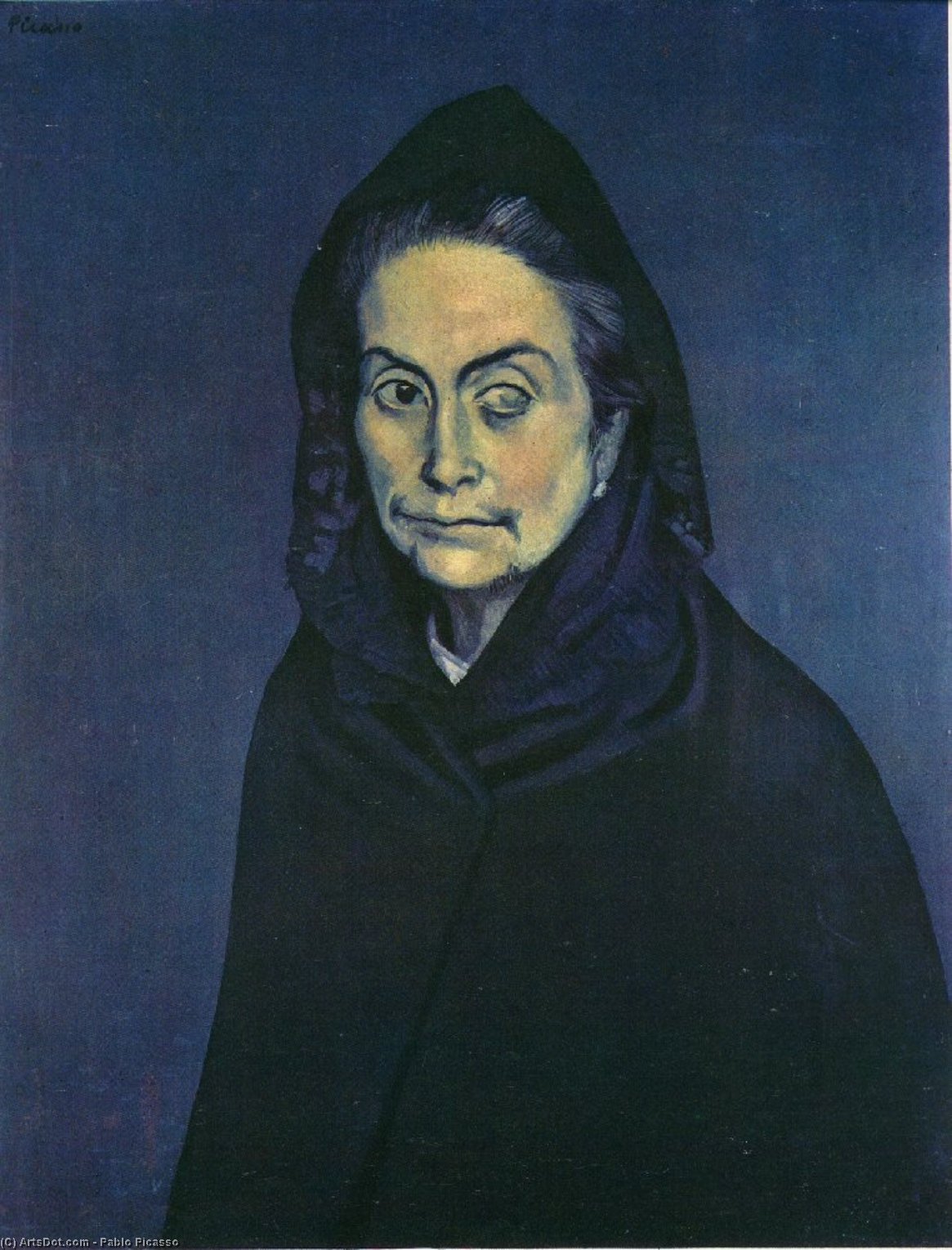
Scopri 'Celestina' di Pablo Picasso (1904) – un toccante ritratto del Periodo Blu che evoca dignità silenziosa e bellezza senza tempo. Esplora la sua importanza storica e la sua profondità emotiva.
Scopri Pablo Picasso: il genio del Cubismo e delle avanguardie! Esplora i periodi Blu e Rosa, Guernica e l'impatto rivoluzionario sulla storia dell'arte moderna.
Celestina: A Portrait of Quiet Dignity
Pablo Picasso’s “Celestina” (1904), housed in the Musée Picasso in Barcelona, stands as a cornerstone of his Blue Period oeuvre—a testament to his masterful exploration of emotion and form during a pivotal moment in artistic history. This striking portrait captures an older woman with remarkable sensitivity, presenting her face against a muted background that amplifies the solemn beauty of the composition. More than just a depiction of a subject, “Celestina” embodies Picasso’s profound engagement with psychological depth and his pioneering approach to representing human experience.
Style and Technique: Embracing Expressionism's Nuances
Painted in 1904, "Celestina" exemplifies Picasso’s embrace of Expressionist principles—a stylistic departure from academic realism that prioritizes conveying inner feelings rather than objective observation. The artist employs smooth, flowing lines to delineate the contours of the woman’s face and clothing, creating a visual rhythm that guides the viewer's gaze. Soft brushstrokes contribute to a palpable sense of texture and depth without resorting to excessive detail—a deliberate choice reflecting Picasso’s desire to capture not merely what is seen but what is felt. The diffused lighting enhances the contours of her features, casting subtle shadows that underscore the woman’s age and conveying an aura of contemplative stillness.
Historical Context: Influenced by Matisse and the Spirit of Its Time
Picasso's Blue Period was profoundly impacted by Henri Matisse’s stylistic innovations—particularly his use of vibrant color palettes to express emotion. However, Picasso countered this trend with a predominantly blue hue scheme, mirroring the melancholic mood prevalent in European society at the time. The painting reflects anxieties surrounding social upheaval and personal loss—themes central to Picasso's own life experiences during this period. It’s considered a significant contribution to the broader artistic dialogue of the early 20th century, marking a decisive step away from traditional conventions toward a more psychologically driven aesthetic.
Symbolism and Emotional Resonance: Exploring Themes of Solitude and Resilience
The dark cloak draped over the woman's shoulders serves as a potent symbol—suggesting protection from external pressures, introspection, and perhaps even solitude. The muted color palette reinforces this mood, inviting viewers to contemplate themes of resilience and inner strength amidst adversity. Picasso’s masterful rendering captures not only physical likeness but also an intangible essence—a quiet dignity that speaks volumes about the subject's character and invites profound reflection. “Celestina” remains a powerful reminder of art’s capacity to convey complex emotions and explore universal human concerns.
Why Choose This Artwork for Your Space
“Celestina” offers exceptional versatility for interior designers seeking to infuse their spaces with artistic sophistication and emotional resonance. Its understated tones harmonize beautifully with minimalist palettes, creating an atmosphere of serenity and contemplation—ideal for bedrooms or living areas where tranquility is paramount. Furthermore, its enduring beauty ensures that it will captivate viewers for generations to come. Acquiring a high-quality reproduction from ArtsDot.com allows you to experience the legacy of Picasso’s artistic genius while enriching your own home environment. Explore more iconic works by Pablo Picasso on our platform—a celebration of revolutionary art and timeless inspiration.