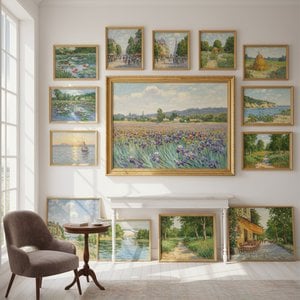
Juliette Wytsman: A Life in Impressionist Hues
Early Life and Education
- Born: Juliette Trullemans on July 14, 1866, in Brussels, Belgium.
- She initially studied under Henri Hendrickx at the Bischoffsheim Institute in Brussels, laying the foundation for her artistic journey.
- Further training took place in the workshop of Jean Capeinick in Ghent, where she specialized in flower painting – a theme that would remain prominent throughout her career.
- It was at Capeinick’s workshop that she met her future husband and artistic collaborator, Rodolphe Wytsman.
Marriage and Artistic Collaboration with Rodolphe Wytsman
- A Pivotal Connection: Rodolphe Wytsman, a founding member of Les XX, introduced Juliette to this influential circle of avant-garde artists.
- They married in 1886 and moved to Linkebeek near Brussels in 1892, establishing a shared artistic life.
- Mutual Influence: Their partnership was marked by mutual influence and support, both contributing to the vibrant Belgian art scene of the late 19th and early 20th centuries.
Artistic Development and Style
- Impressionist Roots: Juliette Wytsman’s work is firmly rooted in Impressionism, characterized by a focus on capturing fleeting moments of light and color.
- Key Themes: Her paintings primarily depict landscapes and gardens, showcasing her keen observation of nature and ability to convey atmosphere.
- She developed a delicate and nuanced style, often employing soft palettes and expressive brushwork.
- While influenced by Rodolphe’s work, she maintained a distinct artistic voice, focusing on the intimate beauty of floral arrangements and natural settings.
Exhibitions and Recognition
- International Exposure: Wytsman exhibited her work at the Palace of Fine Arts during the 1893 World's Columbian Exposition in Chicago, Illinois, gaining international recognition.
- Museum Collections: Her paintings are now held in prestigious Belgian museums, including the Royal Museum of Fine Arts in Antwerp, the Royal Museums of Fine Arts of Belgium in Brussels, and the Museum of Fine Arts in Ghent.
Later Life and Legacy
- Wartime Displacement: During World War I, Juliette and Rodolphe Wytsman fled Belgium and lived in Rotterdam, Netherlands, seeking refuge from the conflict.
- Passing: She died on March 8, 1925, in Ixelles, Belgium, at the age of 58.
- Historical Significance: Juliette Wytsman’s work provides valuable insight into the Belgian Impressionist movement and the role of women artists during this period. Her paintings continue to be appreciated for their beauty, sensitivity, and artistic merit.