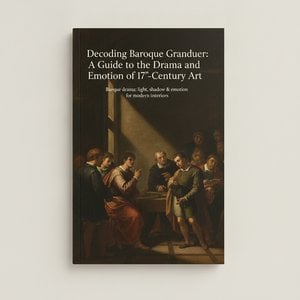
The Master of Light: The Life and Legacy of Gerard Douffet
In the grand tapestry of the seventeenth century, few threads shimmer with as much dramatic intensity as the works of Gerard Douffet. Born in the vibrant Belgian city of Liège around 1594, Douffet emerged from a period of profound artistic transition, bridging the gap between the structured elegance of Mannerism and the emotive power of the Baroque. His early training under the influence of Jean Taulier provided him with a foundation in the meticulous traditions of his homeland, yet it was his subsequent immersion in the legendary Antwerp School—specifically under the shadow of Peter Paul Rubens—that truly ignited his creative spirit. This exposure to the Flemish masters instilled in him an unparalleled devotion to anatomical precision and a profound respect for the tactile reality of the physical world.
As Douffet’s journey took him through the sun-drenched landscapes of Italy, his artistic vocabulary expanded significantly. The classical ideals of the Renaissance met the burgeoning theatricality of the Baroque, allowing him to develop a style defined by chiaroscuro and tenebrism. He became a master of manipulating light, not merely as a tool for visibility, but as a psychological force capable of sculpting form out of darkness. This mastery allowed him to breathe life into his subjects, whether they were figures of profound religious significance or quiet, introspective portraits. His ability to render the subtle play of light across skin, heavy fabrics, and polished metal became a hallmark of his oeuvre, drawing viewers into a space where shadow and illumination dance in eternal tension.
A Tapestry of Devotion and Drama
The breadth of Douffet’s subject matter reflects the complex religious and social landscape of the seventeenth century. He was equally adept at capturing the monumental scale of historical and religious narratives as he was at the intimate nuances of portraiture. His historical compositions are characterized by a sense of solemn grandeur, designed to evoke awe and contemplation in the viewer. One can almost feel the weight of history in his celebrated works, such as 'Pope Nicholas V. at the Tomb of St. Francis of Assisi', where the architectural scale and the somber atmosphere create a profound sense of papal piety and spiritual reverence.
Beyond the epic, Douffet possessed a remarkable gift for the genre scene and the portrait, often imbuing his subjects with a quiet, psychological depth. His portraits, such as those found in the Munich Gallery or the striking depiction of Cyprien Regnier of Oostergooer, demonstrate an extraordinary ability to convey character through subtle facial expressions and the meticulous rendering of attire. In these works, the artist’s technical brilliance is matched by his emotional intelligence, capturing a moment of stillness that feels both timeless and deeply human. His religious commissions, such as 'St. Helena and the True Cross' for the Abbey Saint Lawrence, further showcase his ability to weave complex theological themes into visually breathtaking narratives, utilizing texture and light to emphasize the miraculous nature of the divine.
Artistic Significance and Enduring Influence
The historical significance of Gerard Douffet lies in his role as a stylistic conduit between the Flemish and Dutch traditions. While his roots were firmly planted in the Walloon and Flemish schools, his aesthetic sensibilities resonated deeply with the burgeoning realism of the Dutch Golden Age. His work embodies the era's fascination with the interplay of light and shadow, a technique that would influence generations of painters seeking to capture the drama of human existence. Through his meticulous attention to detail—from the sheen of a silk sleeve to the soft glow of an oil lamp—he elevated the act of observation into a form of high art.
Today, Douffet’s legacy is preserved in some of Europe's most prestigious collections, serving as a testament to his enduring mastery. His contributions to the development of Baroque portraiture and historical painting remain vital studies for anyone seeking to understand the evolution of European art. He remains a painter of profound substance, an artist who could command the vastness of a cathedral scene with the same grace and precision as the smallest flicker of candlelight in a darkened room.