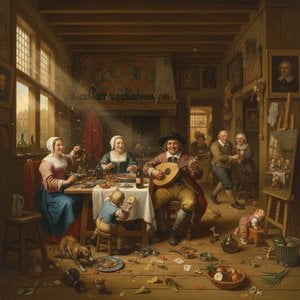
A részletekbe merült élet: Idősebb van Mieris Frans világ
Idősebb van Mieris Frans, egy név, amely az aprólékos részletesség és a kifinomult művészet szinonimája, jelentős helyet foglalt el a holland aranykorban. 1635-ben Leidenben született, s élete az arcsú menet mellett az aranyásat, családi szakmát – amelyet apja, Jan Bastiaensz van Mieris gyakorolt – hagyta trásva a festészet lenyűgöző világának irányába. A rajzolás iránt mutatott korai hajlam megalapozta azt a karriert, amely meghatározta a „fijnschilder” stílust, és intim betekintést nyújtott a 17. századi holland társalomba. Abraham Toorenvliet alatt elsajátított kezdeti képzése, amelyet Gerrit Dou neves tanítása követett, olyan szilárd alapot teremtett, amelyre saját, egyedülálló művészi hangját építhette. Ezek a formálódó évek nemcsak technikai tudást impartáltak számára, hanem mély érzéket is fejlesztettek a narratív árnyalatok és a finom megfigyelések erejét illetően.A „fijnschilder” felemelkedése
Van Mieris hamarosan elismertté vált a fijnschilder – egy holland kifejezés, amely a „finom festészetet” jelenti – mestereként. Ezt a technikát az almost megszállott részletesség, a sima és polírozott ecsetvonások, valamint a kisebb méretű vásznak a preferálása határozta meg. Nem csupán a valóság másolásáról volt szó; a cél a valóság felemelése volt a kíméletlen precizitáson keresztül. Festményeiben a felületek úgy tűnik, mintha élettel csillognának: a szatén fényes ragyogása, a bársony finom textúrája, a fém csillanása – mindezt lenyűgöző pontossággal ábrázolta. Nem egyszerűen festett egy szobát; újraalkotta annak hangulatát is, meghívva a nézőt a családiasság és a jólét jeleneteibe. Témái gyakran a gazdagok életét forgatták körül: elegáns összejöveteleket, díszes belső tereket, portrékat ábrázolva, amelyek nemcsak a külső hasonlságot, hanem a karaktert is megörökítették. Az olyan ismétlődő motívumok, mint az osztrhagymás ebédek, az orvosok a betegek mellett, vagy a mindennapi feladatokban elmélyült nők, ablakokat nyitottak az felső osztály szokásai és társas rituáléi közé. Bár kezdetben erősen Gerrt Dou stílusától volt befolyásolva, van Mieris fokozatosan fejlesztette saját egyedi megközelítését. A túl 많 részletesség helyett a figurák közötti interakcióra és a kompozíciókban kibontakozó történetekre összpontosított. Későbbi művei néha sötétebb tónusokat mutatnak az korábbi, világosabb palettához képest, ami növekvő érettségét és művészi felfedződését tükrözi.Jelentős művek és maradandó örökség
Számos kulcsfontosságú alkotás áll van Mieris készségének és fejlődő stílusának bizonyítékaként. Az Orvos látogatása (1657), amely egyik korai és legfontosabb műve, bemutatja Dou befolyásától való feltörekvő függetlenségét. A festmény mesteri alkotás a medizin vizsgálat csendes feszültségének megörökítésében, lenyűgöző realizmusmal. Öntportré zitterrrel című műve éppoly lenyűgöző, demonstrálva képességét a pompás öltözet ábrázatására, miközben személyiséget és belső gondolkodást is közvetít. A Művész feleséjének, Cunera van der Cocknak készült portréja példaként szolgál portretisztaságának mesterességére, kiemelve a technikai tudást és a chiaroscuro – a fény és árnyék drámai játéka – értelmét. A műfajbeli jeleneteken és portrékon túl van Mieris allegorikus festményekbe is belemerült, például olyan bűnök ábrázolására, mint az ivás, a dohányzás vagy a szerencsejáték, bizonyítva művészi képességeinek szélességét. Idősebb van Mieris frans hatása messze túlmutatott saját élettartamán. Hatása visszhangzott családján belül is; fia, Willem van Mieris (1662–1747) és unoka внуja, Fiatalabb van Mieris Frans (1689–1763) is sikeres műfajfestők lettek, folytatva a művészeti hagyományt. Stílusának népszerűsége számos másolót is létrehozott, legkiemelkedebben A. D. Snaphaan, aki Lipében dolgozott és Anhalt-Dessau udvarának protektálásának részesült w.Tartós hozzájárulás a holland művészethez
Idősebb van Mieris kulcsszerepet játszott a holland aranykorú festészet fijnschilder mozgalmának kialakításában. Az aprólékos részletekhez való ragaszkodása, a mindennapi élet és az felső osztály társadalma realista ábrázolása, valamint technikai zsenialitása jelentős hozzájárulást nyújtott egy olyan korszakhoz, amely már önmagában is híres volt művészeti innovációjáról. Neves protektálói voltak, köztük Leopolde főherceg és III. Cosimo de' Medici, ami tehetségének nemzetközi elismertségét igazolja. Még ma is lenyűgözik a közönséget alkotásai, kiváló kézművességük és a 17. századi kultúra éleslátó ábrázolása miatt. Egy önportré ellopása a szydneyi New South Wales Művészeti Galériából fájdalmas emlékeztető művészetének tartós értékére és vonzerőre – egy olyan örökségre, amely ma is inspirálja és magával ragadja a gyűjtőket és a művészetszeretőket egyaránt. Festményei nem csupán történelmi relikviák; ablakokat nyitnak egy múltbéli korszakba, aprólékosan kidolgozva és időtlen szépséggel árasztva.Kérdések és válaszok
Hol találhatók Frans van Mieris művei kulcsszavakra csoportosítva?
Frans van Mieris Kulcsszavak szerint oldala a művész alkotásait kulcsszavak alapján csoportosítja.
Megtekinthető Frans van Mieris művei technikánként csoportosítva?
Frans van Mieris művei technikák szerint is böngészhetők a művész Minden médium oldalán.
Megvizsgálhatom Frans van Mieris színhasználatát az összes művében?
Frans van Mieris Paletta Genom egy olyan oldal, amely bemutatja a művész életművének színes profilját.