Chiura Obata (1885-1975): Celebrated Japanese-American Painter, UC Berkeley Professor, & Master of Sumi-e
Chiura Obata’s life was a remarkable tapestry woven from threads of tradition and innovation, marked by profound artistic synthesis and unwavering resilience—a testament to the transformative potential of cultural exchange and the enduring spirit of creativity even amidst challenging circumstances. Born Zoroku Sato in Okayama Prefecture, Japan, on November 18, 1885, his formative years were steeped in the rituals and aesthetics of Edo-period Japan. At the tender age of seven, he was entrusted to the care of Rokuichi Obata—his older brother, who served as both a familial figure and an artistic mentor—initiating a formal artistic education centered around sumi-e – Japanese ink painting. This foundational training instilled within him not merely technical proficiency but also a deep reverence for nature’s rhythms and a philosophical outlook on art that would permeate his entire oeuvre. Despite initial inclinations toward military service influenced by Rokuichi's guidance, Obata’s inner compass steered him towards artistic freedom, compelling him at fourteen to abandon his family home and pursue studies in Tokyo under the tutelage of esteemed masters such as Tanryo Murata, Kogyo Terasaki, and Gaho Hashimoto. These formative years exposed him not only to the nuanced intricacies of Japanese artistic conventions but also to burgeoning Western influences that would subsequently shape his distinctive style—a synthesis reflecting his own journey across continents.Early Artistic Training & Influences
The influence of Rokuichi Obata’s artistic sensibilities profoundly shaped Chiura Obata's early artistic development. Rokuichi, himself a respected artist, instilled in Zoroku a deep appreciation for the contemplative beauty of nature and the expressive power of sumi-e—a tradition that prioritized simplicity, balance, and subtle tonal variations to convey emotion and capture the essence of the subject matter. This dedication to observation and meticulous technique would become hallmarks of Obata’s artistic practice throughout his life. Furthermore, Obata's studies under masters like Murata, Terasaki, and Hashimoto broadened his horizons beyond purely Japanese aesthetics, introducing him to Impressionist techniques and fostering a willingness to experiment with new approaches—a crucial step in forging his unique artistic voice. These mentors championed the use of color alongside ink, encouraging Obata to explore the expressive possibilities inherent in blending Eastern and Western traditions.Immigration & Early Career: Illustration & Design
At fourteen, driven by an irresistible yearning for creative autonomy, Chiura Obata severed ties with Sendai and embarked on a transformative voyage to Tokyo—a pivotal moment that irrevocably altered his artistic trajectory. Recognizing the importance of practical experience alongside theoretical knowledge, he initially secured employment as a houseboy to support himself while simultaneously pursuing independent studies in art. This resourceful approach allowed him to hone his skills in illustration – primarily for Japanese community newspapers documenting significant events like the devastating 1906 San Francisco earthquake—and design—working collaboratively with prominent department stores such as Gump’s and The Emporium—tasks that demanded precision, attention to detail, and an understanding of visual communication. These early endeavors solidified Obata's foundational artistic skills and established a grounding in commercial artistry alongside his burgeoning passion for landscape painting.The Yosemite Inspiration & California Landscape Art
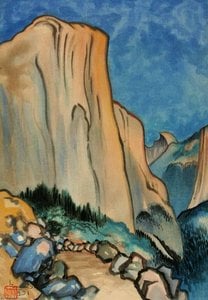
A serendipitous sketching expedition to Yosemite National Park and the Sierra Nevada mountains in 1927 proved to be an epiphany for Chiura Obata—a catalyst that irrevocably redefined his artistic vision and propelled him toward a lifelong devotion to capturing the grandeur of California’s wilderness on canvas. The towering granite cliffs, cascading waterfalls, and expansive meadows captivated Obata's imagination, sparking an intense desire to translate their majesty into visual representations. This formative experience profoundly influenced his subsequent artwork, inspiring him to incorporate Yosemite’s distinctive light and color palettes into his paintings—a stylistic hallmark that distinguishes his oeuvre from many of his contemporaries. Notably, he collaborated closely with UC Berkeley professor Worth Ryder on this journey, fostering a friendship that would endure throughout Obata's life and further enriching his artistic perspective.World War II Internment & Artistic Resilience
The onset of World War II dramatically reshaped Chiura Obata’s personal and professional life—bringing about an abrupt halt to his burgeoning career and subjecting him and his family to the injustices of wartime internment. Following Pearl Harbor, Obata and his wife Haruko Kohashi were forcibly relocated to Tanforan Detention Center and subsequently Topaz Relocation Center in Utah—experiences that profoundly impacted his artistic output and underscored the importance of preserving cultural identity amidst oppression. Despite the hardships imposed by incarceration, Obata demonstrated extraordinary resilience—establishing an art school within Topaz Camp—providing a vital outlet for creative expression among fellow detainees—and fostering a spirit of optimism and perseverance. This unwavering commitment to artistic endeavor served as a powerful rebuke to governmental restrictions and reaffirmed Obata’s belief in the transformative power of art as a means of resistance and remembrance. His enduring legacy resides not only in his stunning landscapes but also in his courageous stance against injustice and his steadfast dedication to nurturing artistic talent during times of crisis.Gyakran Ismételt Kérdések
Hol tekinthetők meg Chiura Obata műveit egy 3D-s galériában?
Virtuális látogatás is lehetséges: Chiura Obata 3D Múzeum oldala egy háromdimenziós galériában mutatja be a művész alkotásait.
Honnan származik Chiura Obata?
Chiura Obata Japán-ban született.
Hogyan találhatom meg Chiura Obata alkotásainak összes darabját egy adott médiumban?
Chiura Obata alkotásainak meghatározott technikában való kereséséhez használja a művész Összes médium oldalát.