


 Megtekintés
 Küldés
 Megosztás
 Részletek

 Letöltés
 Hasonló darabok
 X-ray felvétel
 Diavetítés
Ferdinand I király
 Akril vászonon
- Falfeliratok és faldekoráció
- High Renaissance
 1550
1550 14.0 x 11.0 cm
 Kunsthistorisches Museum
 Összes részlet megjelenítése
Kézzel készített olajfestmény reprodukció
Kézzel festett olajvastú vászon, az Ön által választott méretben és keretben, művészeink készítik meglévőre. ( Nyomat rendelése Kép letöltése)




P118B $10

P118H $10

P118W $10

P438Z $10

P508JH $12

P508YH $12

P805H $10

P805Z $10

P919BZ $10

P919G $10

P919XJ $10

P959ZH $10

P968JZ $12

W106C $8

W218G $10

W218JH $8

W218Y $10

W307PJ $10

W316G $10

W316PJ $8

W316Y $10

W398PJ $8

W4111J $10

W500HY $15

W500JH $15

W692G $12

W849H $8

W940BG $15

W953PJ $8




Válasszon előre meghatározott méreteink közül, amelyek megfelelnek a műalkotás eredeti arányainak.

Ön megadhat saját méreteket egy adott kerethez vagy térhez igazításhoz. Ha a kiválasztott méret nem egyezik az eredeti kép arányával, akkor a műalkotást levágjuk, vagy további kézzel festett elemekkel meghosszabbítjuk a festményt. A gyártás megkezdése előtt küldünk Önnek egy digitális előnézetet jóváhagyásra.
Kérjük, vegye figyelembe, hogy a képernyőn megjelenő előnézet nem tükrözi a tényleges vágást vagy kiterjesztést. Csak az előnézet fog pontosan mutatni a végső kompozíciót.
Bár egyedi méretek állnak rendelkezésre, javasoljuk, hogy válasszon egy méretet az előre meghatározott listából az eredeti arányok megőrzése érdekében.
A rendelést követően a ArtsDot.com csapata e-mailt küld az ügyfélnek az instrukciókért, és biztosít egy előnézeti képet (mockup).
Világszerte elérhető szállítás () 3-4 hét alatt a szokásos 5 hét helyett. (17 augusztus). A minőség nem kérdőjelezhető.

Ingyenes globális expressz szállítás

Prémium minőségű len vászon

Teljes körű szállítási biztosítás

Vámvisszatérítési Garancia

Hiteles színpontosság garancia

60 napos visszaküldési lehetőség (csak hibás termékek esetén)

100% pénzvisszatérítési garancia

Több darab vásárlása esetén kedvezmény
 Az üvegkeretes opció csak 110 cm alatti méretben érhető el

Ferdinand I király
Reprodukciós technika
Reprodukció mérete
-


Összesített ár
$ 263
A műalkotás leírása
Emperor Ferdinand I – A Salzburg Renaissance Masterpiece
Hans the Elder Bocksberger (c. 1510 – before 1569), born in Salzburg, Austria, stands as a pivotal figure within Salzburg’s burgeoning artistic landscape during the High Renaissance and early Mannerism periods. Though overshadowed by his younger brother, Hans Holbein the Younger—a celebrated artist who achieved international renown—Hans Bocksberger nonetheless cemented his place in art history through commissions that adorned noble residences and churches across Bavaria and Austria. His familial legacy instilled a deep understanding of humanist ideals and stylistic conventions prevalent throughout Europe at the time – Salzburg’s Protestant Reformation fostering an environment where innovative ideas could flourish alongside established religious iconography.- Subject Matter: The portrait depicts Emperor Ferdinand I, ruler of Habsburg Austria, capturing him in a dignified pose against a dark backdrop that emphasizes his presence and stature.
- Style & Technique: Executed in oil on paper mounted on wood, the painting embodies the Renaissance’s meticulous attention to detail and realistic representation—a hallmark of its era. Bocksberger skillfully employs chiaroscuro – dramatic contrasts between light and shadow – to sculpt Ferdinand's form and imbue the artwork with depth and emotion.
Historical Context & Patronage
The painting’s creation coincided with Salzburg’s Protestant Reformation, profoundly impacting artistic patronage. This period witnessed a surge in demand for monumental artworks that conveyed religious piety and celebrated Habsburg authority. Ferdinand II commissioned numerous portraits to commemorate his reign and bolster the prestige of his court—a testament to Bocksberger's ability to fulfill ambitious artistic briefs. The artwork itself resides within the Kunsthistorisches Museum, Vienna, reflecting Salzburg’s enduring cultural heritage.Symbolism & Artistic Influences
Bocksberger’s stylistic choices resonate with Holbein’s approach—a shared dedication to anatomical accuracy and psychological insight. The Emperor's attire – a dark shirt overlaid with a fur-lined robe – symbolizes wealth, power, and nobility, mirroring the opulent traditions of Habsburg rule. Notably, the feather adorning Ferdinand’s hat signifies rank and honor, reinforcing his position as a leader within Christendom. The signature “Hans The Elder Bocksberger” confirms the artist's professional reputation during Salzburg’s Renaissance—a testament to artistic excellence and enduring legacy.A Legacy of Detail & Emotion
This captivating portrait transcends mere likeness; it captures Ferdinand I’s character with remarkable sensitivity. The artist’s masterful use of light and shadow, combined with meticulous rendering of facial features and drapery, elevates the artwork to a level of artistic sophistication that continues to inspire admiration today. Consider commissioning a high-quality giclee reproduction – preserving the original artwork's beauty and vibrancy for generations to come. Explore ArtsDot.com for bespoke art solutions!Hasonló műalkotások


A művész életrajza
The Salzburg Renaissance Visionary
In the heart of sixteenth-century Salzburg, amidst a landscape of profound cultural transition, lived an artist whose brush captured the very essence of the High Renaissance and the burgeoning Mannerist style. Hans the Elder Bocksberger, born around 1510, emerged from a lineage of significant artistic talent, inheriting both technical rigor and a deep-seated creative spirit from his father, Ulrich Bocksberger. While history occasionally casts a long shadow over his work through the international fame of his younger brother, Hans Holbein the Younger, the elder Bocksberger carved out a legacy that was uniquely his own, deeply rooted in the aristocratic and ecclesiastical landscapes of Bavaria and Austria.A Master of Detail and Humanist Expression
Bocksberger’s artistry was defined by an exquisite attention to detail and a seamless integration of humanist ideals into his compositions. His work often bridged the gap between the structured elegance of the High Renaissance and the more expressive, fluid grace of early Mannerism. This mastery is perhaps most strikingly evident in his portrait of Emperor Ferdinand I, executed circa 1550-55. In this piece, Bocksberger utilized oil on paper mounted on wood to achieve a breathtaking interplay of light and shadow. The meticulous rendering of the Emperor’s features—the furrowed brow and the piercing gaze—demonstrates a sophisticated grasp of psychological realism, while the opulent textures of fur-lined robes and feathered headwear speak to the grandeur and authority of his subject.Architectural Grandeur and Lasting Influence
Beyond individual portraits, Bocksberger was a master of decorative painting, possessing a rare ability to transform architectural interiors into immersive spiritual and worldly experiences. He excelled in creating spaces of grandeur, where his hand could be seen transforming cold stone into vibrant narratives. His most significant contributions include:- The Schlosskapelle Neuburg, where his frescoes captured the essence of humanist ideals through idealized figures and harmonious compositions;
- The Great Hall at Goldegg Castle near Radstatt, a space where his vision brought forth a breathtaking panorama of color and texture;
- The Residenz in Landshut, where he collaborated with contemporaries like Ludwig Refinger and Hermann Posthumus to create an impressive architectural ensemble.

hans the elder bocksberger
1510 - 1569 , Austria
A művészről röviden
- Artistic Movement Or Style: Renaissance
- Artists Or Movements Influenced By This Artist: ['European Portraiture']
- Artists Who Influenced This Artist: ['Hans Holbein the Younger']
- Date Of Birth: ca. 1510
- Full Name: Hans the Elder Bocksberger
- Nationality: Austrian
- Notable Artworks: ['Emperor Ferdinand I']
- Place Of Birth: Salzburg, Austria
Kapcsolódó cikkek

Hans Holbein the Younger: A Renaissance Portraitist's Mastery of Realism & Psychological Insight
Explore the life & art of Hans Holbein the Younger, a Renaissance master renowned for his strikingly realistic portraits and psychological insight. Discover iconic works like 'The Ambassadors' and delve into his lasting legacy.

A Kunsthistorisches Múzeum 25 Gyöngyszeme: Mesterművek és Inspiráció Otthonra
Fedezze fel a Kunsthistorisches Múzeum 25 legpálcásabb remekművét! Vermeer, Raphael, Rembrandt és más mesterek festményeinek története. Inspiráció otthonra – vászonképek, reprodukciók a ArtsDot.com-on!
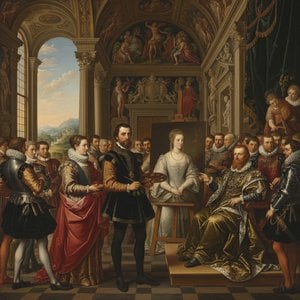
Hans von Aachen: Mannerism's Courtly Visionary & Imperial Portraiture
Explore the captivating world of Hans von Aachen, a leading Mannerist painter renowned for his exquisite imperial portraits & mythological scenes. Discover his legacy and influence on 16th-century European art.

Hans Makart: Opulence, Symbolism & the Viennese Aesthetic Movement
Explore the opulent world of Hans Makart, a pivotal figure in Austrian art history. Discover his influence on Klimt & the Vienna Secession, signature style, and investment potential. Expert insights for collectors.

Ferdinand Hodler: Symbolism, Parallelism & the Quest for Universal Harmony
Explore the captivating world of Ferdinand Hodler, Swiss Symbolist painter renowned for his evocative landscapes & pioneering 'parallelism'. Discover his life, key works, and lasting influence on art history. Own a hand-painted reproduction today!


