

 Megtekintés
 Küldés
 Megosztás
 Részletek
 Útmutató

 Letöltés
 Hasonló darabok
 X-ray felvétel
 Diavetítés
 Kérdések és válaszok
 Statisztika
neubrandenburg

 Összes részlet megjelenítése
Giclée / Műnyomat
Múzeumi minőségű giclée vagy vászonnyomat, gyors gyártással és rugalmas finomítási lehetőségekkel. ( Kézzel festett másolat rendelése Áttérés digitális képre)




P118B Ft10

P118H Ft10

P118W Ft10

P438Z Ft10

P508JH Ft12

P508YH Ft12

P805H Ft10

P805Z Ft10

P919BZ Ft10

P919G Ft10

P919XJ Ft10

P959ZH Ft10

P968JZ Ft12

W106C Ft8

W218G Ft10

W218JH Ft8

W218Y Ft10

W307PJ Ft10

W316G Ft10

W316PJ Ft8

W316Y Ft10

W398PJ Ft8

W4111J Ft10

W500HY Ft15

W500JH Ft15

W692G Ft12

W849H Ft8

W940BG Ft15

W953PJ Ft8




Válasszon előre meghatározott méreteink közül, amelyek megfelelnek a műalkotás eredeti arányainak.

Írja be a keretének vagy a falának megfelelő szélességet és magasságot. A nyomatot csak le lehet vágni, soha nem tehető nagyobbá, mint az eredeti kép, így egy eltérő alakú méretnél a kép egy része elveszik. Mielőtt bármit kinyatintanánk, küldünk egy digitális próbamodellt jóváhagyásra. Az oldalon látható kép nem tartalmazza a valós levágást — ezt csak a próbamodell mutatja meg.
Világszerte történő kiszállítás területére mindössze 2 hét alatt, a szokásos 4-5 hét helyett. (12 november)

Ingyenes globális expressz szállítás

Prémium minőségű len vászon

Teljes körű szállítási biztosítás

Vámvisszatérítési Garancia

Hiteles színarányosság garancia

100 napos visszaküldési lehetőség (csak hibás termékek esetén)

100% pénzvisszatérítési garancia

Több darab vásárlásakor kedvezmény
 Az üvegkeretes opció csak 110 cm alatti méretben érhető el

neubrandenburg
Giclée / Műnyomat
Reprodukció mérete
-


Összesített ár
Ft 20501
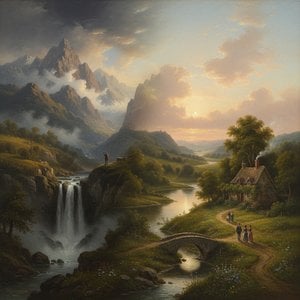
A Vista of Quietude: Exploring Caspar David Friedrich’s *neubrandenburg*
This evocative landscape by Caspar David Friedrich transports viewers to a serene yet subtly melancholic world. *neubrandenburg* is not merely a depiction of a town and its cathedral; it's an exploration of humanity’s place within the vastness of nature, a hallmark of the Romantic era. The painting presents a distant view of Neubrandenburg, dominated by the imposing spire of its cathedral, set against a dramatic skyscape.Style & Historical Context
Friedrich was a pivotal figure in the German Romantic movement (early 19th century), a period characterized by an emphasis on emotion, individualism, and the sublime power of nature. Rejecting the Enlightenment’s focus on reason, Romantics sought spiritual truth through experiencing the natural world. *neubrandenburg* exemplifies this ethos. The painting's style leans heavily into Romantic ideals – it isn’t a precise topographical rendering but rather an emotional response to the landscape. This was a time of significant societal shifts; the rise of industrialization and urbanization led many to yearn for a connection with the unspoiled beauty of nature, which Friedrich masterfully captures. His work often served as a counterpoint to the increasingly materialistic world.Composition & Technique
The composition is powerfully structured around horizontal lines – the horizon dividing the scene into foreground, middle ground and background. This reinforces the sense of expansive space. The small figures in the lower right corner are crucial; they provide a scale reference, emphasizing the immensity of the landscape and subtly suggesting human insignificance within it. Friedrich’s technique is characterized by loose brushstrokes and a muted color palette. He expertly employs atmospheric perspective – colors become paler and less saturated with distance – to create a convincing illusion of depth. The oil on canvas medium allows for rich texture and nuanced tonal variations, particularly in the swirling clouds that dominate the sky.Symbolism & Interpretation
The cathedral spire is arguably the focal point, rising above the town as a symbol of faith and spiritual aspiration. However, its distance and relative smallness within the vast landscape suggest a questioning of traditional religious authority. The dramatic sky, transitioning from dark greys to golden hues, can be interpreted as representing both hope and uncertainty – the transient nature of life itself. The figures in the foreground, seemingly lost in contemplation, invite viewers to share their quiet introspection. Friedrich frequently used landscapes not just as representations of places but as mirrors reflecting inner emotional states.Emotional Impact & Legacy
*neubrandenburg* evokes a sense of peaceful solitude and contemplative melancholy. It’s a painting that encourages viewers to pause, reflect, and connect with the natural world on a deeper level. The work's enduring appeal lies in its ability to tap into universal human emotions – awe, wonder, and a longing for something beyond the material realm. Friedrich’s influence can be seen in subsequent artistic movements, including Symbolism and Expressionism, and his landscapes continue to inspire artists and viewers alike today. A reproduction of this painting would bring a sense of tranquility and intellectual depth to any interior space.Kérdések és válaszok
Milyen domináns alapszín jellemzi „neubrandenburg”, Caspar David Friedrich alkotása alkotást?
A „neubrandenburg”, Caspar David Friedrich alkotása domináns színe a Ochre to Sepia. Ez a szín a paletta alapvető tónusa.
Mekkora a fényerke „neubrandenburg”, Caspar David Friedrich alkotása alkotásnak?
A "neubrandenburg" színei Gentle Luminance fényerőt mutatnak.
A „neubrandenburg”, Caspar David Friedrich alkotása portré, tájékép vagy négyzet alakú kompozíció?
A „neubrandenburg”, Caspar David Friedrich alkotása egy Portrait kompozíció. A nyomtatási méret kiválasztása előtt érdemes ellenőrizni az arányokat.
Hasonló műalkotások


A művész életrajza
Egy magányos látomás
Caspar David Friedrich 1774-ben született a Baltikumi kikötővárosban, Greifswaldban, korai éveket a mély elvesztés érzése határozott meg. Édesanyja és testvérei halála hosszú árnyát vetette juventudára, olyan érzékenységet szülve a halálral való szembeállás iránt, amely később művészetének központi témájává vált. Tanulmányait higidján, Christian testvéréjénél kezdte, mielőtt a művészetre és a teológiára táblázott a Lipcai Egyetemen. Bár egyik diplomát sem szerezte meg, a vizuális és a spirituális világ iránti kettős érdeke meghatározta alkotói pályáját. Technikai tudása Koppenhágenben tovább finomult, ahol olyan tájképi hagyományokkal találkozott, amelyeket később az belső érzelmi állapotok kifejezésének eszközevé változtatott meg.
A tájképezéshez való hozzáállása elszállott a hűséges, apró részletekben gazdag stílustól, amelyet elődei kedveltek. Ehelyett a táj szimbolikus jelentésének átadását célozta meg, a természet elemeit az emberi lélek megtestesülésére használva. Gyakran alkalmazott Rückenfiguren-eket – hátról látható alakokat – hogy a nézőt a kontemplatív élmény részévé tegye. Palettája, amely gyakran a visszafogott kékekből, szürkékből és barna árnyalatokból állt, fokozta az introszpektív és ünnepélyes hangulatot, amely műveit átszöszöri. Nem csupán azt festette meg, amit látott; hanem az emberi szellem belső időjárását örökítette meg.
A fenséges nyelv
Friedrich művészete a fenségesre (the sublime) összpontosít, a természet erején keresztül keresve a spirituális kapcsolódást. Kompozíciói gyakran egy magányos alakot állítanak egy hatalmas, gyakran lenyűgöző táj elé. A "Wanderer above the Sea of Fog" (kb. 1818) című művében a sziluettként megjelenő alak a gombolygó ködtengerrel szembeszállva testesíti meg a feszültséget az emberi jelenlét és a végtelenség között. A "The Sea of Ice" (1824) egy rideg, arktikai fülledt pusztaságot mutat be, amely a természet óriási erejének és az emberi sors iránti közömbösségének ábrázolása. Ezek a művek az élet fragilitására és a tájban reẩn meg a jelentés keresésére irányuló megszállottságot tükrözik.
Festményeiben gyakran specifikus elemeket alkalmaz a belső állapotok közvetítésére:
Örökség és újradilektálás
Friedrich pályafutása nem egy folyamatos emelkedés volt. Bár életében elnyerte elismertségét, népszerűsége elhúzódott, ahogy az művészeti íz a más irányzatok felé tolódott. 1840-ben Drezdenben halt meg, és egy ideig a művészeti világ pereméről a háttérbe szorult neve. Hírneve a 20. század végén jelentős újradilektáláson ment keresztül, amikor a német romantika központi alakjaként emlegeték meg. Szubjektív élményeire és érzelmi kifejezésre való fókuszálása megnyitotta az utat a későbbi irányzatok, például a szimbolizmus és a szürrealizmus előtt is.
Hatása olyan művészekre is kiterjedt, akik a vizuális eszközökkel próbálták felfedezni a belső világot. Az enlightenedment (felvilágosodás) racionalizmusát az érzelemre és a képzeletre cserélve megörökítette egy korszak szellemét. Tájszínészete nemzeti identitásként szolgált a németország politikai fragmentációjának idején. Ma műveit továbbra is mélyen megérintik a nézőket, emlékeztetve minket az emberiség és a természet közötti mély kapcsolatra.

Caspar David Friedrich
1774 - 1840 , Németország
Rövid információk
- Artistic Movement Or Style: Romantika
- Artists Or Movements Influenced By This Artist:
- Szimbolisták
- Szurrealisták
- Artists Who Influenced This Artist:
- Holland masters
- J.C. Dahl
- Date Of Birth: 1774
- Date Of Death: 1840
- Full Name: Caspar David Friedrich
- Nationality: Német
- Notable Artworks:
- A kolostor a tölgyesben
- Vándor a köd felett...
- Rügens vályogsziklái
- A jégtenger
- Place Of Birth: Greifswald, Németország
Kapcsolódó cikkek

Evoking Nature's Sublime: A Comprehensive Exploration of 19th-Century Landscape Painting
Explore the captivating world of 19th-century landscape painting! Discover renowned artists like Friedrich & Monet, key movements, and find the perfect artwork to bring nature's serenity into your home. Expert insights at ArtsDot.

The Sublime and the Picturesque: Exploring Emotion & Nature in Romantic Landscape Painting
Explore the emotional power of Romantic landscape painting! Discover the sublime & picturesque traditions, key artists like Friedrich & Cole, and find your perfect artwork at ArtsDot.

A Romantikus Tájképfestészet 10 Legikonikusabb Műalkotása – ArtsDot.com
Fedezze fel a romantikus tájképfestészet 10 legikonikusabb műalkotását! Caspar David Friedrich, J.M.W. Turner és más mesterek festményeinek története – inspiráló olajfestmények otthonába. ArtsDot.com: múzeumi minőségű reprodukciók és egyedi dekorációk online.
The Sublime and the Picturesque: Exploring Emotion & Nature in Romantic Landscape Painting
Explore the emotional power of Romantic landscape painting! Discover the sublime & picturesque aesthetics, key artists like Friedrich & Cole, and lasting influence on art history. Find your perfect piece at ArtsDot.

Caspar David Friedrich: Romanticism's Master of Landscape & the Sublimity of Inner Experience
Explore the profound landscapes of Caspar David Friedrich, a master of German Romanticism. Discover the symbolism, themes & enduring influence of this iconic artist. A deep dive into his life and work.


