A Life Etched in Indiana Landscapes
William McKendree Snyder, born December 20, 1848, in the quiet Indiana town of Liberty, was an artist whose life became inextricably linked to the rolling hills and majestic beech trees of his native state. His story is one woven with threads of youthful hardship, artistic dedication, and a profound connection to the natural world—a narrative that ultimately cemented his place as a pivotal figure in American landscape painting and a forerunner of the renowned Brown County Art Colony. Snyder’s early life was steeped in the values of family and faith; his father, William W. Snyder, was a prominent Methodist minister who instilled in young William a sense of purpose and moral grounding. This foundation would prove crucial as the family relocated to Madison, Indiana, where the seeds of artistic inclination began to sprout within the boy’s imagination. However, the idyllic rhythm of childhood was abruptly shattered by the outbreak of the Civil War. In 1861, both William and his father answered the call to duty, enlisting in the Union Army. The young Snyder served as a drummer boy, a role that exposed him to the brutal realities of conflict at an age when most boys were still lost in games and lessons. Tragically, he was captured and endured the horrors of imprisonment at Andersonville Prison—an experience that left an indelible mark on his soul and would later find poignant expression in his painting *Battle of Shiloh*.From Battlefield Echoes to Artistic Pursuits
The trauma of war undoubtedly shaped Snyder’s perspective, fostering a deep appreciation for the fragility and beauty of life. Following his release, he embarked on a journey of artistic training, seeking solace and expression through the language of paint and canvas. From 1868 to 1870, he studied with Inesco Williams in Cincinnati, honing his skills in portraiture—a discipline that demanded meticulous observation and technical precision. Yet, Snyder’s ambitions extended beyond the confines of studio work; he yearned to capture the grandeur of nature, a desire that led him eastward between 1872 and 1875. This period proved transformative as he immersed himself in the artistic milieu of the Hudson River School, studying under luminaries such as Albert Bierstadt, Charles Warren Eaton, William Morris Hunt, and George Inness. These masters instilled in him a reverence for atmospheric effects, detailed realism, and the sublime power of the natural world—influences that would become hallmarks of his own distinctive style. He absorbed their techniques, learning to translate light, shadow, and texture onto canvas with breathtaking accuracy, but he also began to forge his own artistic path, blending observation with a subtle sense of mood and atmosphere.The Indiana Canvas: A Legacy in Beech Trees
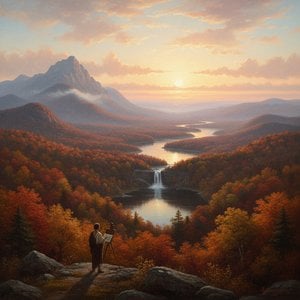
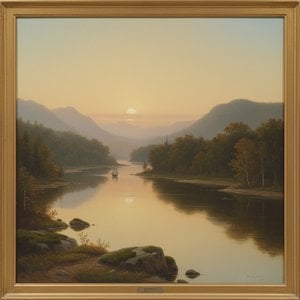
Upon returning to Indiana, Snyder dedicated himself to depicting the landscapes that resonated most deeply within him—the serene countryside of southern Indiana. He became particularly captivated by the region’s majestic beech trees, their smooth silver bark and delicate foliage providing endless inspiration. His paintings captured not merely the visual appearance of these scenes but also their very essence, conveying a sense of tranquility, solitude, and timeless beauty. *Beech Trees*, perhaps his most iconic work, stands as a testament to this dedication—a stunning example of his landscape painting skills and unwavering attention to detail. Snyder’s commitment to portraying Indiana's natural splendor extended beyond mere aesthetic appreciation; he was among the first artists to venture into Brown County, predating the establishment of the celebrated Brown County Art Colony. This pioneering spirit paved the way for countless other artists who would later flock to the area, drawn by its picturesque landscapes and vibrant artistic community. His early presence in Brown County established a precedent, fostering an environment where creativity could flourish and a unique artistic identity could emerge.Enduring Recognition and Artistic Significance
Throughout his career, William McKendree Snyder’s paintings garnered recognition from both public and private collectors, finding homes in esteemed institutions such as the Indiana State Museum and Hanover College—a testament to their enduring artistic merit and historical significance. His influence on the Brown County Art Colony cannot be overstated; he laid the groundwork for a movement that would shape American art for generations to come. Beyond his contribution to the colony, Snyder’s work serves as an invaluable record of the Indiana landscape during the late 19th and early 20th centuries—offering glimpses into a bygone era and preserving the region's natural beauty for posterity. He is remembered not only for his technical skill but also for his ability to evoke emotion through his art, capturing the spirit of place and inviting viewers to connect with the tranquility and majesty of the Indiana countryside. William McKendree Snyder passed away in 1930, leaving behind a legacy that continues to inspire and captivate art enthusiasts today—a lasting tribute to an artist who found beauty in the ordinary and transformed it into something extraordinary.Further Exploration
- Wikipedia: Information about William McKendree Snyder can be found on Wikipedia: https://en.wikipedia.org/wiki/William_McKendree_Snyder
- IU Southeast: A biography and information about his work are available at IU Southeast: https://southeast.iu.eduwonderland-way/collection/william-snyder.html
- AskART: Artist biography and facts can be found on AskART: https://www.askart.com/artist/William_McKendree_Snyder/76810/William_McKendree_Snyder.aspx