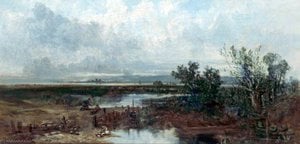
Portret John Wright Oakes

Vaš vodič kroz 25 najpoznatijih djela umjetnika John Wright Oakes

Ažurirano Studeni 2026 · rangirano prema našoj ocjeni popularnosti (pretraživanja, posjeti i narudžbe za svako djelo) · 25 djela John Wright Oakes u našem katalogu

Ukratko

Najpoznatije djelo umjetnika John Wright Oakes je Moonlight, Near Cemmaes, Anglesea (1871). Sljedeći na listi su A North Devon Glen, Autumn (1870) i Slate Quarries, Llanberis (1847). U našem katalogu nalazi se 25 djela umjetnika John Wright Oakes; ovaj vodič izdvaja 25 najpoznatijih, uz godinu nastanka, muzej i priču o svakom platnu.

1820 – 1887, Cheshire West and Chester Najviše djela: Walker Art Gallery

10 najpoznatijih djela umjetnika John Wright Oakes koja trebate znati

1
Moonlight, Near Cemmaes, Anglesea (1871) od John Wright Oakes

Moonlight, Near Cemmaes, Anglesea

1871 · Oil

In Moonlight, Near Cemmaes, Anglesea, John Wright Oakes captures a moment of profound stillness as the sun begins its descent or perhaps prepares to rise, casting warm, glowing hues across the sky. A tranquil landscape unfolds, centered around a quiet body of water that mirrors the shifting colors of the heavens. Upon this liquid surface, a small boat carries a single figure, a solitary presence that provides a sense of…

Ručno oslikana uljana reprodukcija od $175 35 × 29 cm
Naručite ručno oslikano Pročitajte priču o tome
2
A North Devon Glen, Autumn (1870) od John Wright Oakes

A North Devon Glen, Autumn

1870 · Oil On Canvas · Walker Art Gallery, Liverpool

A North Devon Glen, Autumn is an oil on canvas by John Wright Oakes. The work measures 124 x 167 cm. It was created about 1870. This piece resides within the collection of the Walker Art Gallery in Liverpool, United Kingdom.

Ručno oslikana uljana reprodukcija od $175 36 × 27 cm Isti veličine kao i original $750 167 × 124 cm Naručite u izvornim dimenzijama →
Naručite ručno oslikano Pročitajte priču o tome
3
Slate Quarries, Llanberis (1847) od John Wright Oakes

Slate Quarries, Llanberis

1847 · Oil On Canvas · Harris Museum - Art Gallery, Preston

is an oil painting by John Wright Oakes, executed in 1847. The artist, born in 1820 in Cheshire West and Chester, United Kingdom, transitioned from the precise study of still-life fruit pieces to the direct observation of the natural landscape. This work emerged during a period of significant industrial expansion and a simultaneous romantic interest in the untouched natural world.

Ručno oslikana uljana reprodukcija od $175 35 × 28 cm Isti veličine kao i original $247 66 × 52 cm Naručite u izvornim dimenzijama →
Naručite ovo djelo Saznajte više o ovom djelu
4
The Mouth of the River Derwent (1848) od John Wright Oakes

The Mouth of the River Derwent

1848 · Oil On Canvas · Nottingham Castle Museum And Art Gallery, Nottingham

The landscape captures the confluence of the River Derwent, where the water meets the horizon under a vast, shifting sky. Mountains rise in the background, their forms softened by the heavy, moisture-laden air characteristic of the British Isles. A single boat floats upon the surface, a small, solitary presence amidst the expanse of the river. Scattered figures populate the banks, their scale emphasizing the quiet magnitude of the natural environment.…

Ručno oslikana uljana reprodukcija od $175 39 × 25 cm Isti veličine kao i original $490 125 × 94 cm Naručite u izvornim dimenzijama →
Naručite ovo djelo Saznajte više o ovom djelu

Brojevi od 11 do 25: više djela umjetnika John Wright Oakes

Što je John Wright Oakes najčešće slikao

Četiri teme koje se najčešće pojavljuju u ovim djelima, svaka s svojim najpoznatijim primjerom.

Gdje možete vidjeti djela umjetnika John Wright Oakes

7 muzeja u kojima se nalazi najviše djela s ove stranice.

Muzej Grad Djela autora John Wright Oakes Slike iz ovog popisa
Walker Art Gallery, LiverpoolWalker Art Gallery Liverpool 3 A North Devon Glen, Autumn, Morning at Angera, Lago Maggiore, The Tivey at Newcastle Emlyn, Cardiganshire
Nottingham Castle Museum And Art Gallery, NottinghamNottingham Castle Museum And Art Gallery Nottingham 2 The Mouth of the River Derwent, A Sandy Bit of Road
Harris Museum - Art Gallery, PrestonHarris Museum - Art Gallery Preston 1 Slate Quarries, Llanberis
Ludlow Library - Museum Resource Centre, LudlowLudlow Library - Museum Resource Centre Ludlow 1 Malltreath Bay
Laing Art Gallery, Newcastle upon TyneLaing Art Gallery Newcastle upon Tyne 1 Loch Muick, Aberdeenshire
New Walk Museum - Art Gallery, LeicesterNew Walk Museum - Art Gallery Leicester 1 Picking up Wreckage on a Rocky Shore
Touchstones Rochdale, RochdaleTouchstones Rochdale Rochdale 1 Mountain Stream, Glen Derry, Aberdeenshire, 'Like time the restless waters rush along'

Od desetljeća do desetljeća: najpoznatije djelo umjetnika John Wright Oakes iz svakog razdoblja

Djela po desetljećima

Odaberite desetljeće kako biste vidjeli njegovo najistaknutije djelo.

John Wright Oakes: brzi odgovori o slikama

Koje je najpoznatije djelo umjetnika John Wright Oakes?Pogledajte odgovor

Na vrhu liste je Moonlight, Near Cemmaes, Anglesea (1871). Odmah za njim su: A North Devon Glen, Autumn (1870) i Slate Quarries, Llanberis (1847).

Koliko je godina John Wright Oakes imao/la kada je stvarala Moonlight, Near Cemmaes, Anglesea?Pogledajte odgovor

51 godina. John Wright Oakes je rođen/a 1820, a djelo Moonlight, Near Cemmaes, Anglesea datira iz 1871.

Koja su najpoznatija djela umjetnika John Wright Oakes?Pogledajte odgovor

Moonlight, Near Cemmaes, Anglesea, A North Devon Glen, Autumn, Slate Quarries, Llanberis, The Mouth of the River Derwent, Landscape, Woman by River, Barmouth, Malltreath Bay, Loch Muick, Aberdeenshire, Morning at Angera, Lago Maggiore i Picking up Wreckage on a Rocky Shore. Godinu i muzej svakog od njih pronaći ćete u gornjem popisu.

Koliko je djela umjetnika John Wright Oakes u vašem katalogu?Pogledajte odgovor

U našem katalogu imamo 25 djela umjetnika John Wright Oakes, datiranih od 1847 do 1887.

U kojim muzejima možete vidjeti poznata djela umjetnika John Wright Oakes?Pogledajte odgovor

Većinu njih možete pronaći u Walker Art Gallery (Liverpool), Nottingham Castle Museum And Art Gallery (Nottingham) i Harris Museum - Art Gallery (Preston). Na gornjoj listi muzeja nalazi se detaljan pregled.

Kada je John Wright Oakes stvorio svoja najpoznatija djela?Pogledajte odgovor

U 1870s, više nego ikada prije: 10 od 25 djela na ovoj stranici potječe iz tog vremena, od čega je Moonlight, Near Cemmaes, Anglesea među njima.

Koja su prva i posljednja poznata djela umjetnika John Wright Oakes?Pogledajte odgovor

Najstarije djelo ovdje je Slate Quarries, Llanberis (1847), a najnovije je A coastal scene with figures by beached fishing boats in the foreground (1887).

Koje je motive John Wright Oakes najčešće slikao?Pogledajte odgovor

Boat (2), Water (2) i Rural landscape (2) od ukupno 25 djela na ovoj stranici.

Koji se medij najčešće pojavljuje u slikama umjetnika John Wright Oakes?Pogledajte odgovor

Oil On Canvas, korišteno u 3 od 25 djela na ovoj stranici.

Koji se poznati slikarski radovi umjetnika John Wright Oakes nalaze u muzeju Walker Art Gallery?Pogledajte odgovor

Na ovoj stranici možete vidjeti 3 djela u muzeju Walker Art Gallery, Liverpool, uključujući A North Devon Glen, Autumn, Morning at Angera, Lago Maggiore i The Tivey at Newcastle Emlyn, Cardiganshire.

Gdje mogu naručiti reprodukciju John Wright Oakes?Pogledajte odgovor

Da. Svaka slika na ovoj stranici dostupna je kao ručno oslikana uljana reprodukcija ili kao tisak, u veličini koja vam odgovara. Jednostavno otvorite stranicu slike kako biste je naručili.

Priča umjetnika John Wright Oakes

The Soul of the Welsh Landscape: The Life and Art of John Wright Oakes

In the heart of the Victorian era, a period defined by both industrial expansion and a profound romantic longing for the untouched natural world, the works of John Wright Oakes emerged as a poignant bridge between reality and imagination. Born in 1820 at Sproston House near Middlewich, Cheshire, Oakes was a man whose lineage and upbringing provided a stable foundation for a life dedicated to the pursuit of aesthetic truth. While his early years were rooted in the English countryside, his artistic spirit found its true home amidst the rugged, mist-shrouded peaks and dramatic coastlines of Wales. His journey from a student of fine details to a master of atmospheric grandeur represents one of the most compelling narratives of nineteenth-century British landscape painting.

Oakes’s formal training began in Liverpool, where he studied under the guidance of John Bishop at the school attached to the Liverpool Mechanics’ Institution. This early education instilled in him a meticulous discipline that would later serve as the bedrock for his more expansive works. Interestingly, his initial foray into the art world was not through the sweeping vistas for which he is now celebrated, but through the delicate and precise genre of fruit paintings. These early still lifes, exhibited at the Liverpool Academy—where he eventually served as an honorary secretary—demonstrated a profound understanding of texture, light, and form. However, around 1843, a transformative shift occurred; drawn by the raw power of nature, Oakes began painting directly from the landscape, trading the controlled environment of the studio for the unpredictable beauty of the outdoors.

A Mastery of Light and Romantic Grandeur

The transition from still life to landscape allowed Oakes to explore the tenets of Romanticism, an art movement that prioritized emotion, the sublime, and the awe-inspiring power of the natural world. Influenced by the legendary techniques of masters like Turner and Constable, Oakes developed a signature style characterized by masterful tonal modulation and atmospheric perspective. He possessed a rare ability to capture the fleeting, ephemeral qualities of light—the way a sudden sunbeam pier sculpting through heavy clouds, or the soft, melancholic glow of twilight over a mountain glen. His canvases were not merely topographical records but emotional landscapes that invited the viewer to feel the dampness of the mist and the chill of the wind.

His technical prowess was particularly evident in his treatment of diverse terrains:

  • Mountainous Vistas: In works inspired by Snowdonia, he utilized rugged textures and dramatic shadows to convey the intimidating majesty of the Welsh peaks.
  • Coastal Scenes: His depictions of places like Aberffraw Bay and Malldraeth Sands showcased a fluid command of water, capturing the turbulent energy of the sea meeting the shore.
  • Rural Serenity: In pieces such as A North Devon Glen, Autumn, he employed warm palettes and soft brushstrokes to evoke a sense of pastoral peace and seasonal transition.

Legacy and Artistic Triumph

The trajectory of Oakes’s career was marked by consistent recognition from the most prestigious institutions of his time. His debut in London at the Royal Academy in 1847, featuring On the River Greta, Keswick, signaled his arrival as a significant force in British art. Throughout his prolific life, he became a regular contributor to the Society of British Artists, the Dudley Gallery, and the Portland Gallery. His accolades were numerous, including being elected an Associate of the Royal Academy in 1876 and receiving honorary membership in the Royal Scottish Academy in 1883. Even as ill health began to impede his physical practice in his final years, his dedication to the craft remained unshaken, continuing to exhibit at the Royal Academy until the very end.

Today, the historical significance of John Wright Oakes lies in his ability to have captured the vanishing essence of the nineteenth-century landscape. His works, now held in esteemed collections such as the Walker Art Gallery and the Nottingham Castle Museum, serve as windows into a world of sublime beauty and quiet contemplation. He remains a vital figure for anyone seeking to understand the Victorian fascination with the wild, untamed corners of the British Isles, leaving behind a legacy of over 300 canvases that continue to resonate with visual splendor and psychological depth.