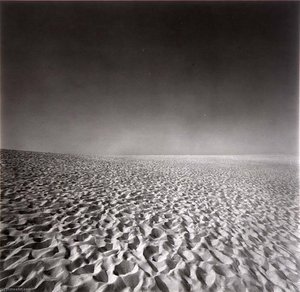
Harry Callahan: A Life in Light and Shadow
Harry Morey Callahan (1912-1999) wasn’t a name that frequently echoed through the halls of 20th-century art circles during his lifetime. Yet, beneath the surface of his seemingly quiet dedication to photography lay an artist of profound depth and innovation—a chronicler of urban life, a master of subtle shifts in light and form, and a deeply personal observer of human relationships. Born in Detroit amidst the industrial heartland of America, Callahan’s journey was one marked by both pragmatic beginnings and a relentless pursuit of artistic expression, ultimately establishing him as a pivotal figure in American photography.
Callahan's early life offered a stark contrast to the world he would later capture through his lens. He began working at Chrysler Motors as a young man, a practical step that provided stability but also fueled a desire for something more intellectually stimulating. This led him to pursue an engineering degree at Michigan State University, though he ultimately dropped out and returned to Chrysler, joining its camera club—a seemingly serendipitous turn of events that ignited his passion for photography. A pivotal moment arrived in 1941 when Ansel Adams’s lecture profoundly impacted Callahan, inspiring him to treat his craft with the seriousness it deserved. This marked a shift from casual experimentation to a deliberate and focused approach.
His early collaborations, particularly with Todd Webb, proved invaluable. Webb's experience and guidance helped refine Callahan’s technique, while their shared enthusiasm fostered a creative dialogue. The 1941 trip to Rocky Mountain State Park, though ultimately unsuccessful in producing photographs, served as an important formative experience, solidifying his commitment to the medium. The invitation to teach at the Institute of Design in Chicago in 1946, under the mentorship of László Moholy-Nagy—a leading figure in avant-garde art and photography—represented a significant step forward. This move brought him into contact with other influential artists and designers, exposing him to new ideas and techniques.
The Rhythm of the City: Callahan’s Photographic Style
Callahan's photographic style was characterized by an almost obsessive dedication to daily observation. He developed a unique method—a deliberate walk through his chosen city each morning, followed by hours spent meticulously crafting proof prints from that day’s best negatives in the afternoon. This process yielded remarkably few finished images – often no more than six per year – yet each one was imbued with a remarkable intensity and precision. He wasn't interested in grand narratives or dramatic compositions; instead, he sought to capture the quiet poetry of everyday life.
His photographs frequently featured urban landscapes—the gritty streets of Detroit, the bustling avenues of Chicago, and the industrial scenes of Rhode Island. However, his work extended far beyond mere documentation. Callahan possessed a keen eye for line, form, and light, skillfully manipulating these elements to create images that were both visually arresting and emotionally resonant. He was particularly adept at capturing the interplay of light and shadow, using them to evoke mood and atmosphere. A defining element of his style was his use of multiple exposures, creating layered effects that added depth and complexity to his compositions.
Perhaps most notably, Callahan’s work consistently centered around his wife, Eleanor Knapp. From 1947 until her death in 1960, she became the primary subject of his photographs—a constant presence in his urban explorations. These images weren't simply portraits; they were intimate studies of a relationship, capturing moments of shared experience and quiet intimacy amidst the backdrop of city life. The inclusion of Eleanor, often as a small counterpoint to expansive landscapes or architectural vistas, created a powerful juxtaposition between the personal and the monumental.
Teaching and Legacy: Shaping a Generation
Callahan’s influence extended far beyond his own artistic output. He recognized the transformative power of photography and dedicated himself to nurturing the next generation of artists. In 1961, he established a photography program at the Rhode Island School of Design, where he taught for nearly two decades. His approach was unconventional—he encouraged students to document their own lives, fostering a sense of personal connection to their work. He didn’t provide prescriptive techniques; instead, he demonstrated through his own practice how to observe, analyze, and ultimately translate those observations into compelling images.
He famously eschewed formal teaching methods, relying on example and observation rather than lectures or assignments. His student Aaron Siskind, a prominent abstract photographer, benefited greatly from Callahan’s guidance, further spreading the artist's innovative approach. Callahan left behind an extensive archive of negatives and proof prints—a testament to his prolific activity—which is now housed at the Center for Creative Photography at the University of Arizona. His work continues to be exhibited and studied, solidifying his place as a significant figure in American art history.
Key Works and Recognition
Harry Callahan’s body of work encompasses a vast range of subjects and techniques. Some notable examples include:
- “Siena, Italy” (1968): A striking black-and-white image capturing the architectural grandeur of Piazza della Signoria in Florence.
- Series of photographs documenting his wife, Eleanor Knapp: These intimate portraits offer a profound glimpse into their relationship and daily life.
- Urban landscapes of Detroit, Chicago, and Providence: These images reveal Callahan’s keen eye for composition and his ability to capture the essence of city life.
Throughout his career, Callahan received numerous accolades, including the Edward MacDowell Medal in 1993 and the National Medal of Arts in 1996. His work has been featured in major exhibitions at institutions such as the Museum of Modern Art (MoMA) and the Art Institute of Chicago. His influence can be seen in the work of countless photographers who followed in his footsteps, cementing his legacy as a pioneer of American photography.
Pitanja i odgovori
Mogu li istražiti djela umjetnika Harry Callahan prema cijelom spektru boja?
Djela umjetnika Harry Callahan možete istražiti prema boji na njegovoj stranici Spektralni indeks.
Koje je boje Harry Callahan najčešće koristio/la?
Genom palete umjetnika Harry Callahan stranica je koja predstavlja profil boja u cjelokupnom umjetničkom stvaralaštvu tog autora.
U kojem je povijesnom razdoblju stvarala/radio Harry Callahan?
Harry Callahan je stvarala u razdoblju Modern. To razdoblje smješta umjetnikov rad u povijesni kontekst.