

Jacques-Louis David: Neoclassical Ideals & Revolutionary Witness
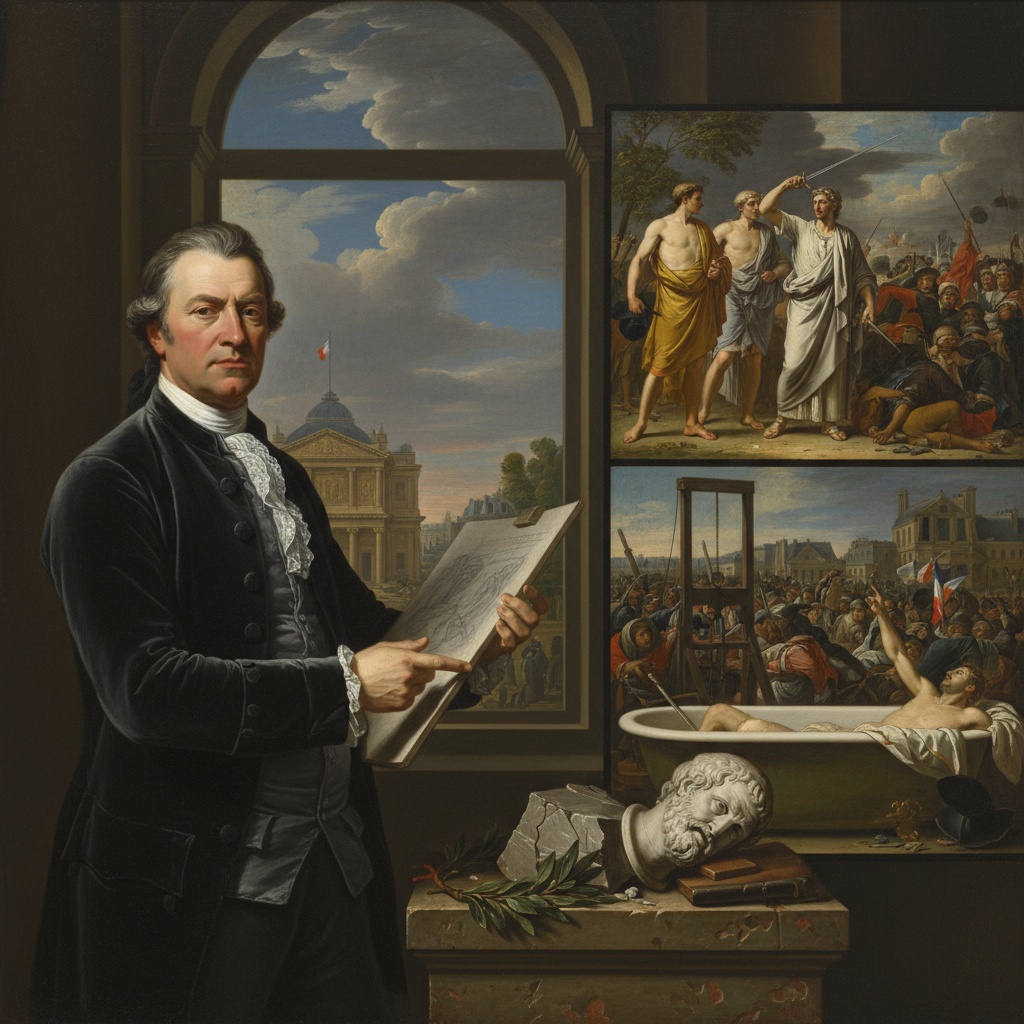
Sadržaj
Early Life & Artistic Formation: From Apprenticeship to Roman Inspiration
Jacques-Louis David’s trajectory was not one of immediate, effortless genius, but rather a carefully cultivated ascent born from dedication and a thirst for classical ideals. Born in Paris in 1748, his early life was marked by the loss of his father, an event that propelled him into the tutelage of his uncles—architects who initially steered him towards their profession. However, David’s heart lay elsewhere, captivated by the burgeoning world of painting and drawing. His initial training under François Boucher, a master of Rococo frivolity, proved formative, yet ultimately unsatisfying. It was Joseph-Marie Vien, a staunch advocate for classical simplicity and moral gravity, who truly ignited David's artistic passion. Vien’s influence instilled in the young artist a profound respect for antiquity, a reverence that would become the cornerstone of his style.
The pivotal moment arrived with David’s acceptance into the prestigious French Academy in Rome after four failed attempts. This sojourn proved transformative. Immersed in the ruins and masterpieces of the ancient world, he meticulously studied classical sculpture, absorbing its principles of balance, proportion, and narrative power. Sketches filled his notebooks—copies of Raphael's compositions, detailed studies of Roman architecture, and explorations of heroic figures. This period wasn’t merely about technical skill; it was a philosophical awakening, shaping David’s belief that art should serve as a vehicle for moral instruction and civic virtue. The seeds of his future masterpieces were sown in the sun-drenched landscapes of Italy.
The Oath of the Horatii: A Revolutionary Statement in Paint
 Jacques-Louis David
Jacques-Louis David (1748-1825): Leading French Neoclassical painter of the Revolution & Napoleonic eras. Known for 'Oath of the Horatii,' his art embodies heroism, drama & classical ideals.
Upon his return to Paris, David began to establish himself within the artistic establishment, yet it was with “The Oath of the Horatii” (1784) that he truly announced his arrival as a force to be reckoned with. Presented at the Salon, the painting immediately captivated and polarized audiences. It depicted a scene from Roman history—the three Horatii brothers swearing an oath before their father to defend Rome against Alba Longa. But this wasn’t simply a historical recreation; it was a potent allegory for contemporary France, grappling with questions of duty, sacrifice, and national identity.
The composition itself is masterful: the rigid, angular forms of the brothers contrasted sharply with the flowing curves of the women lamenting their fate. The stark lighting and dramatic chiaroscuro heightened the emotional intensity, while the deliberate use of classical architecture evoked a sense of solemnity and grandeur. More than just a painting, “The Oath of the Horatii” became a symbol of republican ideals—a call to patriotism and selflessness that resonated deeply with a nation on the cusp of revolution. It signaled a decisive break from the Rococo’s emphasis on aristocratic pleasure and frivolous ornamentation, embracing instead a style characterized by clarity, austerity, and moral purpose.
David and the French Revolution: Art as Political Propaganda
 François-Xavier Fabre
François-Xavier Fabre (1766-1837): French Neoclassical painter & portraitist, trained by David. Founder of Musée Fabre, capturing elegance & historical depth.
As the French Revolution erupted in 1789, David didn't merely observe; he actively participated. He became a fervent supporter of the republican cause, aligning himself with radical factions like the Jacobin Club and forging close relationships with figures such as Maximilien Robespierre. He understood the power of art to shape public opinion and wielded his brush as a weapon in the service of revolution. His studio transformed into a hub of political activity, producing paintings, designs for festivals, and propaganda that glorified revolutionary ideals.
David’s involvement extended beyond creating images; he actively organized civic ceremonies and designed elaborate settings intended to reinforce revolutionary principles. He was elected as a deputy to the National Convention, further solidifying his role as an official artist of the new regime. This period saw a shift in his subject matter—from historical narratives to depictions of contemporary events, celebrating heroes like Marat and embodying the spirit of sacrifice and civic duty. His art wasn’t simply reflecting the revolution; it was actively shaping its narrative.
Marat, Robespierre, and the Cult of Martyrdom: Iconic Portraits of an Era
“The Death of Marat” (1793) stands as perhaps David's most iconic work—a powerful depiction of revolutionary martyrdom. Jean-Paul Marat, a radical journalist assassinated in his bath, is portrayed not as a violent extremist but as a selfless hero, sacrificing himself for the cause. The painting’s stark realism and emotional intensity are deeply affecting. David deliberately stripped away extraneous details, focusing instead on Marat's pale skin, the wound in his chest, and the quill pen still clutched in his hand—symbols of his dedication to writing and revolution.
Similarly, portraits of Robespierre, though less celebrated today, served a crucial propagandistic function during their time. David sought to portray these figures as embodiments of virtue and unwavering commitment to the republic. These weren’t simply likenesses; they were carefully constructed images designed to inspire reverence and loyalty. The cult of personality surrounding revolutionary leaders demanded visual representations that reinforced their authority and legitimacy, and David was instrumental in creating those images. He understood how art could transform individuals into symbols, shaping public perception and solidifying political power.
Neoclassical Style & Legacy: Shaping a Visual Language for Generations
David championed a style of rigorous contours, sculpted forms, and polished surfaces; history paintings were intended as moral exemplars. His influence extended far beyond his own canvases. He became an incredibly influential teacher, establishing a studio that attracted a generation of aspiring artists—including Anne-Louis Girodet-Trioson, François Gérard, and Jean-Auguste-Dominique Ingres. He instilled in them not only technical skill but also a commitment to classical ideals and the belief that art should serve a higher purpose.
The Legacy of Jacques Louis David (1748–1825), as noted by Kathryn Calley Galitz, highlights his pivotal role in defining Neoclassicism. Even after the fall of Robespierre and the rise of Napoleon, David adapted his style—embracing a warmer palette and more opulent compositions to suit the tastes of the new regime. His monumental works like “Leonidas at Thermopylae” continued to embody classical principles while reflecting the changing political landscape. Though his allegiances shifted throughout his life, his commitment to artistic excellence remained unwavering. David’s legacy is not simply a collection of iconic paintings; it's a testament to the power of art to shape history, inspire generations, and define a visual language that continues to resonate today.
Srodni članci

The Revival of Antiquity: Exploring Neoclassical Art's Ideals & Enduring Legacy
Explore the revival of classical ideals in Neoclassical art! Discover Jacques-Louis David & the movement's impact on painting, sculpture & architecture. Expert insights & high-quality reproductions at ArtsDot.

Illuminating the Enlightenment: Art & Sociopolitical Context of the 18th Century
Explore the art of the Enlightenment! Discover Rococo's elegance, Neoclassicism’s virtue, & David’s revolutionary masterpieces. Uncover the sociopolitical context shaping 18th-century European painting.

