


 Pregledaj u stvarnoj veličini
 Podijeli
 Podijeli
 Detalji
 Vodič
Vodič

 Preuzmi datoteku
 Slični predmeti
 Rentgenska snimka
 Slide show
 Statistika
Ագնես Միյակավա


 Pročitajte više
Ručno rađena uljana reprodukcija
Ručno oslikano uljanim bojama na platnu u dimenzijama i okviru po vašem izboru, izrađeno po narudžbi od strane naših umjetnika. ( Prebacite na prodaju printova Prebacite na digitalnu prodaju slika)




P118B $10

P118H $10

P118W $10

P438Z $10

P508JH $12

P508YH $12

P805H $10

P805Z $10

P919BZ $10

P919G $10

P919XJ $10

P959ZH $10

P968JZ $12

W106C $8

W218G $10

W218JH $8

W218Y $10

W307PJ $10

W316G $10

W316PJ $8

W316Y $10

W398PJ $8

W4111J $10

W500HY $15

W500JH $15

W692G $12

W849H $8

W940BG $15

W953PJ $8




Odaberite jednu od naših unaprijed definiranih veličina koje odgovaraju izvornim proporcijama umjetničkog djela.

Možete unijeti vlastite dimenzije kako bi odgovarale određenom okviru ili prostoru. Ako odabrana veličina ne odgovara proporcijama izvorne slike, izrezat ćemo umjetničko djelo ili proširiti sliku dodatnim ručno oslikanim elementima. Digitalni nacrt bit će vam poslan na odobrenje prije početka proizvodnje.
Imajte na umu da pregled na ekranu ne prikazuje stvarno izrezivanje ili proširivanje. Samo će nacrt točno prikazati konačni sastav.
Iako su dostupne prilagođene veličine, preporučujemo odabir dimenzije s preddefiniranog popisa kako bismo očuvali izvorne proporcije.
Nakon narudžbe, tim ArtsDot.com kontaktirat će klijenta putem e-pošte radi dobivanja uputa te dostaviti probni prikaz (mockup)
Isporuka širom svijeta () u roku od 3-4 tjedna umjesto standardnih 5 tjedana. (21 Rujan). Bez kompromisa u kvaliteti.

Besplatna ekspresna dostava širom svijeta

Visokokvalitetno laneno platno

Potpuno osiguranje transporta

Jamstvo povrata carine i uvoznih poreza

Jamstvo vjernosti boja

Politika povrata u roku od 100 dana (samo u slučaju nedostataka)

Jamstvo povrata 100% novca

Popust na više proizvoda
 Opcija stakla dostupna je samo za dimenzije manje od 110 cm

Ագնես Միյակավա
Tehnika izrade
Veličina reprodukcije
-


Ukupna cijena
$ 263
Agnes Miyakawa – Alban Maria Johannes Berg: A Portrait of Elegance Amidst Innovation
Sacramento Japantown native Agnes Miyakawa (1911-1995) represented a fascinating confluence of artistic influences—a dedication to vocal performance coupled with an immersion in the groundbreaking musical explorations spearheaded by Arnold Schoenberg. Her journey from Parisian singing studies to establishing herself as a respected artist speaks volumes about the transformative power of artistic ambition and intellectual curiosity. This portrait, executed around 1931, captures Miyakawa’s likeness with meticulous detail, reflecting Berg's commitment to portraying subjects with profound sensitivity and capturing their essence through visual representation.- Subject Matter: The artwork centers on Agnes Miyakawa, a celebrated opera singer known for her captivating performance as Cio-Cio San in Madame Butterfly – an operatic masterpiece that cemented Berg’s reputation for blending Romantic lyricism with the revolutionary twelve-tone technique.
- Style: Berg's stylistic approach aligns perfectly with the prevailing aesthetic sensibilities of his time, embodying a formal studio portrait style characteristic of early 20th-century photography. The composition prioritizes clarity and directness, mirroring the artist’s intention to convey an honest depiction of Miyakawa’s appearance.
- Composition: Centered framing emphasizes Miyakawa's gaze directly toward the viewer, fostering a connection that transcends mere visual observation—a deliberate gesture indicative of Berg’s belief in capturing psychological depth alongside physical likeness. The inclusion of a partially obscuring fan adds textural interest and compositional balance.
Technical Considerations: Monochrome Elegance
The photograph utilizes a grayscale palette, skillfully manipulating tonal range to illuminate Miyakawa's facial features and delineate subtle details within her attire. Berg’s mastery of darkroom techniques—likely employing traditional processes for developing and printing—contributed significantly to the image’s timeless quality. Soft lines dominate the composition, particularly in Miyakawa’s face and hair, reflecting Berg’s stylistic preference for conveying emotion through understated elegance. The fan introduces curved lines that contrast with the more structured elements of her kimono, enriching the visual narrative.- Color Palette: Berg eschewed vibrant hues, opting instead for a grayscale palette dominated by shades of black, white, and gray—a stylistic choice consistent with Schoenberg’s influence and prioritizing tonal nuance over chromatic intensity.
- Lighting: Gentle diffusion ensures that Miyakawa's face receives ample illumination without harsh shadows, highlighting her features while maintaining an atmosphere of serenity and sophistication. The subtle gradient from brighter tones on the front of her face to darker shades on the sides underscores Berg’s meticulous attention to detail.
- Texture: The photograph captures a range of textures—the smoothness of Miyakawa's skin, the intricate patterns adorning her kimono (rendered as tonal variations), and the delicate texture of the flowers embellishing her hair—demonstrating Berg’s ability to convey tactile sensations through visual media.
Symbolism & Emotional Resonance: Capturing Grace Under Pressure
The image evokes a sense of formality, grace, and perhaps a hint of melancholy – sentiments powerfully conveyed by Berg's artistic vision. Miyakawa’s unwavering gaze embodies confidence and strength—qualities that resonate deeply within the context of Madame Butterfly, where Cio-Cio San confronts immense personal tragedy with resolute determination. This portrait serves as a testament to Berg’s ability to distill complex emotions into a single visual frame, cementing his legacy as one of the most emotionally astute composers of his era.Provenance & Reproduction
This artwork is housed in Sacramento Japantown and represents a remarkable achievement of early 20th-century portrait photography. A high-quality reproduction offers an opportunity to appreciate Berg’s artistic brilliance and Miyakawa's enduring beauty—a timeless piece destined to inspire collectors and interior designers alike.Srodna umjetnička djela


Biografija umjetnika
A Life Immersed in Sound and Emotion
Alban Maria Johannes Berg, born February 9, 1885, in Vienna, Austria, was a composer whose relatively brief life yielded a body of work that profoundly reshaped the landscape of 20th-century music. Though initially drawn to literature, a path he seriously considered pursuing, Berg’s destiny lay within the realm of sound. His father, Konrad Berg, managed a successful export business, providing a comfortable upbringing that allowed for early musical exploration – though largely self-directed at first. He began composing at fifteen, receiving piano lessons from his sister's governess, but it was a pivotal encounter in 1904 with Arnold Schoenberg that irrevocably altered the course of his artistic development. This mentorship wasn’t merely instructional; it was an immersion into a new musical language, one built on principles of developing variation and, later, the revolutionary twelve-tone technique. A complex personal life unfolded alongside his burgeoning career, including the birth of a daughter, Albine, in 1902 to Marie Scheuchl, a family maid – a circumstance that speaks to the societal complexities of the time. In 1911 he married Helene Nahowski, a union that brought both joy and social challenges.Forging a Unique Musical Voice
Berg’s genius wasn't in simply adopting Schoenberg’s innovations but in *transforming* them. He didn’t merely apply the twelve-tone technique as an intellectual exercise; he infused it with a deeply Romantic sensibility, a lyrical expressiveness that distinguished his work from that of his mentor and fellow Second Viennese School member, Anton Webern. His early compositions – five drafts for piano sonatas and a collection of songs including the evocative *Seven Early Songs* (first publicly performed in 1907) – already hinted at this unique blend. The Piano Sonata, Op. 1, completed around 1908-1909, stands as a remarkably mature debut, demonstrating an astonishing mastery of musical structure and foreshadowing the emotional depth that would characterize his later works. Berg wasn’t isolated in his artistic pursuits; he thrived within Vienna's vibrant cultural circle, associating with figures like Alexander von Zemlinsky, the iconic Gustav Klimt, and the incisive writer Karl Kraus. These interactions undoubtedly enriched his perspective and fueled his creative fire. He absorbed influences from Mahler and Wagner, retaining a connection to the Romantic tradition even as he ventured into atonality.Landmark Operas and Chamber Masterpieces
Berg’s most enduring legacy lies in his operas and chamber works. *Wozzeck* (1924), a landmark achievement of 20th-century opera, is a harrowing portrayal of a soldier exploited and driven to despair. Its fragmented scenes, dissonant harmonies, and intensely psychological characterizations broke with operatic conventions and established Berg as a major force in the genre. The *Lyric Suite* (1926), a chamber work for string sextet, showcases his ability to distill profound emotions into concise forms, revealing layers of meaning through subtle motivic development. The Violin Concerto (1935), dedicated to Louis Krasner, is a fascinating synthesis of twelve-tone technique and tonal references, incorporating elements of Bach chorales and Carinthian folk songs – a testament to Berg’s ability to bridge seemingly disparate musical worlds. Perhaps his most ambitious undertaking was *Lulu*, an opera exploring themes of sexuality, power, and societal corruption. Tragically unfinished at his death in 1935, it was later completed by Friedrich Cerha, allowing audiences to experience the full scope of Berg’s vision. The Chamber Concerto (1925) further exemplifies his skill in weaving diverse musical elements into a cohesive and emotionally resonant whole.A Lasting Impact on Modern Music
Alban Berg's untimely death on December 24, 1935, from sepsis following an insect bite robbed the world of a composer at the height of his powers. Yet, despite his relatively short life, he left behind a musical legacy that continues to resonate today. He profoundly influenced the development of modern music, demonstrating the expressive potential of atonality and twelve-tone techniques while simultaneously retaining a commitment to emotional depth and humanism. As a key member of the Second Viennese School, alongside Schoenberg and Webern, Berg contributed to a revolutionary shift in musical aesthetics. His operas, particularly *Wozzeck* and *Lulu*, remain staples of the operatic repertoire, frequently performed worldwide and captivating audiences with their dramatic intensity and psychological insight. His works are not merely studied by musicologists; they continue to inspire composers seeking new ways to express complex emotions through innovative musical structures. Theodor W. Adorno’s observation – that Berg believed “everything was supposed to develop out of something else and yet be intrinsically different” – encapsulates the essence of his compositional philosophy, a principle that continues to guide musicians today. Berg's music stands as a powerful testament to the enduring power of artistic expression in a rapidly changing world.
Alban Maria Johannes Berg
1885 - 1935 , Austria
Brzi pregled
- Artistic Movement Or Style: Expressionism, Atonal music
- Artists Or Movements Influenced By This Artist:
- Modern music
- Second Viennese School
- Artists Who Influenced This Artist:
- Arnold Schoenberg
- Mahler
- Wagner
- Date Of Birth: February 9, 1885
- Date Of Death: December 24, 1935
- Full Name: Alban Maria Johannes Berg
- Nationality: Austrian
- Notable Artworks:
- Wozzeck
- Lulu
- Lyric Suite
- Violin Concerto
- Place Of Birth: Vienna, Austria
Povezani članci

Beyond the Lens: Photography's Enduring Influence on Modern & Contemporary Art
Explore photography's pivotal role in shaping modern & contemporary art. Discover key movements, influential artists like Stieglitz, and expert collecting advice from ArtsDot.

White on Canvas: 10 Masterpieces & Timeless Elegance for Your Home Decor
Explore 10 iconic white paintings by Monet, Whistler & Rothko! Discover the stories behind these serene masterpieces and their impact on art history. Find museum-quality reproductions for your home decor at .

Monochrome Visions: Exploring the Aesthetic & Historical Significance of Black & White Photography
Explore the rich history & artistic power of black and white photography. From early techniques to iconic masters like Ansel Adams, discover why monochrome continues to captivate art lovers today. Expert insights for collectors.
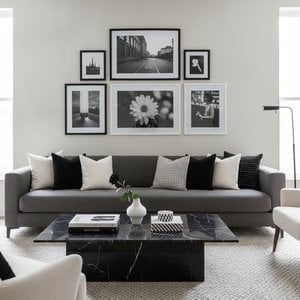
Timeless & Chic: Elevating Your New Home with the Sophistication of Black and White Photography
Transform your new home with the timeless allure of black and white photography. ArtsDot.com specializes in elegant monochrome decor and custom hand-painted wedding portraits that turn cherished milestones into lasting, soulful masterpieces. Elevate your space with ease.

Dark Masterpieces: 10 Iconic Paintings Dominated by Black Tones |
Explore 10 iconic paintings dominated by black tones, from Rembrandt’s chiaroscuro to Goya's dark expressions. Discover the stories behind these masterpieces & find museum-quality art reproductions for your home at .
