Urs Fischer: Sculpting Dreams and Embracing Paradox
Urs Fischer, born in Zurich, Switzerland in 1973, is a Swiss artist whose distinctive oeuvre defies easy categorization. He operates across mediums – sculpture, photography, drawing, painting, and publishing – creating works that simultaneously evoke childlike wonder and unsettling contemplation. His artistic journey began with an early fascination for Surrealism, particularly the pioneering visions of Max Ernst and Yves Tanguy, artists who profoundly shaped his aesthetic sensibility.
Early Influences: A Sculptor's Legacy
Fischer’s formative years were deeply intertwined with the art world through his father, Philippe Ernst, a sculptor renowned for his monumental works exploring themes of form and materiality. This familial connection instilled in him an unwavering appreciation for sculptural techniques and conceptual rigor—concepts that would become central to his artistic practice. Observing his father's dedication to crafting enduring objects imbued Fischer with a conviction that art should transcend fleeting trends, prioritizing timelessness and intellectual depth.
Surrealist Roots: Echoes of Ernst and Tanguy
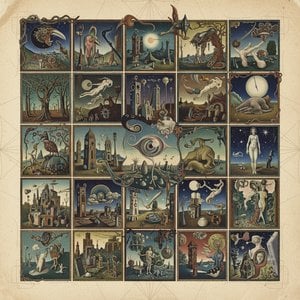
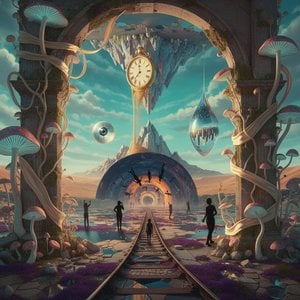
The influence of Max Ernst and Yves Tanguy is palpable throughout Fischer’s work. He frequently employs techniques reminiscent of Surrealist automatism – chance operations designed to bypass conscious control—mirroring the artists' desire to tap into subconscious realms. Like Ernst, Fischer utilizes collage and assemblage, layering disparate materials and images to generate unexpected juxtapositions that challenge conventional perceptions of reality. Similarly, Tanguy’s hazy landscapes populated by amorphous shapes inspire Fischer to explore visual ambiguity and evoke a sense of disorientation—elements he skillfully incorporates into his sculptural installations and photographic projects.
Sculptural Exploration: Installations That Confront Reality
Fischer gained international recognition for his sculptural installations, often featuring meticulously crafted objects arranged in seemingly illogical configurations. These sculptures delve into themes of repetition, decay, and the uncanny, inviting viewers to confront uncomfortable truths about existence—a preoccupation that reflects the anxieties prevalent during the postwar era. His works explore the tension between order and chaos, beauty and ugliness, mirroring the Surrealist impulse to destabilize established norms and expose hidden contradictions. The sculptures are often presented in darkened spaces, enhancing their impact and prompting contemplation on themes of memory and loss.
Photography as Medium: Memory and Perception
Fischer’s photographic projects delve into themes of memory, loss, and the fragility of perception. He utilizes staged scenarios and carefully constructed compositions to create images that possess a dreamlike quality—a stylistic choice consistent with Surrealist aesthetics. His photographs capture fleeting moments of beauty and unease, reflecting his fascination with capturing the elusive nature of experience. Like Ernst and Tanguy, Fischer seeks to transcend representational accuracy, prioritizing emotional resonance and psychological depth.
A Singular Artistic Vision
Throughout his career, Urs Fischer has garnered critical acclaim for his ability to distill complex ideas into deceptively simple visual languages. His sculptures have been exhibited in prestigious institutions worldwide – including museums in New York and Zurich – cementing his position as one of Switzerland’s most significant contemporary artists. He continues to refine his artistic practice, exploring new territories while remaining steadfastly committed to the core principles that define his distinctive style: playful curiosity, unsettling beauty, and a profound engagement with the mysteries of consciousness. His work stands as a testament to the enduring power of Surrealism's legacy and its capacity to inspire artists to confront the contradictions inherent in our experience—a legacy he embraces with unwavering conviction.