Pablo Antonio García del Campo: Bridging Art and Science in Colonial Colombia
Pablo Antonio García del Campo (1744-1814) stands as a singular figure within the artistic landscape of colonial Colombia, embodying an uncommon fusion of artistic talent and scientific curiosity. Born in Bogotá, he emerged from a lineage steeped in intellectual pursuits—his father, Juan José García del Campo, was a distinguished jurist—and his formative years were marked by exposure to the burgeoning Enlightenment ideals that swept across Europe. Recognizing his innate aptitude for visual representation, García del Campo sought instruction under Joaquín Gutiérrez, a prominent Bogota painter who championed neoclassical principles. This early training instilled in him a disciplined approach to artistic execution and established a foundation for his subsequent endeavors.
Joaquín Gutiérrez’s influence profoundly shaped García del Campo's stylistic sensibilities, encouraging him to adopt the balanced compositions and idealized forms characteristic of neoclassical art—a movement that prioritized rationality and order as responses to the philosophical upheavals of the time. The meticulous attention to detail demanded by this artistic style mirrored the burgeoning scientific fervor gripping Europe, particularly Carl Linnaeus’s groundbreaking system of taxonomy, which aimed to categorize all living organisms based on observable characteristics. This convergence of aesthetic and intellectual pursuits would prove instrumental in defining García del Campo's enduring legacy.
The pivotal moment in García del Campo’s career arrived with his appointment as the expedition’s first delineator for José Celestino Mutis’s ambitious Botanical Expedition. Mutis, a fervent believer in Linnaeus’s taxonomy, envisioned a comprehensive scientific investigation into Colombia’s flora and fauna—a project destined to revolutionize Western understanding of the New World's biodiversity. Recognizing García del Campo’s exceptional artistic skill alongside his unwavering dedication to observation, Mutis entrusted him with documenting Colombia’s botanical wonders through painstakingly accurate illustrations. This task necessitated not merely artistic proficiency but also a profound grasp of scientific methodology – a testament to Mutis’s visionary leadership and the collaborative spirit that fueled the expedition's success.
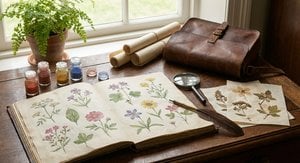
Over six hundred specimens—a staggering accomplishment for the era—were meticulously documented, transforming them into breathtaking visual representations of Colombian plants. These drawings weren’t merely decorative embellishments; they functioned as indispensable tools for classifying organisms and disseminating knowledge across continents. García del Campo’s illustrations were dispatched to Uppsala University in Sweden, where Linnaeus himself scrutinized them with meticulous care, validating Mutis's expedition’s scientific rigor and securing García del Campo’s place within the annals of botanical history—a remarkable feat achieved through a harmonious blend of artistic vision and scientific precision.
Beyond his contribution to the expedition, García del Campo cultivated a prolific artistic practice, producing portraits of influential figures like José Celestino Mutis and Antonio Caballero y Góngora – works that reflected the stylistic sensibilities of the Baroque period while simultaneously conveying nuanced psychological insight. His paintings exemplify the neoclassical style prevalent in Bogotá during his time, characterized by balanced compositions, idealized forms, and subtle tonal gradations—a deliberate choice reflecting the intellectual currents shaping Colombian culture. Influenced by European masters such as Nicolas Pocock and Johann Christian Andreas Sprengel, whose botanical illustrations served as models for his own endeavors, García del Campo skillfully merged artistic expression with scientific observation – a defining characteristic of his oeuvre and a lasting symbol of Colombia’s commitment to both art and science.
Today, Pablo Antonio García del Campo's artwork graces museums across Bogotá and Rosario, offering enduring evidence of his remarkable contribution to Colombian cultural heritage—a testament to the transformative power of intellectual curiosity coupled with artistic talent. His legacy continues to inspire artists and scientists alike, cementing his position as a pivotal figure in shaping Colombia’s artistic identity and furthering its understanding of the natural world.