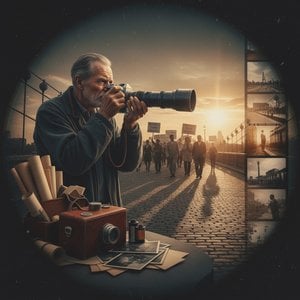
Nikolai Filippov : Un observateur révérencieux de l'Antiquité
Nikolai Filippov (1948 – 2021) a émergé du paysage artistique de l'Union soviétique comme une voix singulière, dédiée à capturer l'essence même des civilisations anciennes — en particulier la Grèce, l'Iran et l'Égypte. Son œuvre transcende la simple documentation ; elle incarne un respect profond pour l'histoire ainsi qu'un engagement inébranlable envers une observation méticuleuse et une exécution magistrale. Né à Moscou, la fascination précoce de Filippov pour la photographie a allumé le feu de son voyage créatif, le propulsant vers une carrière ancrée dans le récit visuel.
Influences précoces et formation artistique : Les années de formation de Filippov ont coïncidé avec l'intérêt croissant pour la photographie amateur soviétique. Il a perfectionné son art au Palais des Pionniers et des Écoliers de Moscou, maîtrisant des techniques qui deviendraient les marques de fabrique de son style distinctif. Sa formation académique s'est conclue par un diplôme du département de journalisme de l'Université d'État Lomonov de Moscou, lui dotant des compétences analytiques cruciales pour interpréter les contextes culturels.
La période soviétique et la reconnaissance : La carrière artistique de Filippov a pris de l'ampleur dans les années 1980 lorsqu'il a rejoint l'Organisation internationale des journalistes et a reçu une médaille prestigieuse pour ses contributions au photojournalisme. Cette période fut témoin d'avancées significatives dans l'art soviétique, favorisant l'expérimentation tout en maintenant les traditions du réalisme.
Un style distinctif : croquis au graphite et études de vases
La signature artistique de Filippov réside dans ses magistraux croquis au graphite — souvent imprégnés d'une qualité à la fois naïve et perceptive. Ces dessins privilégient la capture de l'esprit d'un sujet plutôt que la recherche de la précision photographique, reflétant une esthétique humaniste profondément influencée par les traditions de la peinture réaliste russe. Notamment, il a produit des représentations évocatrices de scènes quotidiennes — comme « Ce méandre ressemble à la rambarde du canal Griboyedov à Saint-Pétersbourg » — où il a rendu avec brio les détails architecturaux avec une précision et une sensibilité remarquables.
Œuvres notables : Parmi ses pièces les plus célèbres figure « Vase avec porteur de torchère », un croquis monochrome méticuleusement réalisé qui illustre le dévouement de Filippov à capturer la forme et la perspective. Le vase lui-même sert de vecteur pour explorer des thèmes plus larges d'héritage culturel et de contemplation artistique.
Explorer les cultures anciennes par la représentation visuelle
La vision artistique de Filippov s'est concentrée sur la traduction de la grandeur et de la complexité des civilisations anciennes en récits visuels accessibles. Il abordait ses sujets avec révérence, documentant méticuleusement les sites archéologiques et les artefacts — des temples grecs aux tombes perses en passant par les masques funéraires égyptiens. Ses dessins n'étaient pas de simples reproductions ; c'étaient des interprétations — imprégnées du regard d'un artiste capable de capturer l'atmosphère et de transmettre l'émotion.
Héritage et importance historique
Nikolai Filippov s'est éteint en 2021, laissant derrière lui un héritage d'un art silencieusement observateur qui continue de résonner aujourd'hui. Son œuvre témoigne du pouvoir durable de la représentation visuelle pour communiquer la compréhension culturelle et l'appréciation artistique — une contribution singulière à l'histoire de l'art soviétique et une source d'inspiration continue pour les artistes cherchant à honorer le passé avec une créativité réfléchie.
Par la rédaction de ArtsDot.com
Quiz d'art
Chaque question ne comporte qu'une seule bonne réponse.
Question 1:
Quel était le premier intérêt de Nikolai Filippov pour l'art ?
Question 2:
Où Nikolai Filippov a-t-il obtenu son diplôme universitaire ?
Question 3:
En quelle année Nikolai Filippov a-t-il été reconnu comme l'un des meilleurs photographes amateurs ?
Question 4:
Quelle récompense Nikolai Filippov a-t-il reçue pour ses contributions au photojournalisme ?
Question 5:
Quel musée présente les peintures réalistes de Nikolai Yaroshenko représentant la vie paysanne et les paysages régionaux ?
Explore the rich history & artistic power of black and white photography. From early techniques to iconic masters like Ansel Adams, discover why monochrome continues to captivate art lovers today. Expert insights for collectors.
Explore the powerful history of documentary photography – from its origins to contemporary masters like Gordon Parks & W. Eugene Smith. Discover how this art form shapes our understanding of society and witness pivotal moments in time.
Plongez au cœur de la photographie documentaire avec les 10 œuvres incontournables qui ont marqué l'histoire. Découvrez les artistes, leurs techniques et trouvez l'inspiration déco sur ! Explorez notre collection en ligne.
AAssistant de studioEn ligne · répond en une minute
Bonjour ! Je peux vous aider à choisir une œuvre d'art, à suivre une commande ou à répondre à vos questions sur la garantie. Comment puis-je vous aider ?