
Marino Guandalini, born in Bologna in 1927, embarked on his artistic journey amidst the vibrant intellectual landscape of postwar Italy. He was deeply rooted in the Gruppo Forma 1, a collective of artists who championed abstraction and geometric exploration during the formative years of Italian art history. This influential group fostered experimentation with visual language, rejecting traditional representational styles in favor of pure form and color—a stylistic approach profoundly shaped by groundbreaking figures like Kazimir Malevich and Theo van Doesburg. Malevich’s Suprematism, particularly his iconic “Black Square,” served as a catalyst for Guandalini's conceptual framework, urging him to distill artistic expression into its most fundamental elements. Similarly, Van Doesburg’s Nieuwe Kunst (New Art), with its emphasis on simultaneity and dynamism, instilled in Guandalini a desire to capture the essence of movement and perception within his canvases.
Artistic Style and Notable Works
Guandalini's distinctive artistic style is characterized by an unwavering commitment to abstraction and geometric precision. He skillfully manipulated shapes—circles, squares, triangles—to create compositions that resonated with both visual harmony and intellectual depth. Bold lines punctuated the surfaces of his paintings, conveying energy and immediacy while simultaneously establishing structural relationships between elements. Vibrant hues—often juxtaposed in unexpected combinations—added layers of emotional resonance to his artworks. Among Guandalini’s most celebrated pieces are “Untitled (1960)” and “Composition (1955).” The former exemplifies his mastery of geometric abstraction, presenting a balanced arrangement of shapes bathed in luminous colors. "Composition," on the other hand, demonstrates his ability to evoke atmosphere and emotion through subtle chromatic nuances—a testament to his nuanced understanding of color theory.
Exhibitions and Legacy
Guandalini’s artistic vision gained recognition throughout Italy during the 1950s and 60s, culminating in appearances at prestigious institutions such as Galleria Nazionale d'Arte Moderna in Rome and Galleria d'Arte Moderna in Bologna. These exhibitions solidified his position within the avant-garde movement and garnered critical acclaim for his innovative approach to abstraction. Furthermore, Guandalini’s work traveled internationally—reaching galleries in Paris, London, and New York—establishing him as a prominent figure on the global art stage. His enduring influence can be discerned in subsequent generations of artists who embraced geometric forms and bold color palettes as expressive tools.
Further Exploration
To delve deeper into Marino Guandalini’s artistic contributions, explore his artworks at ArtsDot: marino guandalini | ArtsDot. Discover other Italian artists on art movements: art movements | ArtsDot.
References:
Marino Guandalini, Wikipedia
Gruppo Forma 1, Wikipedia
Galleria Nazionale d'Arte Moderna, ArtsDot
Par la rédaction de ArtsDot.com
Quiz d'art
Chaque question ne comporte qu'une seule bonne réponse.
Question 1:
Quel mouvement artistique influença fortement le style de Marino Guandalini ?
Question 2:
Quel artiste inspira Guandalini ?
Question 3:
Guandalini est connu pour utiliser quels éléments visuels ?
Question 4:
Marino Guandalini était membre du groupe...
Question 5:
Dans quelle décennie Marino Guandalini atteignit-il la notoriété dans la scène artistique italienne ?
Plongez au cœur de l'abstraction géométrique avec ArtsDot.com ! Découvrez les 10 œuvres majeures de Mondrian, Malevitch et Kandinsky qui ont révolutionné l'art moderne. Inspirez votre décoration intérieure avec des reproductions de tableaux exceptionnelles. Explorez la collection en ligne !
Explore the captivating world of geometric abstraction! Discover its origins, key artists like Malevich & Mondrian, and why this movement remains highly valued by art collectors today. Expert insights at ArtsDot.
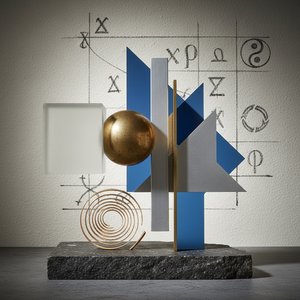
Explorez les fondements philosophiques de l'abstraction géométrique avec ArtsDot. Découvrez Malevitch, Mondrian et Lissitzky. Analyse approfondie pour collectionneurs et amateurs d'art.
AAssistant de studioEn ligne · répond en une minute
Bonjour ! Je peux vous aider à choisir une œuvre d'art, à suivre une commande ou à répondre à vos questions sur la garantie. Comment puis-je vous aider ?