Le Creuset Intellectuel de Bordeaux
Né en 1681 dans le port vibrant et embrasé par les embruns de Bordeaux, Joseph-François Lafitau fut un enfant à la fois du commerce et de la foi. Élevé au sein d'une famille de marchands prospères, ses premières années furent imprégnées des courants mondiaux qui traversaient la plus importante porte maritime de France. Cet environnement, où convergeaient langues étrangères et marchandises exotiques, offrit un terreau fertile à un esprit destiné à jeter des ponts entre les continents. Son éducation au Collège Jésuite lui inculqua une discipline rigoureuse, mais c'est la richesse de sa famille qui lui permit d'accéder à une vaste bibliothèque de littérature antique, de théologie et d'histoire naturelle. En rejoignant la Compagnie de Jésus, Lafitau ne chercha pas seulement à propager un credo ; il s'efforça de décoder la trame même de l'existence humaine à travers le regard d'un missionnaire-érudit.Un Regard Révolutionnaire sur le Nouveau Monde
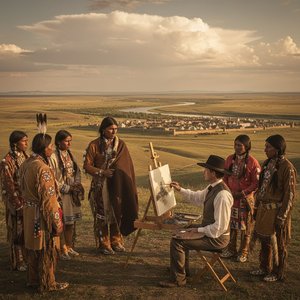
L'année 1709 marqua un tournant profond dans la trajectoire de Lafitau, lorsque sa vocation le conduisit vers les paysages sauvages de la ville de Québec. Alors que nombre de ses contemporains percevaient les peuples autochtones d'Amérique du Nord à travers un prisme purement théologique ou colonial, Lafitau initia une rupture radicale. S'inspirant des idéaux naissants des Lumières portés par Montesquieu et Voltaire, il adopta la méthode comparative. Il ne se contenta pas d'observer ; il documenta méticuleusement les structures sociales complexes, les systèmes de parenté et les traditions juridiques de la Confédération Iroquoise. Son travail se distingua par une rigueur scientifique sans précédent, traitant les coutumes du « Nouveau Monde » non pas comme des curiosités primitives, mais comme des sociétés complexes dignes d'une étude analytique profonde. Cette transition de missionnaire à ethnologue fit de lui un pionnier de l'anthropologie scientifique.L'Héritage Durable de l'Observation
Les contributions de Lafitau s'étendent bien au-delà des frontières de la mission religieuse, laissant une empreinte indélébile tant sur les sciences naturelles que sur la philosophie sociale. Son magnum opus, Mœurs des Amérindiens comparées aux mœurs des temps primitifs, s'impose comme un accomplissement monumental de la littérature ethnographique, offrant une fenêtre ouverte sur un monde en pleine mutation. Au-delà de ses triomphes anthropologiques, son œil aiguisé pour la nature permit la découverte significative du lien entre le ginseng asiatique et américain, reliant les connaissances botaniques par-delà le Pacifique. Son voyage intellectuel, qui débuta dans les salles de classe de Bordeaux pour culminer dans les forêts du Canada, demeure un témoignage de la puissance de la raison et de l'observation. À travers l'œuvre de sa vie, Lafitau a aidé à poser les pierres angulaires de l'étude moderne des cultures humaines, garantissant que les voix du passé résonnent à travers les avancées scientifiques du futur.Questions et réponses
Puis-je parcourir les œuvres de Joseph-François Lafitau par mouvement ?
Retrouvez les mouvements associés à Joseph-François Lafitau sur la page Tous les mouvements artistiques de l'artiste, qui regroupe ses œuvres par mouvement.
Puis-je parcourir les œuvres de Joseph-François Lafitau par ambiance ?
La L'espace des émotions de Joseph-François Lafitau vous permet de découvrir les œuvres de l'artiste classées par ambiance.
Quel est le degré de popularité des œuvres de Joseph-François Lafitau ?
Une page Statistiques est disponible pour Joseph-François Lafitau, présentant des statistiques sur les œuvres de l'artiste sur ce site.