Un héritage d'élégance flamande : La vie et l'art de Hieronymus Francken I
Au cœur vibrant et bouillonnant de l'Anvers du XVIe siècle, une époque marquée par l'épanouissement artistique et les transitions culturelles, Hieronymus Francken I s'est imposé comme un maître de la grâce courtisane et de l'intensité religieuse. Né en 1540 à Herentals, en Belgique, il était destiné à une vie imprégnée des pigments et des palettes de la grande tradition flamande. Membre de l'illustre dynastie Francken, son identité même était tissée dans la trame de l'élite artistique d'Anvers. Fils de Nicolaes Francken, un peintre qui jeta les bases d'un héritage familial dominant la scène artistique régionale pendant des générations, il s'inscrivit dans une lignée d'excellence aux côtés de ses frères, Frans Francken I et Ambrosier Francken I, faisant ainsi le pont entre la Renaissance tardive et l'ère naissante du Baroque.
Les années de formation d'Hieronymus furent façonnées par la rigueur de l'école d'Anvers, notamment sous le mentorat du légendaire Frans Floris. De ce maître, Francken hérita une maîtrise sophistiquée de la perspective et une compréhension profonde de l'équilibre compositionnel, éléments qui deviendraient les signatures de son style mature. Bien que les archives historiques suggèrent qu'il ait pu parcourir les paysages d'Italie pour y absorber les idéaux classiques de la Renaissance italienne, son véritable génie résidait dans sa capacité à synthétiser ces influences étrangères avec l'énergie expressive et souvent tourmentée du Maniérisme. Cette fusion lui permit de créer des œuvres qui n'étaient pas seulement décoratives, mais possédaient une profondeur psychologique et une vitalité rythmique capables de captiver tant le clergé que la noblesse.
La splendeur de la cour et le récit sacré
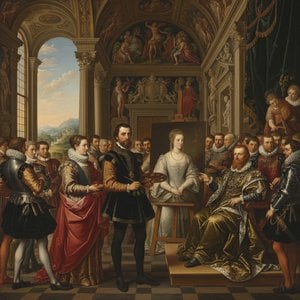
Hieronymus Francken I atteignit un niveau de prestige que peu de ses contemporains pouvaient revendiquer, rencontrant un immense succès en tant que peintre de cour pour les monarques français Henri IV et Louis XIII. Sa présence à la cour de Fontainebleau le plaça à l'épicentre du mécénat artistique européen, où il fut chargé de décorer des palais et d'immortaliser la grandeur de la vie royale. Dans ces toiles monumentales, on observe une attention méticuleuse aux détails : le miroitement de la soie, les motifs complexes de la dentelle et la posture digne de l'aristocratie. Sa capacité à capturer l'élégance formelle des rassemblements de cour, mettant souvent en scène des figures dansantes et des processions aristocratiques, préfigurait la peinture de genre qui allait s'épanouir au XVIIe siècle.
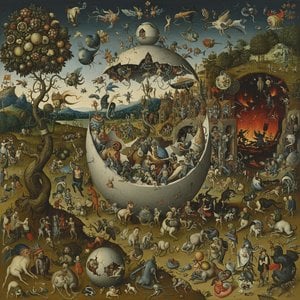
Pourtant, sa maîtrise ne se limitait pas à la splendeur séculière du palais ; il excellait tout autant dans l'exploration des paysages émotionnels profonds de l'iconographie religieuse. Ses œuvres sacrées, telles que Le Jugement dernier et Le Chemin de Croix, témoignent d'un usage dramatique de l'ombre et de la lumière, une technique qui deviendra centrale au mouvement baroque. Dans ces pièces, Francken utilisa des figures musclées et dynamiques ainsi que des compositions amples pour évoquer un sentiment de crainte divine et de souffrance humaine. Qu'il dépeigne la gravité biblique d'un jugement ou les délicates leçons morales présentes dans des œuvres comme Les Jeunes Filles Sages et Folles, son coup de pinceau demeurait imprégné d'une certaine tension maniériste — un jeu sophistiqué entre grâce et drame.
Importance historique et héritage artistique
L'importance historique de Hieronymus Francken I réside dans son rôle de figure de transition, ayant aidé l'art flamand à passer de l'élégance structurée de la Renaissance vers la puissance émotive du Baroque. Il était un peintre de dualités : capable de la beauté délicate et presque ornementale requise pour la décoration de cour, tout en possédant la force technique nécessaire pour exécuter des récits théologiques imposants. Sa carrière constitue un lien vital dans l'évolution de la peinture d'Europe du Nord, fournissant le socle sur lequel ses descendants et successeurs allaient bâtir.
Réfléchir à l'ampleur de sa contribution, c'est reconnaître les éléments suivants :
- La maîtrise du Maniérisme : Sa capacité à fusionner les proportions italianisantes avec le détail expressif flamand.
- L'innovation courtisane : Son rôle dans la définition du langage visuel des cours royales françaises durant une période de profonds changements politiques.
- L'héritage familial : L'établissement du nom Francken comme symbole de prestige artistique à Anvers et au-delà.
- Précurseur du genre : Ses premières explorations des scènes de la vie quotidienne, de la danse et des interactions sociales qui ont ouvert la voie aux maîtres ultérieurs de la peinture de genre.
Bien qu'il se soit éteint en 1610, laissant derrière lui une œuvre qui continue de résonner par sa brillance technique et sa profondeur narrative, l'influence d'Hieronymus Francken I reste gravée dans l'histoire de l'art flamand. Il demeure un peintre d'une profonde sophistication, un homme capable de capturer à la fois la joie éphémère d'une danse de cour et le poids éternel d'un décret divin.