Pierre-Jean David d’Angers : Le Sculpteur de l'Idéalisme Héroïque
Pierre-Jean David d’Angers (1788 – 1856) s'impose comme une figure charnière du paysage artistique néoclassique en France, incarnant l'esprit de l'idéalisme républicain et la grandeur de la sculpture monumentale. Né à Angers, dans la Loiret, sa jeunesse fut marquée par des liens familiaux profonds avec l'armée républicaine — son père, lui-même sculpteur et graveur sur bois, prit part vaillamment à la lutte contre la rébellion chouanne — une expérience formatrice qui instilla en lui un profond sens du devoir civique et une vision de l'expression artistique comme instrument de fierté nationale. Cet héritage façonna profondément sa trajectoire, le propulsant vers une carrière distinguée centrée sur la sculpture et le modelage, particulièrement durant la période influente de l'atelier de Jacques-Louis David.
- Formation Initiale et Influences : Les années de formation de David furent consacrées au perfectionnement de son art sous la direction de Jean-Jacques Delusse et Philippe-Laurent Roland à Paris, où il absorba les préceptes stylistiques du Romantisme ainsi que l'héritage durable de la sculpture classique. Notamment, sa rencontre avec Antonio Canova — un sculpteur dont l'attention méticuleuse aux détails anatomiques et le portrait émotif captivèrent l'imagination de David — établit un lien crucial avec les traditions artistiques de Rome qui allait définir son œuvre entière.
- L'École des Beaux-Arts et le Prix de Rome : Reconnaissant son talent, David fut admis à l'École des Beaux-Arts en 1808, où il excella, culminant par une victoire au concours de l'École pour la tête d'expression, avant de remporter le prestigieux Prix de Rome en 1811. Cette bourse lui offrit un accès inégalé aux idéaux artistiques romains et lui permit de développer sa technique sculpturale — caractérisée par une maîtrise magistrale du marbre et du bronze — affinant davantage sa capacité à capturer l'émotion humaine et la grandeur héroïque.
- Période Romaine et Évolution Artistique : Le séjour de cinq ans de David à Rome s'avéra transformateur, favorisant des collaborations avec ses pairs et l'immergeant dans la ferveur artistique de l'époque. Il étudia méticuleusement les œuvres de Michel-Ange et du Bernin, absorbant leurs techniques et leurs sensibilités stylistiques — des influences qui imprégneront ses sculptures et gravures ultérieures. Durant cette période, il entreprit des expéditions à Venise, Naples et Florence, élargissant ses horizons artistiques et enrichissant sa compréhension de l'histoire de l'art classique.
- Sculpture Monumentale et Commandes Notables : La réputation de David s'envola en tant que sculpteur durant la période de la Restauration, lui assurant des commandes d'œuvres monumentales qui ancrèrent sa place dans l'histoire culturelle française. Parmi ses accomplissements les plus célèbres figurent la frise du Panthéon — une représentation époustouflante de la mythologie romaine commandée pour commémorer le triomphe de Napoléon Bonaparte — la statue équestre du maréchal Jacques-Nicolas Gobert érigée au cimetière du Père Lachaise — ainsi que la sculpture monumentale célébrant le libérateur grec Markos Botsaris, témoignage de l'engagement de David à représenter des figures héroïques avec une conviction inébranlable.
- Héritage et Reconnaissance : La production prolifique de David engloba plus de 500 médaillons et bustes, capturant les portraits de sommités de toute l'Europe — incluant Voltaire, Rousseau, Goethe, Napoléon Bonaparte et Friedrich Schiller — démontrant sa polyvalence d'artiste et consolidant son influence durable sur les générations suivantes de sculpteurs. Son dévouement sans faille aux idéaux classiques et sa capacité à transmettre une émotion profonde à travers la forme sculpturale garantirent que David d’Angers resterait une figure vénérée dans les annales de l'histoire de l'art français, assurant sa place parmi les plus grands sculpteurs de son temps.
Œuvres Clés et Style Artistique
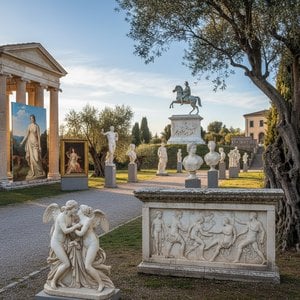
Le style artistique de David se caractérise par un engagement indéfectible envers les principes néoclassiques — spécifiquement la précision anatomique, la beauté idéalisée et la composition dramatique — reflétant l'influence de Michel-Ange et du Bernin. Il employa avec brio le marbre et le bronze pour transmettre l'émotion et la grandeur, privilégiant la clarté de la forme et le geste expressif au détriment du simple embellissement décoratif. Ses sculptures sont imprégnées d'un sentiment palpable de pathos et de noblesse, capturant des instants d'expérience humaine profonde avec un détail méticuleux et une conviction sans faille. La frise du Panthéon illustre sa maîtrise de la sculpture monumentale, présentant une entreprise ambitieuse qui célèbre la mythologie romaine et commémore la victoire de Napoléon Bonaparte — véritable témoignage de l'ambition et de la vision artistique de David. De même, la statue équestre du maréchal Gobert s'érige comme un symbole de la prouesse militaire française et de la vertu civique, démontrant la capacité de David à élever la forme sculpturale pour en faire un véhicule capable de transmettre des récits complexes et une résonance émotionnelle profonde.