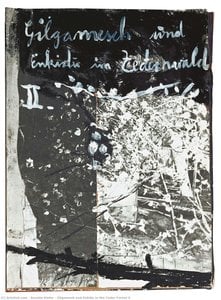
Le Poids de la Mémoire : L'Art d'Anselm Kiefer
Anselm Kiefer s'impose comme l'une des voix les plus profondes et les plus singulières du Néo-expressionnisme, un mouvement artistique apparu à la fin des années 1970 et au début des années 1980 en réaction puissante contre l'austérité du Minimalisme et de l'Art Conceptuel. Né à Donaueschingen, en Allemagne, en 1945, l'existence même de Kiefer est inextricablement liée aux séquelles de la Seconde Guerre mondiale. Son œuvre transcende la simple représentation ; elle constitue une exploration immersive et viscérale de l'histoire allemande — particulièrement son traumatisme profond — exprimée à travers des toiles monumentales et des sculptures qui exigent une confrontation physique de la part du spectateur. Son parcours artistique a débuté par des études rigoureuses sous la direction de Peter Dreher et Horst Antes à la Hochschule für Gestaltung Weinheim-Basel, où il a jeté les bases de son approche expérimentale de la création.
L'âme de l'œuvre de Kiefer est profondément ancrée dans les ombres littéraires du passé, notamment à travers la poésie envoûtante de Paul Celan. Le langage fragmenté et la préoccupation pour la perte présents dans les vers de Celan ont profondément marqué les thématiques de Kiefer, spécif'iquement en ce qui concerne l'Holocauste et ses effets persistants, souvent silencieux, sur la mémoire collective allemande. À travers son art, Kiefer cherche à donner forme à ce silence, explorant les thèmes de l'absence, de la destruction et du lourd fardeau de l'héritage historique. Son travail ne se contente pas de dépeindre l'histoire ; il tente de l'excaver des couches du temps et des débris.
Matérialité et Alchimie de la Destruction
Ce qui distingue véritablement Kiefer de ses contemporains est son utilisation délibérée et magistrale de matériaux porteurs d'un immense poids symbolique. Il ne traite pas la toile comme une surface plane, mais comme un site de transformation géologique et historique. En incorporant des éléments non conventionnels tels que la cendre, la paille, l'argile, le plomb et la gomme-laque, il crée des œuvres qui ressemblent moins à des peintures qu'à des artefacts récupérés d'une terre brûlée. Chaque matériau remplit une fonction narrative :
- La cendre : issue de forêts brûlées, elle agit comme un rappel poignant de la dévastation écologique et de la destruction, tant littérale que métaphorique, causée par la guerre.
- La paille : cet élément introduit une sensation de fragilité, représentant la vulnérabilité de la vie humaine face aux forces écrasantes de la nature et de l'histoire.
- Le plomb : un médium lourd et sombre qui apporte un sentiment de permanence et le poids écrasant du passé.
La technique de Kiefer se caractérise par une superposition d'empâtements intenses et épais. Il applique la peinture en couches multiples et denses pour créer des surfaces texturées qui rappellent la terre brûlée ou d'anciennes formations géologiques. Cette approche tactile n'est pas purement décorative ; elle engage activement le spectateur, le forçant à se confronter à la physicalité brute de son processus. L'échelle de ses toiles reflète souvent l'ampleur monumentale des événements historiques qu'il aborde, créant un environnement où le spectateur est englouti par la texture et la gravité de l'œuvre.
Héritage et Importance Historique
Au fil de sa carrière, la reconnaissance internationale de Kiefer s'est accrue grâce à des œuvres qui ont défié les frontières entre peinture, sculpture et installation. Sa capacité à tisser ensemble le mythe, l'alchimie et la catastrophe historique lui a assuré une place de titan dans l'art contemporain. Qu'il dépeigne les ombres menaçantes des empereurs romains ou les paysages désolés de l'Europe d'après-guerre, son travail demeure un dialogue continu avec le concept même du temps. Par sa maîtrise de la texture et du symbolisme, Anselm Kiefer a créé un langage visuel capable d'articuler les aspects les plus difficiles de l'histoire humaine, garantissant que les cicatrices du passé ne soient jamais véritablement effacées, mais plutôt transformées en œuvres profondes d'une importance durable.
Questions et réponses
Combien d'œuvres de Anselm Kiefer sont disponibles à la consultation ?
Vous pouvez parcourir 39 œuvres d'art œuvres de Anselm Kiefer sur la page Toutes les œuvres.
Puis-je parcourir les œuvres de Anselm Kiefer par ambiance ?
La L'ambiance par émotion de Anselm Kiefer est une page qui organise les œuvres de l'artiste par ambiance.
Comment la carrière de Anselm Kiefer est-elle divisée en périodes ?
Un récit chronologique de l'œuvre de Anselm Kiefer est disponible sur la page Chronologie de l'artiste, où les œuvres défilent par ordre de création, chapitre par chapitre.