Anne Anderson: A Visionary Illustrator of Scottish Art Nouveau
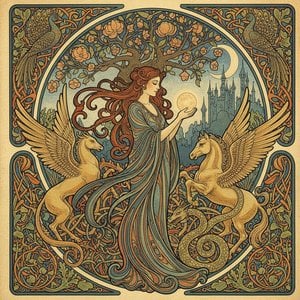
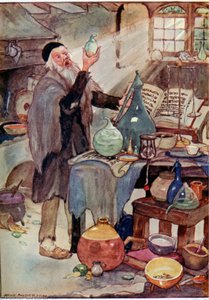
Anne Anderson (1874 – 1930) stands as a remarkable figure in the annals of Scottish illustration, primarily celebrated for her exquisite Art Nouveau style children’s book illustrations. Yet, her artistic endeavors extended beyond fantastical tales; she was also a skilled painter, etcher, and designer of greeting cards—a multifaceted artist who captured the spirit of her era with grace and imagination. Born in Scotland to James and Grace Anderson, Anne's childhood unfolded amidst the vibrant landscapes of Argentina, where her family resided during her formative years. Upon returning to England in 1900, she embarked on a career path marked by collaboration and artistic dedication. Her marriage to Alan Wright in June 1912 solidified her creative partnership—Wright himself was a respected illustrator until his reputation suffered a devastating blow when he undertook a controversial commission for Baron Corvo, an event that profoundly impacted his professional life. Despite this setback, Wright remained steadfastly supportive of Anderson’s artistic pursuits, contributing to her illustrations and sharing in her vision. Anderson's foray into illustration began at the cusp of the Edwardian period, swiftly gaining recognition for her ability to infuse narratives with delicate beauty and subtle symbolism—characteristics deeply rooted in Art Nouveau principles. Her work graced publications such as Blackie’s and Cassell’s, adorning royal doulton china, and frequently appeared on postcards, cementing her place as a beloved artist of the time. Notable projects included “The Little Mermaid,” “The Snow Queen,” “Beauty and the Beast,” “Briar Rose,” “Cinderella,” “Snow White,” “Rapunzel,” “Rumplestiltskin,” “The Frog Prince,” “The Red Shoes,” “The Swan Prince,” and “The Fisherman and His Wife.” Furthermore, she collaborated on "The Three Dwarfs," showcasing her versatility and artistic prowess. Anderson’s distinctive style—characterized by flowing lines, organic forms, and muted color palettes—was influenced by contemporaries like Charles Robinson and Jessie Marion King – Artists who championed Art Nouveau’s organic forms and delicate color palettes. Her paintings often depicted serene landscapes and intimate portraits, reflecting a profound appreciation for nature and human emotion. She skillfully blended classical techniques with the expressive dynamism of Art Nouveau, creating images that captivated audiences with their ethereal quality. Her illustrations were instantly admired for their meticulous detail and masterful use of decorative elements—a hallmark of Art Nouveau’s aesthetic ideals. Anderson's commitment to capturing the essence of folklore and fairy tales ensured that her work would endure as timeless representations of childhood wonder. Her contribution to British illustration remains significant, solidifying her legacy as a pioneer of Art Nouveau in Scotland.- Illustrations: “The Little Mermaid,” “The Snow Queen,” “Beauty and the Beast,” “Briar Rose,” “Cinderella,” “Snow White,” “Rapunzel,” “Rumplestiltskin,” “The Frog Prince,” “The Red Shoes,” “The Swan Prince,” “The Fisherman and His Wife,” “The Three Dwarfs.”
- Influences: Charles Robinson, Jessie Marion King – Artists who championed Art Nouveau’s organic forms and delicate color palettes.
- Collaborative Partnership: Alan Wright—Her husband's career as an illustrator provided invaluable support and inspiration for Anderson’s own artistic endeavors.
Questions et réponses
Quelles couleurs Anne Anderson a-t-il le plus souvent utilisées ?
La ADN de la palette de Anne Anderson présente le profil chromatique de l'ensemble de son œuvre.
Existe-t-il une chronologie des œuvres de Anne Anderson ?
La page Chronologie des œuvres de l'artiste présente les œuvres de Anne Anderson classées par date, année par année.
Puis-je trier les œuvres de Anne Anderson par couleur ?
L'Par couleur de Anne Anderson permet de parcourir les œuvres de l'artiste par couleur.