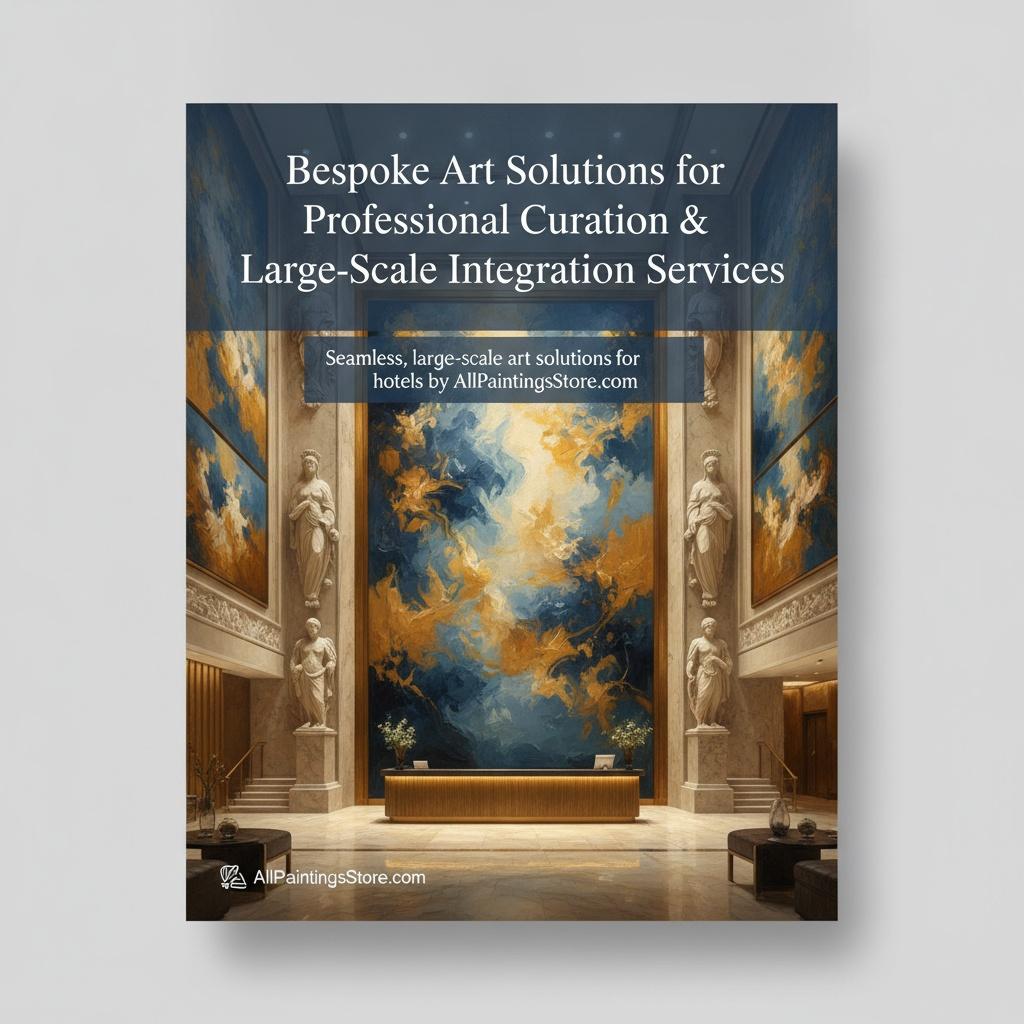
Strategic Art Procurement: Aligning Brand Identity with Operational Efficiency
 Premium Statement Artworks for Hotels, Restaurants, and Corporate Interiors: A Professional Procurement Guide for Large-Scale Design
Strategic Art Procurement: Aligning Brand Identity with Operational Efficiency Bulk Art Procurement for Commercial Interiors: A Professional Guide to High-Volume Hospitality & Corporate Decor Solutions Strategic Art Procurement: Aligning Brand Identi...
In the high-stakes arena of luxury hospitality design, the selection of artwork transcends mere decoration; it serves as a fundamental pillar of brand storytelling and spatial atmosphere. For the modern hotel designer, the pursuit of a cohesive interior narrative is often interrupted by the logistical chaos of fragmented procurement. The vision for a grand lobby or a curated corridor requires more than just aesthetic intuition; it demands a synchronized supply chain that can bridge the gap between a conceptual sketch and a physical masterpiece. When procurement is disconnected—managing disparate vendors for framed prints, custom murals, and bespoke furniture—the risk of stylistic inconsistency and logistical failure increases exponentially. True excellence in hospitality is achieved when art acts as the silent ambassador of the guest experience, anchoring a brand identity in historical continuity and sophisticated elegance. By treating art procurement as a strategic integration rather than an afterthought, designers can ensure that every texture and tone contributes to a unified, prestigious destination.
Mastering Scale: Large-Format Art for Atriums, Corridors, and Grand Lobbies
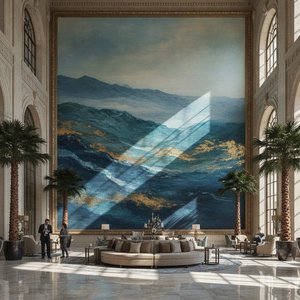 Mastering Scale: How Large-Format Art Creates Illusionary Space in Grand Hospitality Interiors
The Architecture of Perception: Utilizing Large-Format Art to Expand Grand Atriums Woman Red Hair, Large Mouth, Large Foot Influenced by action painting and featuring a striking red-haired woman with oversized features against a vibrant yellow and pi...
A wall in a high-end hotel is never merely a boundary; it is a canvas awaiting a narrative. In grand atriums or soaring lobbies, the physical constraints of an urban footprint often stand in direct opposition to a brand’s promise of boundless escape. Here, the strategic integration of large-format art serves as a profound tool for manipulating perception. A singular, expansive canvas does more than occupy a wall; it acts as a structural element that redefines the room's geometry. By introducing a focal point of significant scale, the designer can anchor the vastness of an atrium, preventing the eye from wandering aimlessly and instead directing it toward a curated horizon. This mastery of scale allows for the creation of an illusionary space, where well-placed masterpieces create a visual weight that balances heavy architectural features like marble columns or steel beams. Through the intentional use of large-format works, even the most dense urban environments can be transformed into seemingly limitless sanctuaries, pushing the boundaries of the physical architecture outward.
The Multi-Panel Revolution: Utilizing Triptychs and Polyptychs in Hospitality Design
 Large-Scale Art Solutions for Commercial and Hospitality Interiors: A Professional Guide to Scalable Decor
Establishing Visual Identity: The Strategic Role of Large-Scale Art in Hospitality Mastering the Layered Look: An Expert Guide to Art Groupings and Multi-Panel Displays for Luxury Hotel Interiors The Architecture of Walls: Establishing Visual Hierarc...
As contemporary hospitality design moves toward more dynamic and layered aesthetics, the multi-panel revolution has emerged as a sophisticated solution for expansive architectural challenges. For wide walls, long corridors, or grand staircases, the use of triptychs, quadriptychs, and larger polyptych sets offers a way to break down monumental surfaces into digestible, rhythmic compositions. This approach allows for a continuous visual flow where colors and brushstrokes transition seamlessly across multiple panels, creating a cohesive, modern architectural look. Beyond their aesthetic appeal, these groupings allow designers to establish a clear visual hierarchy within a space. By splitting a single, powerful image across three, four, or five panels, the artwork becomes an integrated part of the wall's architecture rather than a mere attachment. This method is particularly effective in luxury hotel interiors where creating a sense of movement and rhythm is essential to guiding the guest through transitional zones like hallways and lounges.
Bespoke Integration Services: Custom Commissions, Murals, and Architectural Frescoes
 Elevate Your Hotel Interiors: The All-in-One Solution for Seamless, High-Impact Art Procurement
The Designer's Dilemma: Overcoming Fragmentation in Art Procurement Interior architecture Interior architecture is the design of a building or shelter from the inside out, or the design of a new interior for a type of home that can be fixed. It can r...
For projects requiring a truly singular identity, bespoke integration services offer the ability to move beyond the catalog and into the realm of architectural storytelling. This includes the creation of large-format murals and even ceiling frescoes, which are painted on massive canvas rolls and shipped globally for professional installation. These works allow designers to recreate historical grandeur, such as the intricate beauty of Renaissance ceilings, within a contemporary setting. Furthermore, the ability to "remix" art history provides unparalleled customization; one might request a modern photograph to be reimagined in the thick, impasto style of Van Gogh or the light-drenched atmosphere of Monet. This level of bespoke service extends to custom commissions where artists can adapt specific color palettes to match a hotel's interior scheme or even perform "period shifts," transforming contemporary imagery into 17th-century masterpieces. Such deep integration ensures that the art is not just placed within the space, but is an intrinsic part of its very fabric.
Streamlining Logistics: Managing High-Volume Art Orders and Global Distribution
For procurement managers and hospitality chains, the success of an art installation depends as much on operational reliability as it does on aesthetic quality. Managing high-volume orders requires a system built for efficiency, transparency, and speed. A professional-grade service must provide a seamless order management experience, featuring real-time status updates via SMS or email and the ability to review digital mockups before production begins. This is critical for complex commissions where color matching or group portraits are required. Reliability is further cemented through robust global logistics, utilizing industry leaders like DHL Express and FedEx to ensure secure delivery to over 70 countries. For international projects, navigating the complexities of customs and VAT is essential; a dependable partner provides full support, including the necessary documentation for tax-compliant imports in regions such as Brazil, Mexico, or Turkey. When the supply chain is predictable—from the initial confirmation email to the arrival of reinforced, double-walled packaging—the designer can focus on the creative vision rather than the logistical burden.
Professional Consultation & Technical Specifications for Large-Scale Installations
The final stage of successful art integration lies in the technical precision of the installation and long-term preservation. Professional art consultation services offer designers a way to mitigate risk by digitally "placing" artwork onto photos of their specific walls, providing color analysis and scale verification before a single brushstroke is applied. Once the artwork arrives, the technical quality of the materials ensures longevity. High-quality reproductions, hand-painted on 100% cotton canvas with flexible gesso and finished with protective Damar varnish, are engineered to resist cracking, dust, and moisture. For large-scale projects, considerations such as stretcher bar bracing to prevent warping and the use of acid-free matting for framed pieces are vital for protecting the investment. By adhering to these rigorous standards—from the academic excellence of the artists to the precision of the framing shop—designers can ensure that their curated collections remain vibrant and structurally sound for generations, maintaining the prestige of the property long after the initial installation.