
- Accueil

- Impression sur toile
- Jan van de Cappelle
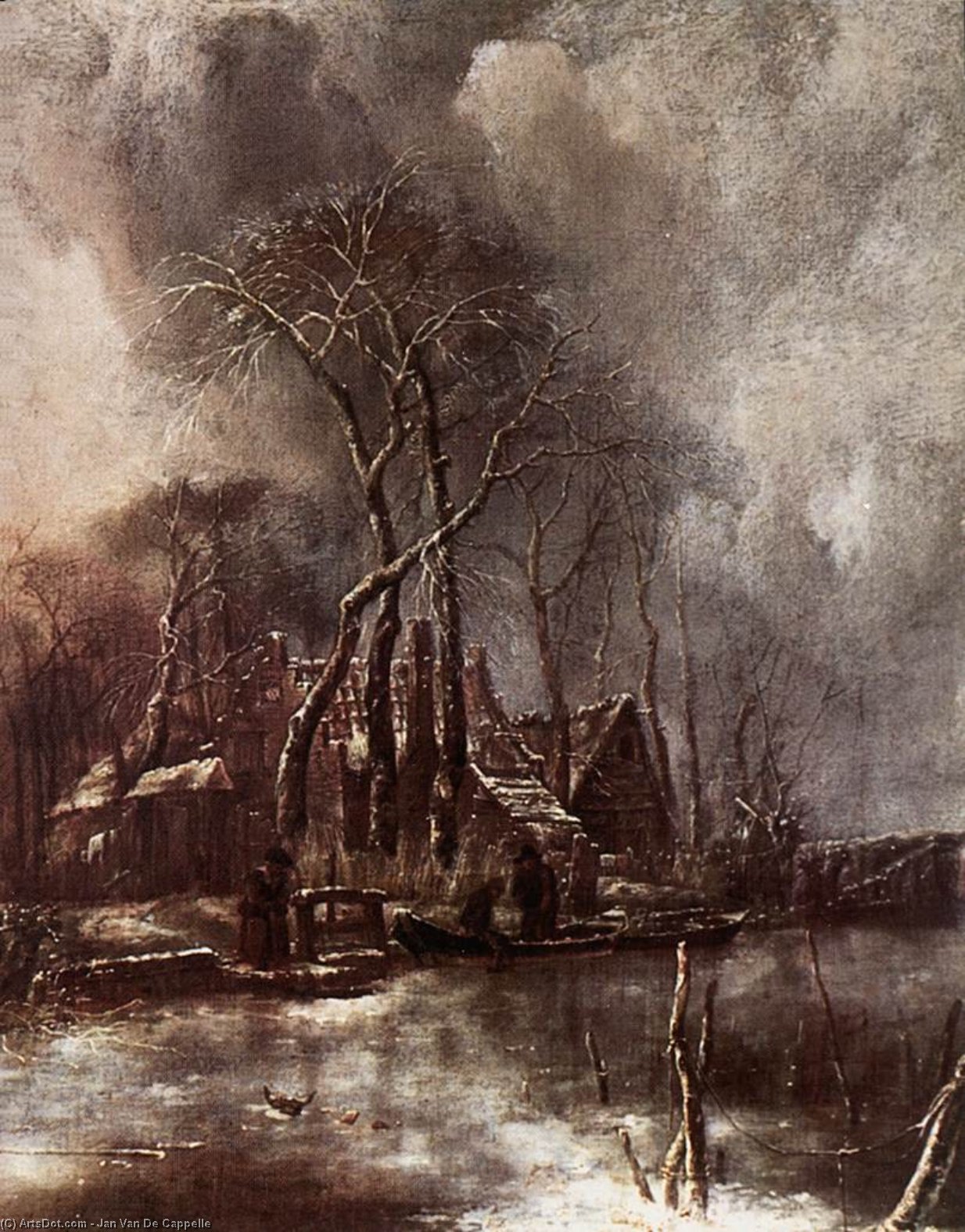
- Winter Landscape
 Commander la reproduction Acheter l'image haute résolution
 Partager
 Partager
 Détails de l'œuvre
 Ajouter aux favoris

 Télécharger
 Articles similaires
 Radiographie
 Diaporama
Winter Landscape


 Afficher la suite
Giclée / Impression d'art
Impression giclée ou sur toile de qualité musée, avec une production rapide et des finitions au choix.




































Choisissez parmi nos formats prédéfinis qui respectent les proportions originales de l’œuvre.

Vous pouvez saisir vos propres dimensions pour vous adapter à un cadre ou à un espace spécifique. Si la taille sélectionnée ne correspond pas aux proportions de l'image originale, nous recadrerons l'œuvre ou étendrons l'image avec une bordure en miroir ou une couleur unie. Une maquette numérique vous sera envoyée pour approbation avant le début de la production.
Veuillez noter que l'aperçu à l'écran ne reflète pas le recadrage ou l'extension réelle. Seule la maquette montrera avec précision la composition finale.
Bien que des tailles personnalisées soient disponibles, nous vous recommandons de choisir une dimension dans la liste prédéfinie afin de préserver les proportions originales.
Livraison dans le monde entier () en 2 semaines au lieu des 4/5 semaines habituelles. (15 juillet)

Livraison express gratuite dans le monde entier

Toile de lin de haute qualité

Assurance transport complète

Garantie de remboursement des frais de douane

Garantie de fidélité des couleurs

Politique de retour de 60 jours (uniquement en cas de défaut)

Garantie de remboursement à 100%

Réduction sur les achats groupés
 L'option verre n'est disponible que pour les dimensions inférieures à 110 cm.

Winter Landscape
Giclée / Impression d'art
Format de reproduction
-


Prix total final
-
Œuvres apparentées


Biographie de l'artiste
Jan van de Cappelle: The Mirror of Tranquility
Jan van de Cappelle (1626-1679) stands as a singular figure within the Dutch Golden Age, an artist whose output—a mere handful compared to his contemporaries—commands remarkable distinction. He wasn’t merely a painter; he was an industrial titan and astute collector, inextricably linked to the economic powerhouse of Amsterdam and its burgeoning textile industry. This duality profoundly shaped his artistic vision, resulting in seascapes and winter landscapes imbued with an unparalleled serenity – a stillness that reflects not just the surface waters but also the very heavens above. He is rightfully hailed as “Holland’s outstanding marine painter of 17th century,” a testament to his mastery of capturing atmospheric nuance and conveying profound emotional depth within deceptively simple compositions.Early Life & Training
Born in Amsterdam in 1624, Jan van de Cappelle possessed an uncommon path to artistic recognition. Unlike many artists of his era who honed their skills through formal guild training, he was largely self-taught—though likely influenced by the stylistic sensibilities of Simon de Vlieger, whose work closely resembles Cappelle’s formative paintings. His father, Franchoy van de Cappelle, operated a substantial dyeworks specializing in crimson dye production, a profession that demanded considerable technical expertise and provided Jan with invaluable practical experience alongside his artistic pursuits. This grounding in the craft of dyeing—a cornerstone of Amsterdam's economic prosperity—served as an unexpected catalyst for his burgeoning talent.Influences & Style
Cappelle’s style is characterized by its meticulous attention to detail and its masterful use of atmospheric perspective—particularly the technique of mirroring sky formations onto calm water surfaces. This distinctive approach echoes the influence of Willem van de Velde the Elder, a celebrated marine painter whose compositions prioritized realism and emotional resonance. However, Cappelle’s artistic voice transcends mere imitation; he developed a unique visual language that speaks to the contemplative spirit of his time. He achieved this remarkable feat by meticulously observing natural phenomena—the subtle shifts in light and color—and translating these observations onto canvas with breathtaking accuracy. The resulting paintings possess an ethereal quality, capturing not just the visual appearance of landscapes but also their emotional impact on the viewer.Career & Patronage
Despite lacking official guild affiliation—a notable omission for artists of his stature—Cappelle achieved considerable success as an artist and businessman. He skillfully navigated the complexities of Amsterdam’s economic landscape, securing commissions from wealthy patrons and managing his family's dyeworks with unwavering dedication. Records indicate he purchased significant quantities of Rembrandt’s paintings during insolvency sales in 1656 and 1658, demonstrating a discerning eye for artistic merit and bolstering his own collection. This shrewd investment underscored Cappelle’s understanding of both art history and financial acumen—a rare combination that propelled him to prominence within the cultural elite of Amsterdam.Notable Works & Achievements
Cappelle’s oeuvre comprises fewer than 150 paintings—a remarkably small number considering the prolific output of many artists during the Golden Age. Yet, these works stand apart for their luminous quality and evocative depiction of maritime scenes and winter landscapes. Pieces like “Ships at Anchor on a Quiet Sea” exemplify his signature technique: placid waters reflecting ethereal cloudscapes, creating an illusion of boundless space and conveying a sense of profound peace. The masterful rendering of light—particularly the way Cappelle captures the diffused glow of dawn or dusk—elevates these paintings beyond mere representation, transforming them into expressions of contemplative beauty. His contribution to Dutch art history extends beyond his individual creations; he embodies the spirit of an era defined by innovation and artistic excellence.Legacy & Historical Significance
Jan van de Cappelle’s legacy resides not only in his stunning visual achievements but also in his embodiment of the Golden Age's ethos—a harmonious blend of artistic creativity and economic enterprise. He represents a crucial link between Rembrandt’s artistic legacy and the subsequent development of marine painting, securing his place as one of Holland’s most enduring masters. His serene landscapes continue to inspire admiration for their beauty and technical brilliance, reminding us that true artistry can flourish even amidst the pressures of commerce and societal ambition.
Jan van de Cappelle
1624 - 1679 , Pays-Bas
En bref
- Artistic Movement Or Style: Golden Age
- Artists Who Influenced This Artist:
- Simon de Vlieger
- Willem van de Velde the Elder
- Date Of Birth: Amsterdam, Netherlands (1624)
- Date Of Death: 1679
- Full Name: Jan van de Cappelle
- Nationality: Dutch
- Notable Artworks:
- Ships at Anchor on a Quiet Sea
- Vessels Moored off a Jetty
- A River Scene with Dutch Vessels Becalmed
- Place Of Birth: Amsterdam

