


 Aperçu en situation
 Partager
 Partager
 Détails
 Guide imprimable

 Télécharger
 Articles similaires
 Radiographie
 Voir le diaporama
 Statistiques
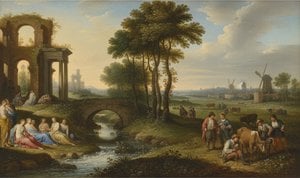
Paysage italien avec des guerriers romains
 Huile sur toile
- Art mural
- Paysage baroque
 1650
1650 154.0 x 174.0 cm
 Musée de l'Ermitage
 Afficher la suite
Reproduction à l'huile faite à la main
Huile sur toile peinte à la main, avec cadre et dimensions personnalisés, réalisée sur commande par nos artistes. ( Passer au format impression Passer au format image numérique)




P118B €10

P118H €10

P118W €10

P438Z €10

P508JH €12

P508YH €12

P805H €10

P805Z €10

P919BZ €10

P919G €10

P919XJ €10

P959ZH €10

P968JZ €12

W106C €8

W218G €10

W218JH €8

W218Y €10

W307PJ €10

W316G €10

W316PJ €8

W316Y €10

W398PJ €8

W4111J €10

W500HY €15

W500JH €15

W692G €12

W849H €8

W940BG €15

W953PJ €8




Choisissez parmi nos formats prédéfinis qui respectent les proportions originales de l’œuvre.

Saisissez la largeur et la hauteur souhaitées, pour s'adapter à votre cadre ou à votre mur. Cette œuvre est peinte à la main ; ainsi, pour un format de forme différente, l'artiste peut peindre un peu plus autour du tableau ou réduire légèrement les bords — c'est vous qui choisissez. Nous vous envoyons une maquette numérique pour approbation avant que la peinture ne commence. L'image présentée sur cette page ne reflète pas le résultat réel — seule la maquette le fait.
Après la commande, l’équipe ArtsDot.com contactera le client par e-mail pour recueillir ses instructions et lui fournira une maquette d’aperçu
Livraison dans le monde entier () en 3 à 4 semaines au lieu des 5 semaines habituelles. (24 octobre). Aucun compromis sur la qualité.

Livraison express gratuite dans le monde entier

Toile de lin de haute qualité

Assurance transport complète

Garantie de remboursement des droits de douane

Garantie de fidélité des couleurs

Garantie de retour de 100 jours (uniquement en cas de défaut)

Garantie de remboursement à 100%

Tarifs dégressifs sur quantité
 L'option verre n'est disponible que pour les dimensions inférieures à 110 cm.

Paysage italien avec des guerriers romains
Technique de reproduction
Format de la reproduction
-


Prix total final
€ 231
La Vision de Jan Both : Un Chef-d'œuvre Méditerranéen
Le « Paysage italien avec des guerriers romains » de Jan Dirksz Both, peint vers 1650, n'est pas une simple représentation d'une vue pittoresque de l'Italie ; c'est une expérience immersive. Né à Utrecht et formé aux traditions de la peinture flamande, Both entreprit un voyage transformateur vers Rome, un moment charnière qui altéra fondamentalement sa trajectoire artistique. Cette œuvre témoigne de ce basculement — une synthèse vibrante du réalisme septentrional et de la lumière méridionale, capturant non seulement une scène, mais une humeur, une atmosphère imprégnée de la grandeur et du drame de la Renaissance italienne.
Le tableau attire immédiatement le regard par sa composition expansive. Un fleuve majestueux domine le premier plan, reflétant l'azur du ciel, tandis que des collines vallonnées se déploient vers l'horizon, pour culminer en des montagnes brumeuses qui semblent se fondre dans la ligne d'horizon. Pourtant, il ne s'agit pas d'un simple rendu topographique ; Both utilise avec maestria la perspective atmosphérique — une technique empruntée à Claude Lorrain et aux autres maîtres du paysage italien — pour créer une illusion de profondeur et d'immensité. Les couleurs deviennent plus douces, plus froides et moins saturées à mesure qu'elles s'éloignent, entraînant l'œil du spectateur au cœur même de la scène.
Le Langage de la Lumière : Une Révélation Baroque
Le style emblématique de Both se caractérise par une qualité lumineuse qui élève le paysage au-delà de la simple représentation. Il fut profondément influencé par la tradition baroque, particulièrement par son accent sur l'éclairage dramatique et les effets théâtraux. Observez comment la lumière du soleil, semblant émaner d'une source invisible, baigne la scène d'un éclat doré, mettant en lumière des éléments spécifiques : l'eau scintillante, le feuillage texturé et les postures assurées des guerriers romains. Il ne s'agit pas d'une illumination plate et uniforme ; c'est un jeu dynamique d'ombre et de lumière qui imprègne la peinture d'un sentiment de vitalité et de mouvement.
L'utilisation de la couleur est tout aussi délibérée. Des ocres riches, des verts profonds et des bleus vibrants sont juxtaposés pour créer un intérêt visuel et de la profondeur. Les tons terreux du paysage contrastent vivement avec l'armure étincelante des soldats, accentuant davantage leur puissance et leur autorité. Les subtiles variations de nuances — une pointe de violet dans les montagnes lointaines, une touche de rose dans les nuages — contribuent au sentiment global de réalisme et de détail atmosphérique.
Symbolisme et Pouvoir : La Présence Romaine
Au-delà de ses qualités purement esthétiques, le « Paysage italien avec des guerriers romains » est chargé de significations symboliques. La présence des soldats romains, vêtus de leurs armures imposantes et brandissant des lances, évoque les thèmes du pouvoir, de la conquête et de la force militaire. Ils ne sont pas de simples figures au sein d'un paysage ; ils sont des participants actifs, façonnant la scène et y affirmant leur dominance. Les bandits menant des prisonniers renforcent davantage ce récit, suggérant un monde de conflits et d'intrigues politiques.
Cependant, le tableau ne se concentre pas uniquement sur la guerre. L'inclusion d'un fleuve, d'arbres et d'une sensation de loisir laisse entrevoir une vision plus complexe — une vision qui reconnaît à la fois la beauté et la brutalité du paysage italien. Les personnages sont engagés dans des activités qui suggèrent une coexistence harmonieuse entre l'humanité et la nature, bien que s'inscrivant dans un cadre de pouvoir et de contrôle.
Un Héritage de Lumière : L'Influence Durable de Both
Le « Paysage italien avec des guerriers romains » de Jan Dirksz Both représente un moment charnière dans le développement de la peinture de paysage néerlandaise. Il démontre sa maîtrise technique, sa profonde compréhension de la couleur et de la lumière, ainsi que sa capacité à synthétiser diverses influences artistiques. Son œuvre continue de captiver les spectateurs aujourd'hui, offrant un aperçu d'un monde de beauté, de drame et de symbolisme intemporel. Les reproductions de cette œuvre magnifique capturent l'essence de la vision de Both, nous permettant de faire l'expérience directe de sa qualité lumineuse et de son pouvoir évocateur.
Questions et réponses
Dans quelle pièce est-il suggéré d'exposer « Paysage italien avec des guerriers romains », compte tenu de sa palette ?
Avec sa palette Tons terreux, «Paysage italien avec des guerriers romains» de Jan Both est recommandé pour une Espaces de vie. Ses couleurs justifient d'ailleurs cette suggestion.
Qu'est-ce que "Paysage italien avec des guerriers romains" partage avec le reste de l'œuvre de Jan Both ?
Dans l'œuvre de Jan Both, « Paysage italien avec des guerriers romains » s'inscrit dans le style Paysage baroque, tout en abordant les thèmes de lumière méditerranéenne, idéaux romains, paysage classique, figures héroïques, allégorie religieuse, thèmes moraux, drame baroque, profondeur émotionnelle.
Quelle palette de couleurs utilise "Paysage italien avec des guerriers romains" ?
Les couleurs de "Paysage italien avec des guerriers romains" forment une palette Tons terreux. Cette classification décrit les familles de couleurs dominantes.
Œuvres similaires


Biographie de l'artiste
Jan Both (1610-1652) : Maître de la lumière méditerranéenne
Jan Dirksz Both fut un peintre, dessinateur et graveur néerlandais qui s'imposa comme l'une des figures de proue du mouvement naissant du paysage « italianisant » durant l'Âge d'or néerlandais. Né vers 1615/161ables à Utrecht, il était le frère cadet d'Andries Both ; leur père, Dirck Both, peintre sur verre ou verrier, leur transmit dès l'enfance un profond respect pour l'artisanat d'art. Bien que les détails biographiques demeurent par certains aspects éparses, les recherches académiques suggèrent que la formation de Jan inclut l'enseignement d'Abraham Bloemaert et de Gerrit van Honthorst, le plaçant parmi les artistes les plus influents de son époque.- Jeunesse et formation : Les années formatrices de Both se déroulèrent à Utrecht, où il perfectionna ses talents aux côtés de son frère Andries, absorbant les techniques issues de la pratique du vitrail de leur père – un métier profondément ancré dans les traditions flamandes.
- <Influence romaine : Vers 1638, Jan et Andries entreprirent un voyage transformateur vers Rome via la France, s'immergeant dans la ferveur artistique de la cour papale et rencontrant des sommités telles que Bloemaert et Gerrit van Honthorst. Cette exposition façonna profondément leurs sensibilités stylistiques.
Le style romaniste et la collaboration avec Lorrain
Rome s'avéra être le creuset du développement artistique de Both. Tandis qu'Andries se concentrait sur des scènes de genre à la manière de Pieter van Laer, Jan se consacra principalement à la peinture de paysage — un style fortement tributaire de Claude Lorrain — capturant la beauté éthérée de la région méditerranéenne avec une maîtrise inégalée de la lumière et de la couleur. Notamment, il collabora étroitement avec Herman van Swanevelt sur un projet monumental pour le palais du Buen Retiro à Madrid, démontrant son ambition et ses prouesses artistiques au sein des plus hautes sphères du mécénat européen. Ce partenariat scella la réputation de Both en tant qu'innovateur majeur du paysage.Œuvres notables et caractéristiques artistiques
L'œuvre de Both se caractérise par des paysages vastes et imaginatifs, baignés d'une lumière dorée et lumineuse — une marque de fabrique du style de Lorrain et le reflet des courants artistiques plus larges circulant à travers l'Europe. Son chef-d'œuvre, « Paysage avec des bandits menant des prisonniers » (Museum of Fine Arts, Boston), illustre cette brillance esthétique. La route diagonale guide le regard au cœur de la scène, juxtaposant des figures réalistes à une toile de fond de panoramas idylliques peuplés d'une végétation méticuleusement rendue. Les motifs récurrents incluent des figures religieuses ou mythologiques — comme on peut le voir dans « Le Jugement de Pâris » (Londres, National Gallery) — souvent exécutées par des confrères d'Utrecht tels que Cornelis van Poelenburch, soulignant l'engagement de Both envers les idéaux humanistes et les conventions artistiques.Héritage et influence
Le frère de Jan Both, Andries, succomba tragiquement à la maladie à Venise lors de leur voyage de retour de Rome. Malgré la brièveté de sa vie, Andries s'imposa comme un artiste respecté, spécialisé dans les scènes paysannes — un genre reflétant les réalités sociales de l'époque. L'héritage artistique de Jan Both s'étend bien au-delà de ses peintures individuelles ; il fut le maître de disciples talentueux tels que Barend Bispinck et Willem de Heusch, garantissant que ses innovations stylistiques continuent d'inspirer des générations d'artistes. Son travail demeure célébré pour son atmosphère évocatrice, sa technique magistrale et sa contribution au développement de la peinture de paysage néerlandaise — un témoignage de l'influence durable de Both sur l'histoire de l'art européen.Collections
- Fitzwilliam Museum, Université de Cambridge
- Ermitage, Saint-Pétersbourg
- Kunsthistorisches Museum, Vienne
- Louvre, Paris
- Galerie royale Mauritshuis

Jan Both
1610 - 1652 , Pays-Bas
En bref
- Artistic Movement Or Style: Italianate Landscape Painting
- Artists Who Influenced This Artist:
- Abraham Bloemaert
- Gerrit van Honthorst
- Date Of Birth: Utrecht, Netherlands (1610)
- Date Of Death: August 9, 1652
- Full Name: Jan Dirksz Both
- Nationality: Dutch
- Notable Artworks:
- Saint Anne with the Virgin and Child
- Landscape with bandits leading prisoners
- Judgement of Paris
- Place Of Birth: Utrecht
Articles connexes
Cornelis van Poelenburch: Bridging Mannerism & the Dutch Baroque Landscape
Discover Cornelis van Poelenburch, a pivotal Dutch Baroque landscape painter bridging Mannerism & Italianate styles. Explore his life, key works, and lasting influence on 17th-century art with ArtsDot.

Les 10 Chefs-d'œuvre du Paysage Romantique : Artistes et Décor d'Intérieur
Plongez dans l'émotion du Romantisme avec les 10 plus beaux paysages de Friedrich, Turner & Delacroix. Découvrez leur histoire et trouvez l'inspiration déco idéale sur ArtsDot.com !

Évocations de lieux : Un voyage historique à travers l'art du paysage
Explorez l'histoire fascinante de la peinture de paysage à travers les chefs-d'œuvre du Romantisme. Découvrez Friedrich, Turner et Aivazovski et laissez-vous inspirer par la beauté sauvage et le sublime. Reproduction d'art de qualité chez ArtsDot.

Jan Brueghel the Elder: A Master of Flemish Landscape & Allegory – Exploring Innovation & Influence
Explore the captivating world of Jan Brueghel the Elder, a Flemish Baroque master renowned for his stunning landscapes & allegorical paintings. Discover his collaborations with Rubens and lasting artistic legacy.

Claude Lorrain: Master of Light & Landscape in the Golden Age
Explore the luminous landscapes of Claude Lorrain, a Baroque master renowned for his masterful use of light & atmosphere. Discover his life, techniques, key works & enduring influence on art history.

